

|
s
|
l
|
m
|
k
|
m
|
c
|
l
|
s
|
w
|
p
|
l
|
g
|
|
s
|
l
|
m
|
k
|
m
|
c
|
l
|
s
|
w
|
p
|
l
|
g
|
O tej roślinie
Eleutherococcus
Eleutherococcus is a genus of some thirty deciduous shrubs from East Asia, related to ivy, Aralia and ginseng. The often prickly stems carry handsome palmate leaves, small whitish flowers in rounded umbels and clusters of black berries. Easy-going and hardy, they are valued as unusual foliage shrubs and some species have a long history in Asian medicine.
Eleutherococcus henryi
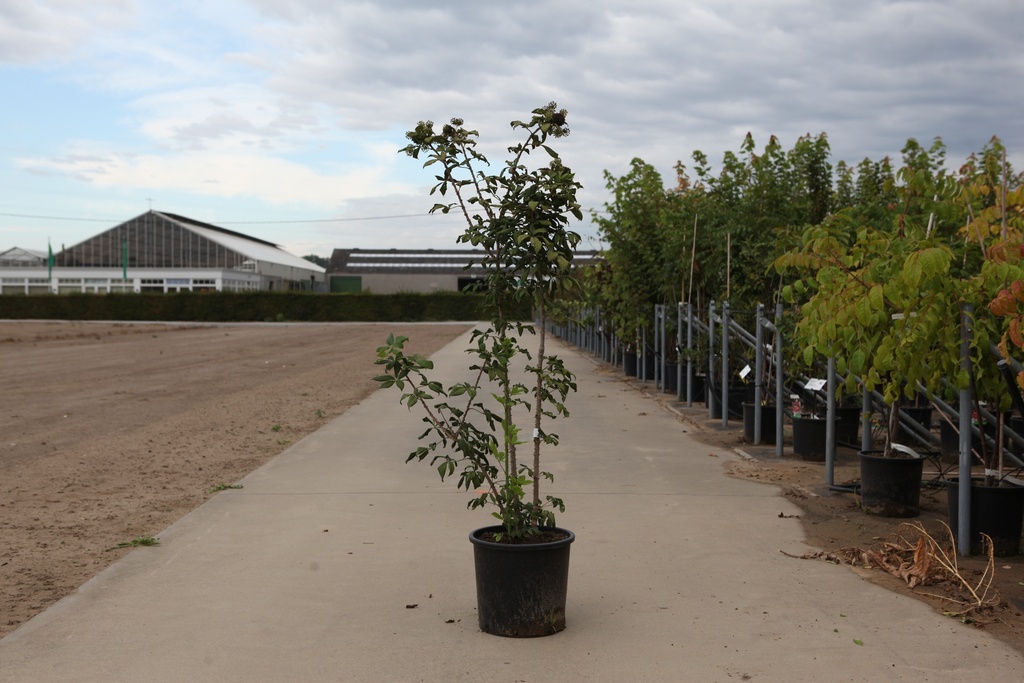
Eleutherococcus henryi comes from central and southern China, where it grows in fields, woods and on mountain slopes. This upright, dense shrub of about 2 to 3 m has sturdy stems with strong prickles and leaves of five toothed leaflets. Plants are male or female; only female plants carry the decorative black berries, which last into late autumn.
Stanowisko i gleba
This species tolerates sun, partial shade and shade, and grows in clay, chalky or humus-rich soil, even in urban conditions. It prefers a soil that stays slightly moist but copes with dry spells once established. Waterlogged ground does not suit it. For berries, plant a male shrub near the female ones.
Przycinanie i pielęgnacja
Hardy throughout Belgium and slow-growing, it needs little attention. Prune in March, at the end of winter, to encourage branching and restrict its size; every four to five years a hard rejuvenation pruning keeps it in shape. Remove suckers if you do not want the shrub to spread.
Zastosowanie w ogrodzie
Its prickles make it a good choice for defensive hedges, free-growing or clipped, mixed with privet, species roses or spiraea. It also brightens darker corners under trees and along woodland edges, and suits wild, Japanese-style or exotic gardens.
Cechy rośliny
Dane botaniczne
| Rodzina | Araliaceae |
| Rodzaj | Eleutherococcus |
| Gatunek | henryi |
Liście
| Zimozielony | no |
| Kolor (liście) | green |
Pokrój
| Wysokość | 200 cm, 300 cm |
Stanowisko
| Mrozoodporność | strefa 5a (do -28,9 °C) |
| Upały letnie | do strefy upałów 8 |
Pielęgnacja
| Cięcie | march |