
|
s
|
l
|
m
|
k
|
m
|
c
|
l
|
s
|
w
|
p
|
l
|
g
|
|
s
|
l
|
m
|
k
|
m
|
c
|
l
|
s
|
w
|
p
|
l
|
g
|
|
s
|
l
|
m
|
k
|
m
|
c
|
l
|
s
|
w
|
p
|
l
|
g
|
O tej roślinie
Co wyróżnia tę roślinę
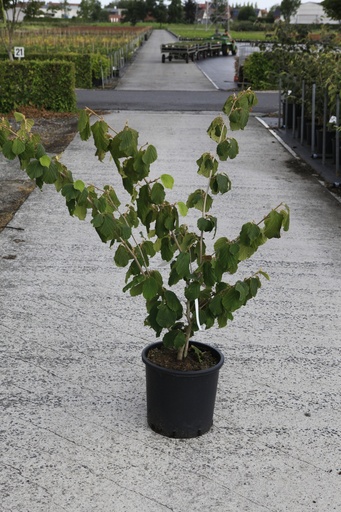
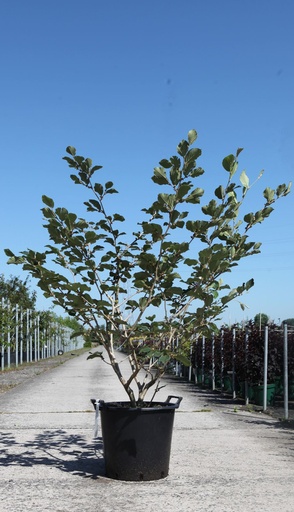
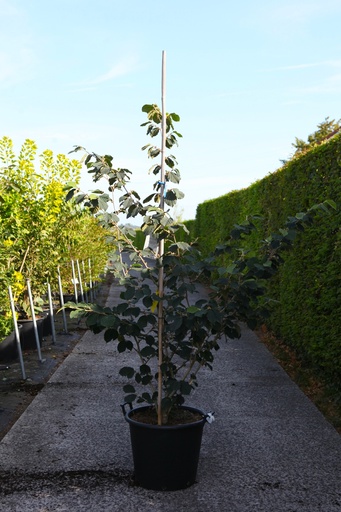
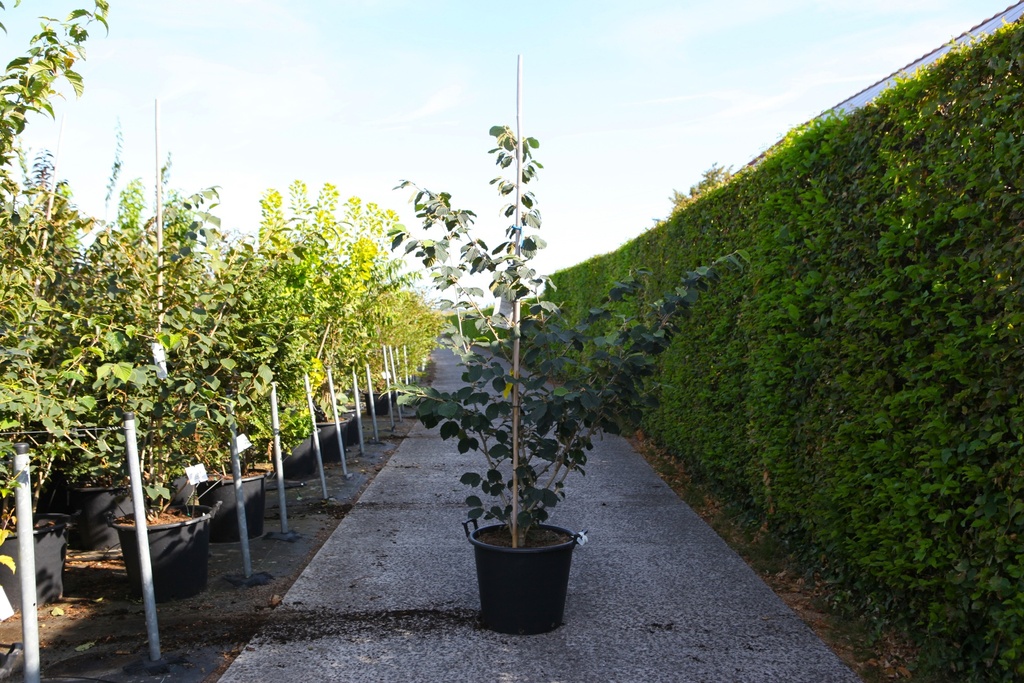
'Pallida' bears pale sulphur-yellow flowers with a purple-tinged heart from December or January into March, and they are richly scented with a sweet hint of honey. The shrub spreads wider than it grows tall, around 3 m high and 4 m across, and its leaves turn yellow with red margins in autumn.
Hamamelis
Witch hazels (Hamamelis) are a small genus of slow-growing deciduous shrubs from East Asia and North America. Depending on the species, their spidery, often fragrant flowers in yellow, orange or red open on the bare branches between October and March and withstand frost well. The hazel-like leaves give warm autumn colour in yellow, orange and red.
Hamamelis intermedia
Hamamelis x intermedia is the hybrid between the Chinese and the Japanese witch hazel, first described from a plant at the Arnold Arboretum. It forms a broad, vase-shaped to rounded shrub of around 4 m with large leaves. Its clustered flowers, from pale yellow through orange to purple-red depending on the cultivar, appear mainly in January and February.
Stanowisko i gleba
Plant in sun or partial shade, sheltered from wind, in a deep, light, humus-rich and moist soil that is acid to neutral. Allow enough room around it, as the roots spread near the surface. It is very hardy in Belgium and the flowers are not harmed by frost.
Przycinanie i pielęgnacja
Mulch the base and water during dry spells, especially in the first years. Prune only occasionally, about every two years, in March just after flowering: remove dead or crossing branches and shorten shoots that spoil the shape. Remove any suckers from the rootstock on grafted plants.
Zastosowanie w ogrodzie
One of the most popular winter-flowering shrubs, ideal as a specimen near the house or along a path, where the scent can be enjoyed. It combines well with other winter bloomers such as daphne and sweet box, and with rhododendrons, and the autumn colour adds a second season of interest.
Cechy rośliny
Dane botaniczne
| Rodzina | Hamamelidaceae |
| Rodzaj | Hamamelis |
| Gatunek | intermedia |
| Odmiana | 'Pallida' |
Kwitnienie
| Okres kwitnienia | january – february |
| Kolor (kwiat) | yellow |
Liście
| Zimozielony | no |
| Kolor (liście) | green |
Pokrój
| Wysokość | 400 cm, 200 cm |
Stanowisko
| Mrozoodporność | strefa 5a (do -28,9 °C) |
| Upały letnie | do strefy upałów 8 |
| Stanowisko | sun, half shade |
| Odporny na wiatr | sheltered |
| Wilgotność gleby | normal |
Pielęgnacja
| Cięcie | march |