
|
s
|
l
|
m
|
k
|
m
|
c
|
l
|
s
|
w
|
p
|
l
|
g
|
|
s
|
l
|
m
|
k
|
m
|
c
|
l
|
s
|
w
|
p
|
l
|
g
|
|
s
|
l
|
m
|
k
|
m
|
c
|
l
|
s
|
w
|
p
|
l
|
g
|
O tej roślinie
Co wyróżnia tę roślinę
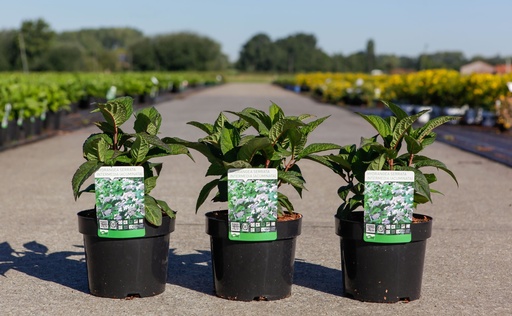
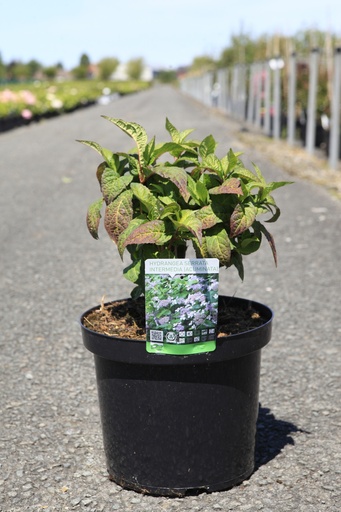
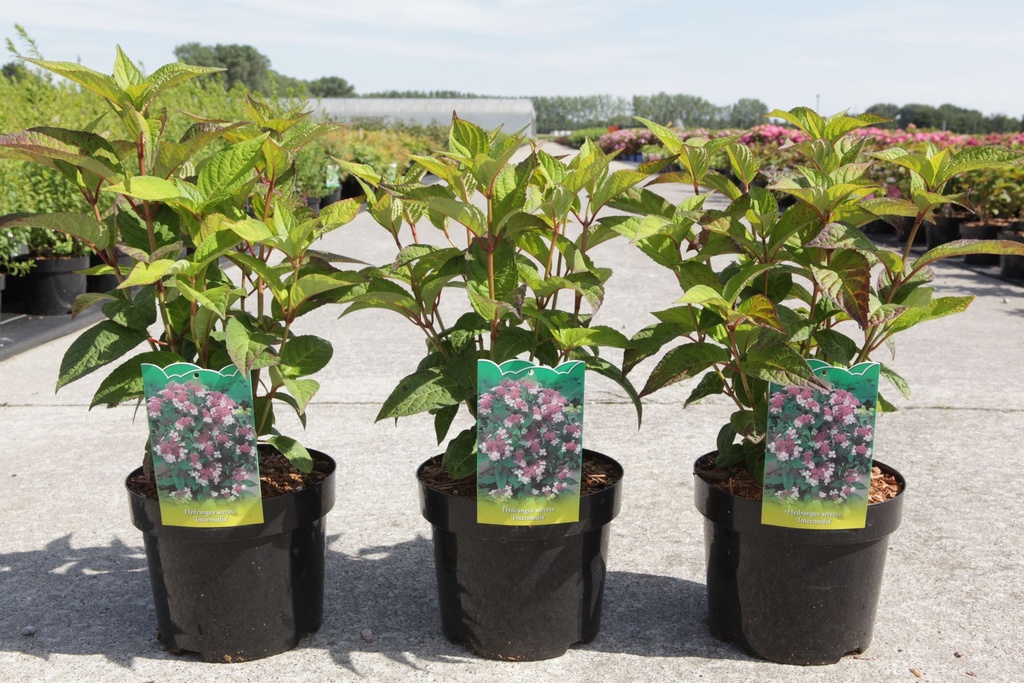
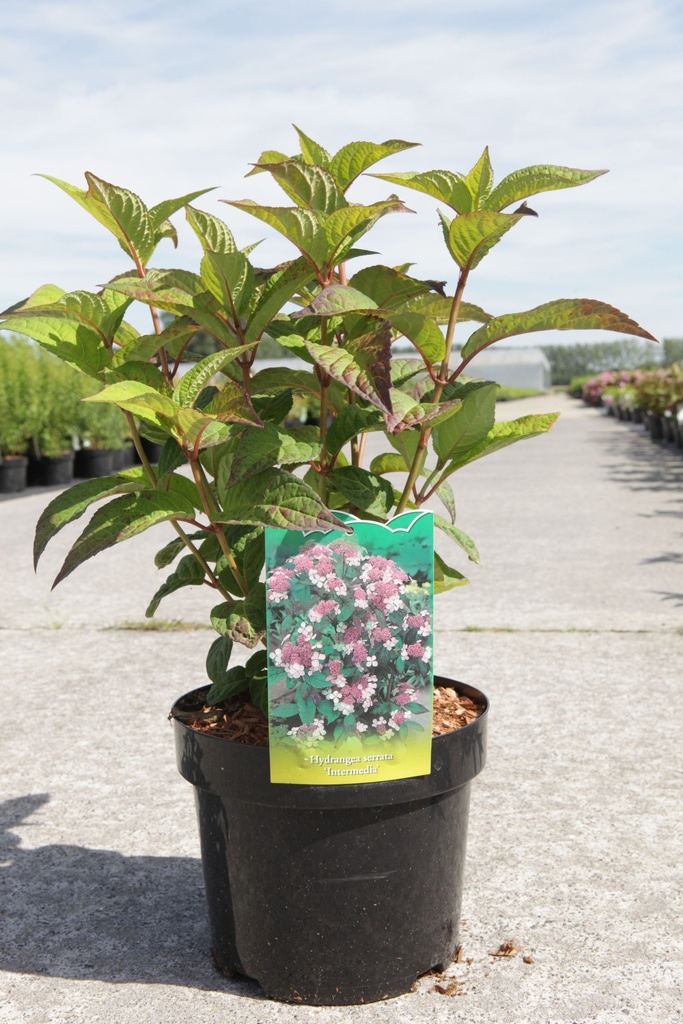
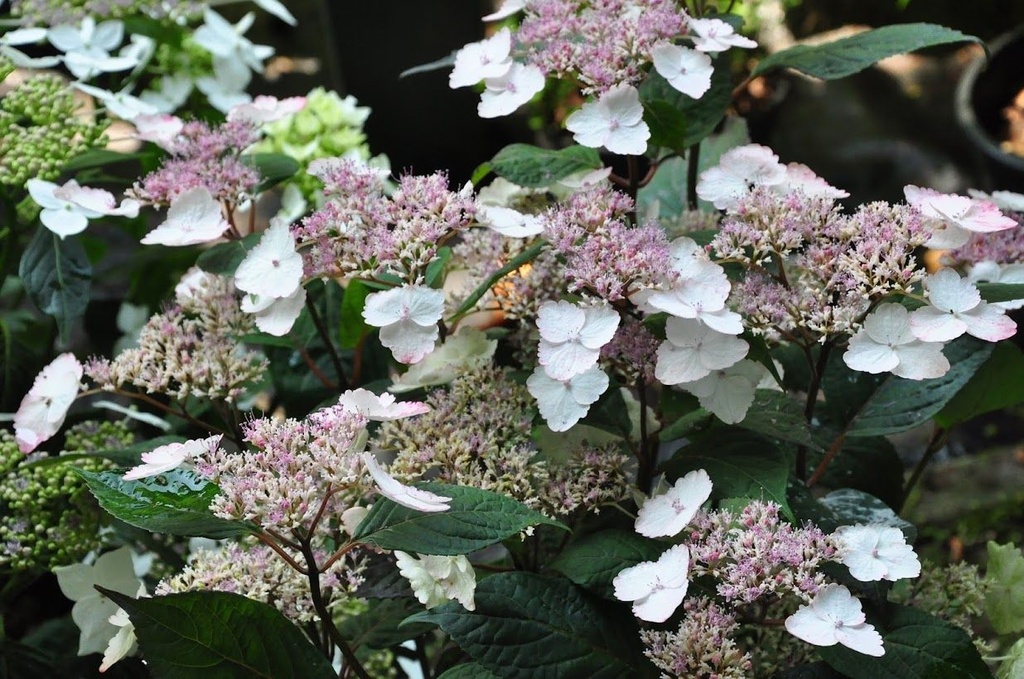
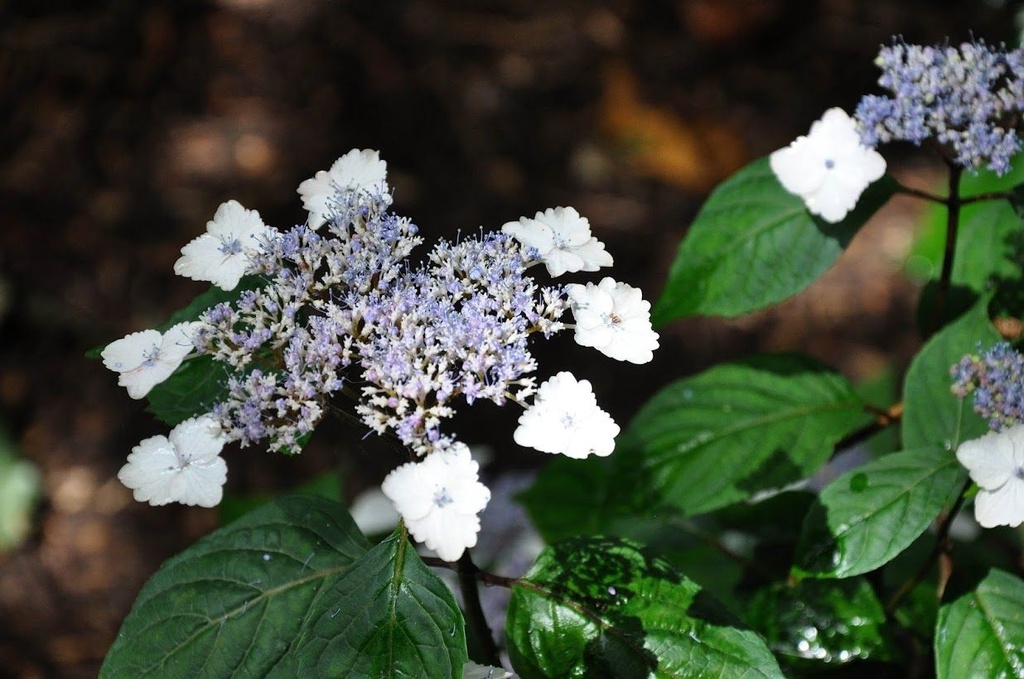
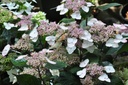
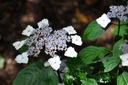
'Intermedia', also listed as 'Acuminata', was introduced in Britain around 1950 by Michael Haworth-Booth. It makes an upright, fairly narrow bush of 1 to 1.2 m with loose, flat heads in which white, finely serrated outer florets frame violet to lilac-pink fertile flowers; late in summer the flowers and leaves both turn red.
Hortensja Hydrangea
Hortensje to krzewy zrzucające liście lub zimozielone oraz samoczepne pnącza pochodzące z Azji Wschodniej i Ameryki Północnej. Każdy kwiatostan łączy drobne kwiaty płodne z większymi, okazałymi kwiatami płonnymi; zależnie od gatunku tworzą kulę, płaską tarczę lub spiczastą wiechę. Kwitną długo, od pełni lata do jesieni, a kwiatostany zmieniają barwę z wiekiem; wiele gatunków ładnie przebarwia się też jesienią. Rozmiary sięgają od niewielkich krzewów po okazy niemal drzewiaste.
Hydrangea serrata
The mountain hydrangea (Hydrangea serrata) comes from the mountain woods of Japan and Korea. It is a compact, slow-growing deciduous shrub, usually about 1 to 1.5 m, with narrower, finely toothed and often darker leaves than the common hydrangea. From June to September it carries mostly flat lacecap heads, sometimes rounded, in blue, mauve, pink or white, and the foliage often colours in autumn.
Stanowisko i gleba
Plant in partial shade with some morning or evening sun but no full midday sun; four to five hours of sun a day bring out the red autumn colour, while deep shade gives few flowers. It wants acid to neutral, humus-rich soil that stays moist; in acid soil many forms flower blue. Native to mountains at 500 to over 2,000 m, it is fully hardy in Belgium.
Przycinanie i pielęgnacja
Flowers on the previous year's wood, and next year's buds form in August just below the old heads, so never prune in autumn or cut back hard. In April remove the faded heads and, once the shrub is in leaf, cut out dead wood and a few of the oldest stems at the base. Water in dry spells, ideally with rainwater, and mulch in spring.
Zastosowanie w ogrodzie
Thanks to its compact size it suits small gardens, shady borders, woodland edges and containers on a shaded terrace. It combines well with hostas, ferns, epimediums and Japanese anemones, and can also be used for a low, informal flowering hedge.
Cechy rośliny
Dane botaniczne
| Rodzina | Hydrangeaceae |
| Rodzaj | Hydrangea |
| Gatunek | serrata |
| Odmiana | 'Intermedia (Acuminata)' |
Kwitnienie
| Okres kwitnienia | july – august |
| Kolor (kwiat) | red, pink |
Liście
| Zimozielony | no |
| Kolor (liście) | green |
| Barwa jesienna | red |
Pokrój
| Wysokość | 100 cm |
Stanowisko
| Mrozoodporność | strefa 6a (do -23,3 °C) |
| Upały letnie | do strefy upałów 9 |
| Stanowisko | sun, half shade |
| Wilgotność gleby | moist |
Zastosowanie
| Typ (zastosowanie) | shrub, solitary, in group, terrace plant |
Pielęgnacja
| Cięcie | april |