

|
s
|
l
|
m
|
k
|
m
|
c
|
l
|
s
|
w
|
p
|
l
|
g
|
|
s
|
l
|
m
|
k
|
m
|
c
|
l
|
s
|
w
|
p
|
l
|
g
|
|
s
|
l
|
m
|
k
|
m
|
c
|
l
|
s
|
w
|
p
|
l
|
g
|
O tej roślinie
Co wyróżnia tę roślinę
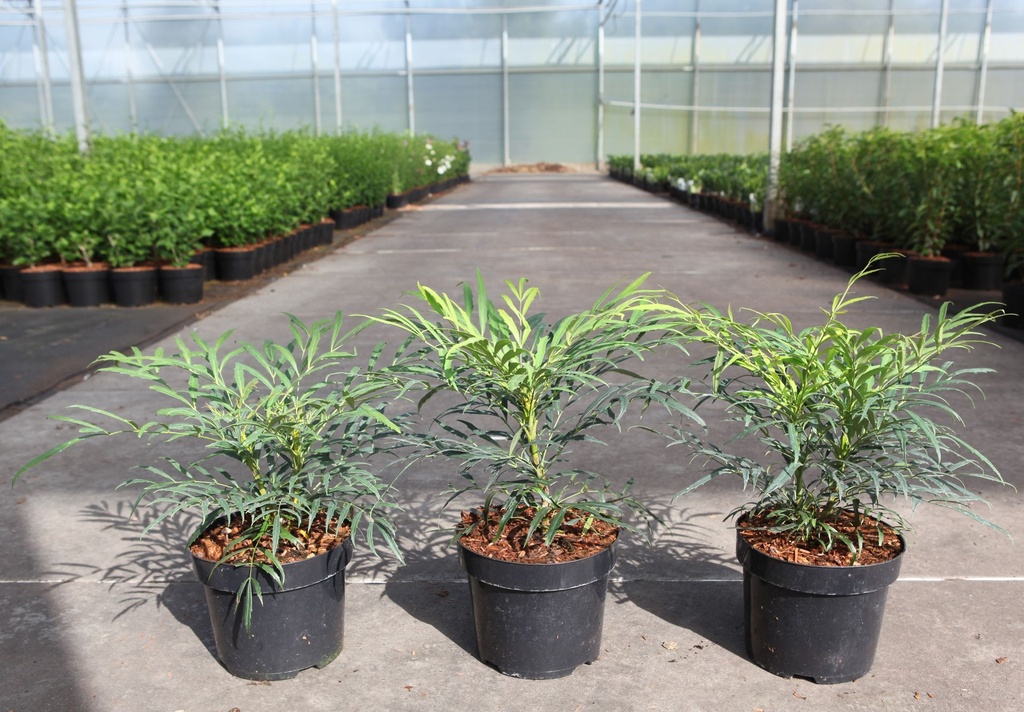
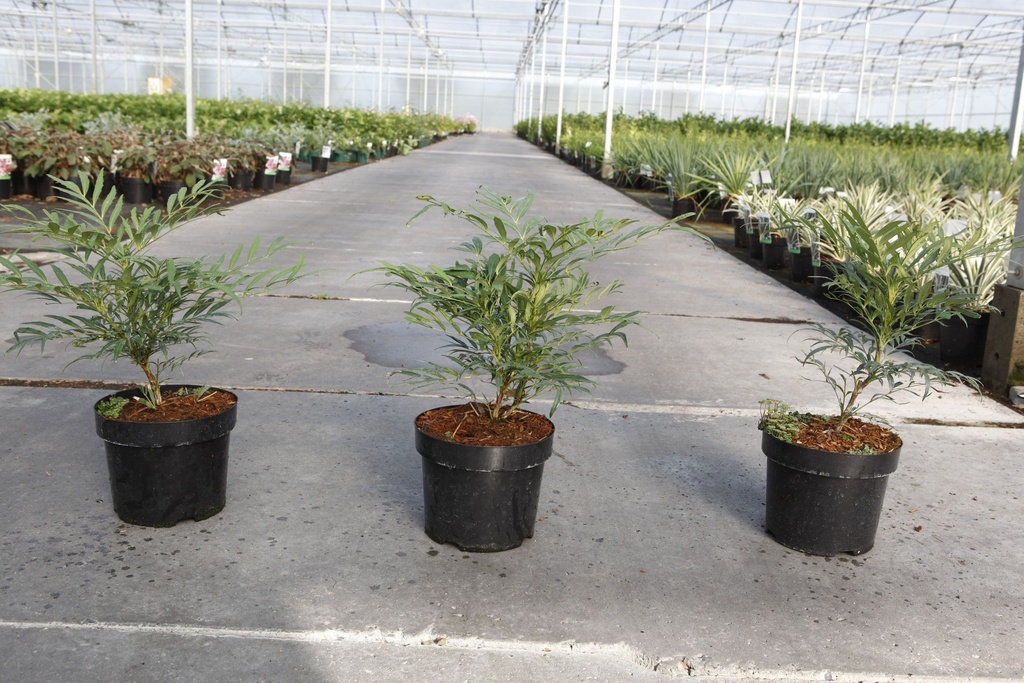
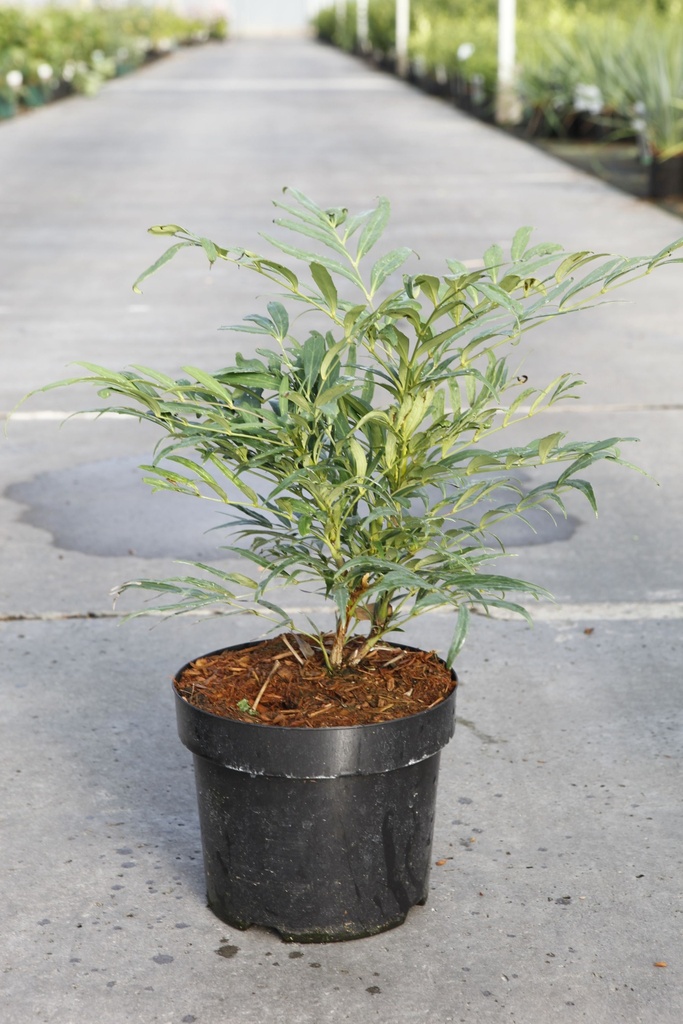
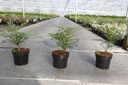
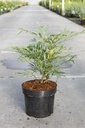
SWEET WINTER ('Minganpi'), from the French breeder Hortival Diffusion, stays compact at about 1 m high and wide. Its fine, dark green foliage has no sharp teeth and starts bronze in spring; dark blue berries follow the winter flowers. Hardy to about −20 °C, it suits mass planting as well as containers on a terrace.
Mahonia
Mahonias (Mahonia) are evergreen shrubs, some 70 species from North America and Asia, closely related to barberries. They are grown for their leathery, pinnate leaves, often spiny like holly, and for their scented yellow flower clusters between autumn and early spring, which feed bees when little else is in flower. Blue-black berries follow.
Mahonia eurybracteata
Mahonia eurybracteata is a Chinese species from which several spineless garden mahonias have been selected. It forms a compact shrub of about 1 to 1.5 m with long leaves divided into narrow, soft leaflets, giving it a fern- or bamboo-like look. Pale yellow, lightly scented flower spikes open from autumn into early winter, followed by blue-black berries with a silvery bloom.
Stanowisko i gleba
Thrives in partial or full shade, with at most some morning sun, in a cool, humus-rich and well-drained soil; heavy ground needs a drainage layer. Moderately hardy: plant it out of cold winds, protect young plants with fleece in hard winters, and in very cold areas grow it in a pot.
Przycinanie i pielęgnacja
Water regularly in the first year, then mulch and water only during prolonged heat. No pruning is needed. Disease resistance is good and pests are rare; after heavy snowfall, shake the snow off so the supple branches do not break.
Zastosowanie w ogrodzie
Because the foliage has no spines, it can go along paths and border edges and in pots on a shaded terrace. It suits Japanese-style and contemporary gardens, with ferns, hellebores and nandinas. Bees visit the flowers late in the season, and the berries feed birds and can be eaten once cooked.
Cechy rośliny
Dane botaniczne
| Rodzina | Berberidaceae |
| Rodzaj | Mahonia |
| Gatunek | eurybracteata |
| Odmiana | 'Minganpi' |
| Nazwa handlowa | Sweet Winter (PBR) |
Kwitnienie
| Okres kwitnienia | august – october |
| Kolor (kwiat) | yellow |
Liście
| Zimozielony | yes |
| Kolor (liście) | green |
Pokrój
| Wysokość | 120 cm, 100 cm |
Stanowisko
| Mrozoodporność | strefa 7a (do -17,8 °C) |
| Upały letnie | do strefy upałów 8 |
| Stanowisko | half shade |
Pielęgnacja
| Cięcie | march – april |
Wyłączne prawo do odmiany
Mahonia eurybracteata 'Minganpi' SWEET WINTER (PBR) is subject to European Plant Breeders Rights under nr. 20090364. Asexual propagation and/or use of the trademark without license are prohibited.