Actinidia kolomikta
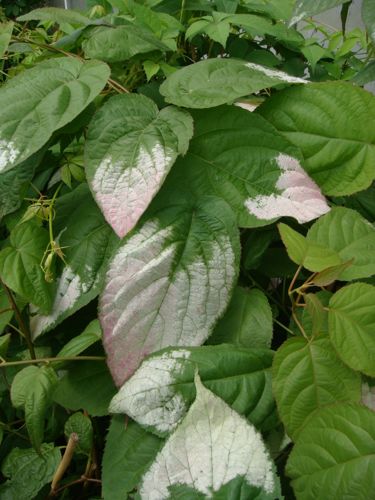
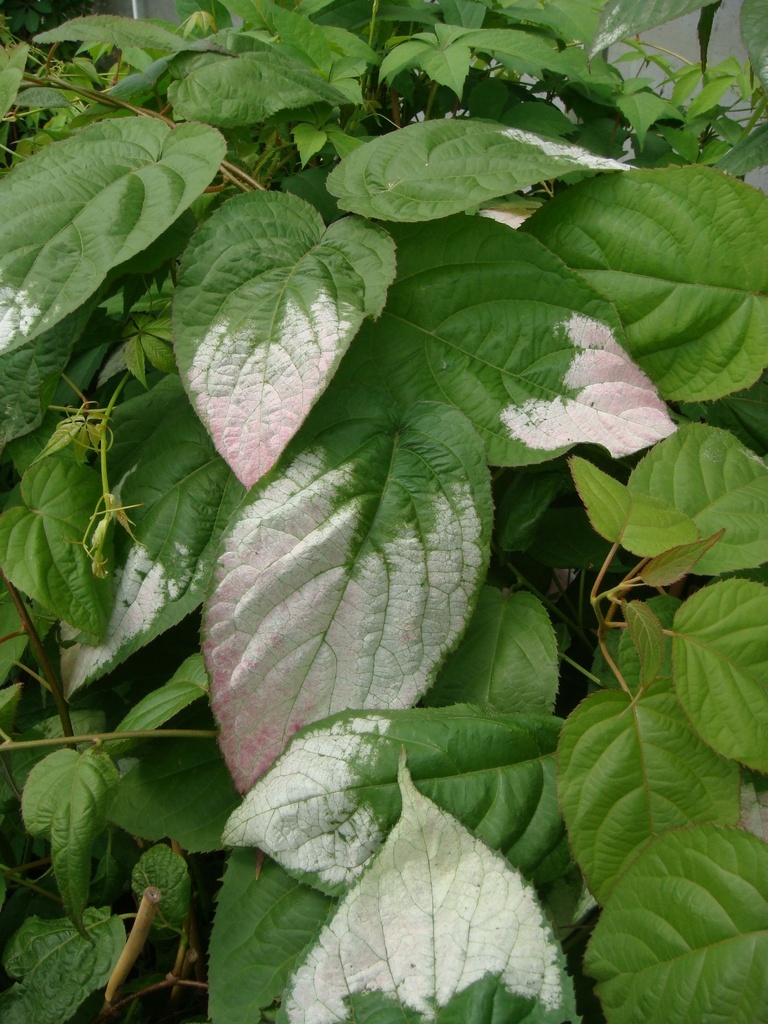
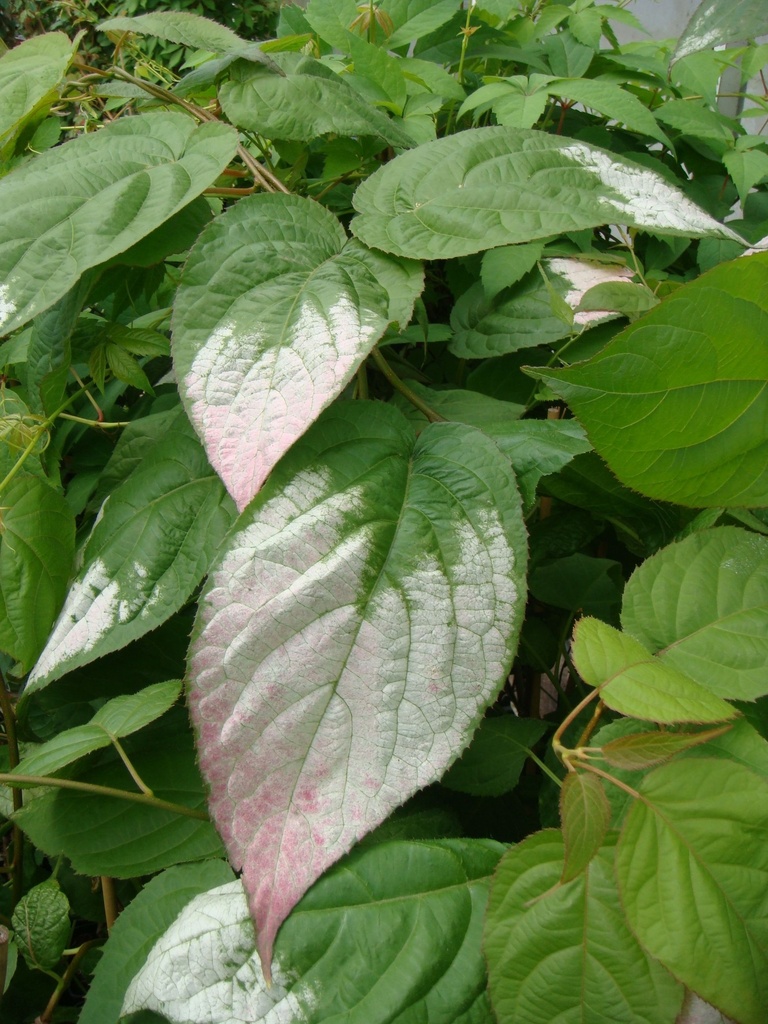
Actinidia kolomikta is a relatively fast-growing, deciduous, woody vine which typically grows 4,5m - 6m and features tiny, slightly fragrant, greenish-white flowers in early summer. Flowers are not particularly showy since they are often hidden by the foliage. The male has lovely pink, white, and green variegated leaves and small flowers that are fragrant and cream-covered. Greenish-yellow, 3 cm long, edible fruits appear on female plants in early fall. This species needs both a male and female plant to produce its sweet, grape-sized fruit.
Flowering period
Planting period
About this plant
Hardy kiwi Actinidia
Kiwi vines (Actinidia) are deciduous twining climbers from the temperate forests of eastern Asia, mainly China, Japan and the Russian Far East. They are grown for their edible fruits as well as for their large, decorative leaves. Most species carry male and female flowers on separate plants, so a male plant is usually needed nearby to get fruit.
Actinidia kolomikta
The variegated kiwi (Actinidia kolomikta) comes from northeastern Asia, from China and Korea to Japan and the Russian Far East. It is grown above all for its foliage: the heart-shaped leaves unfold bronze, then many turn white and pink towards the tip around flowering, before colouring again in autumn. Small, fragrant white flowers appear in June.
Location and soil
It colours best in a sunny but not scorching spot, for example against an east- or southeast-facing wall; too much shade or fertiliser weakens the variegation. It prefers a humus-rich, fresh, well-drained, neutral to acid soil and dislikes chalk. It is hardy in Belgium, but a sheltered position protects the young shoots from late frost.
Pruning and care
A moderate grower that needs little pruning: if required, shorten the season's shoots by about a third in autumn, and after a harsh winter cut back damaged stems in spring. Guide the twining stems onto a support. Mulch the base in autumn and give organic fertiliser in spring. Cats are drawn to the young shoots and may chew them.
Use in the garden
Thanks to its moderate size it suits smaller gardens: on a wall trellis, a garden shed, a fence or in a large container. It combines well with summer-flowering clematis and shrubby hydrangeas. Male plants often show the strongest leaf colour, while female plants bear small, edible green fruits in September when a male grows nearby.
Characteristics
Botanical
| Family | Actinidiaceae |
| Genus | Actinidia |
| Species | kolomikta |
Flowering
| Flowering period | april |
| Colour (flower) | white, yellow |
| Flowers | fragrant |
Foliage
| Evergreen | no |
| Colour (foliage) | green, white, pink, silver |
Growth habit
| Height | 400 cm |
Location
| Winter hardiness | -30 °C |
| Soil type | neutral |
| Location | sun, half shade |
| Wind resistant | sheltered |
| Soil moisture | moist, normal |
Use
| Type (use) | climbing |