
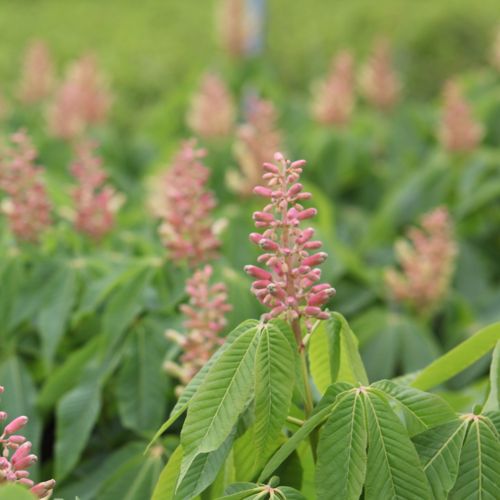
Aesculus mutabilis 'Induta'
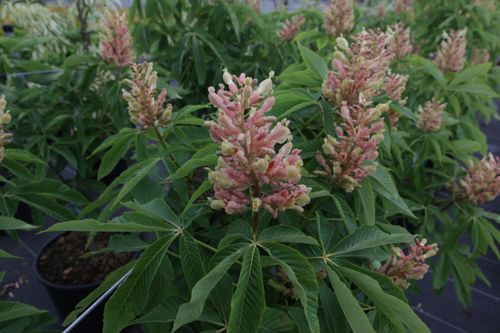
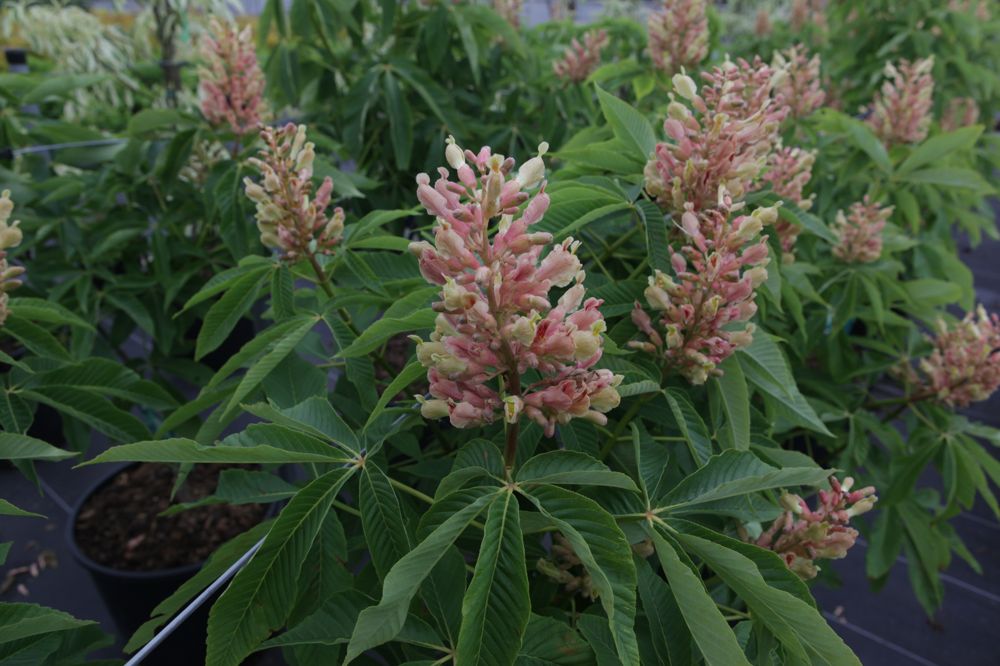
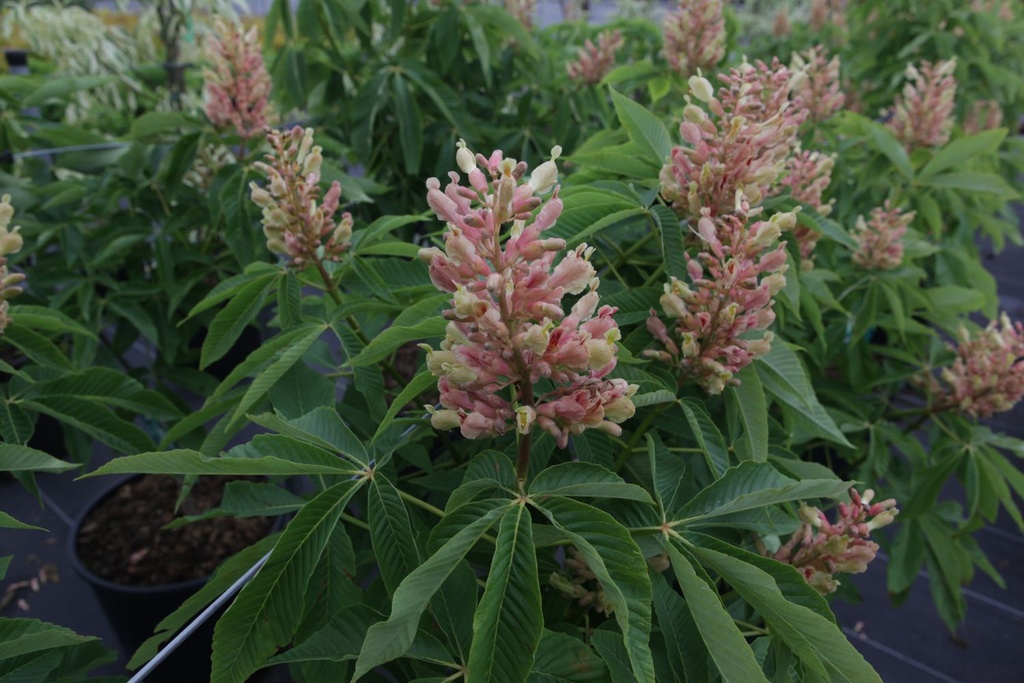
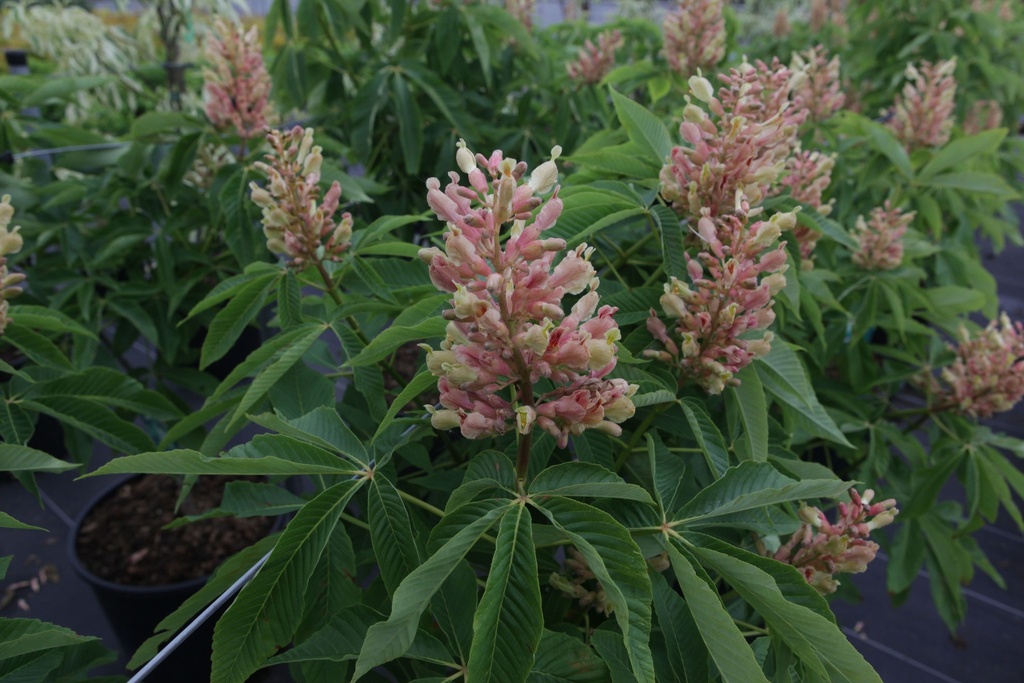
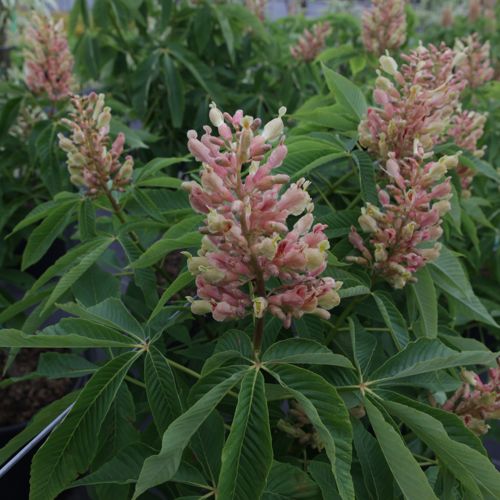
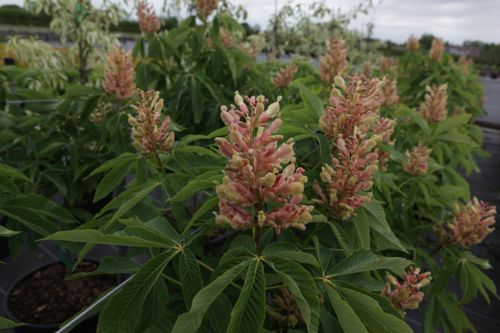
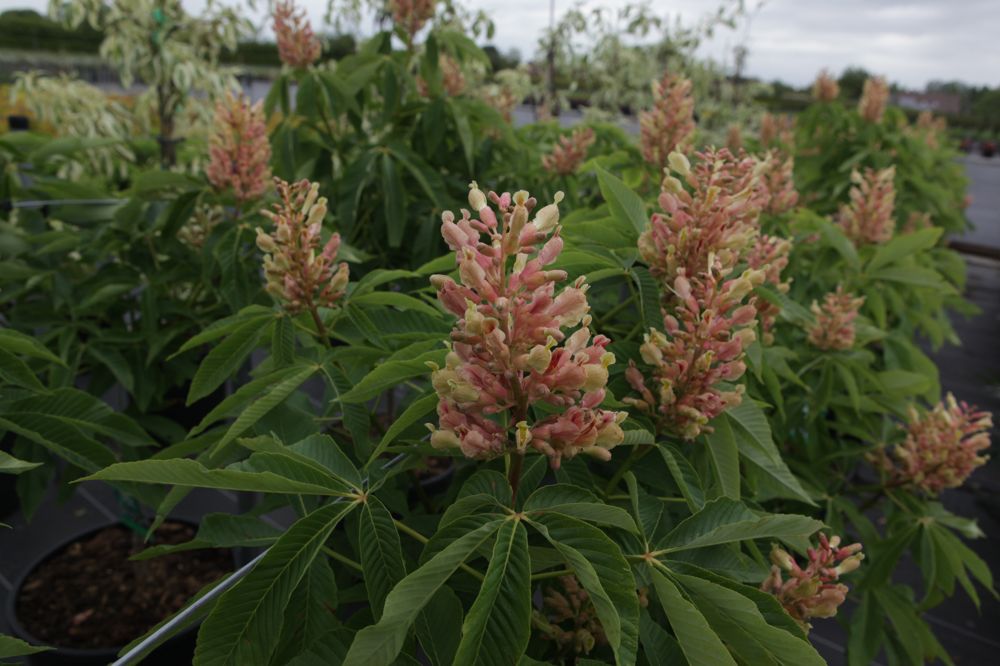
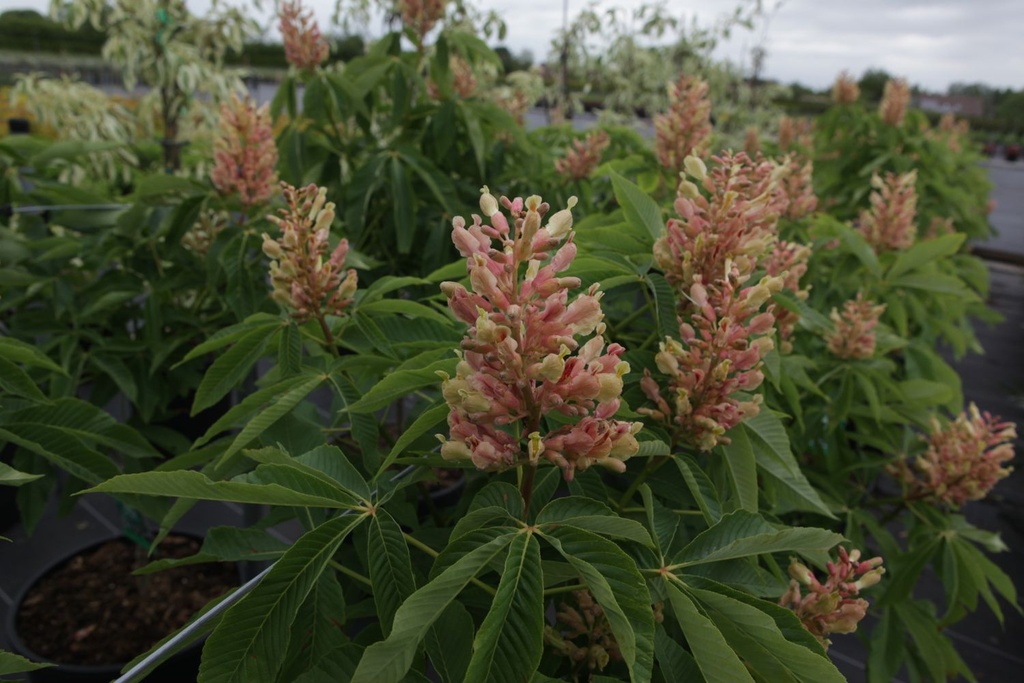
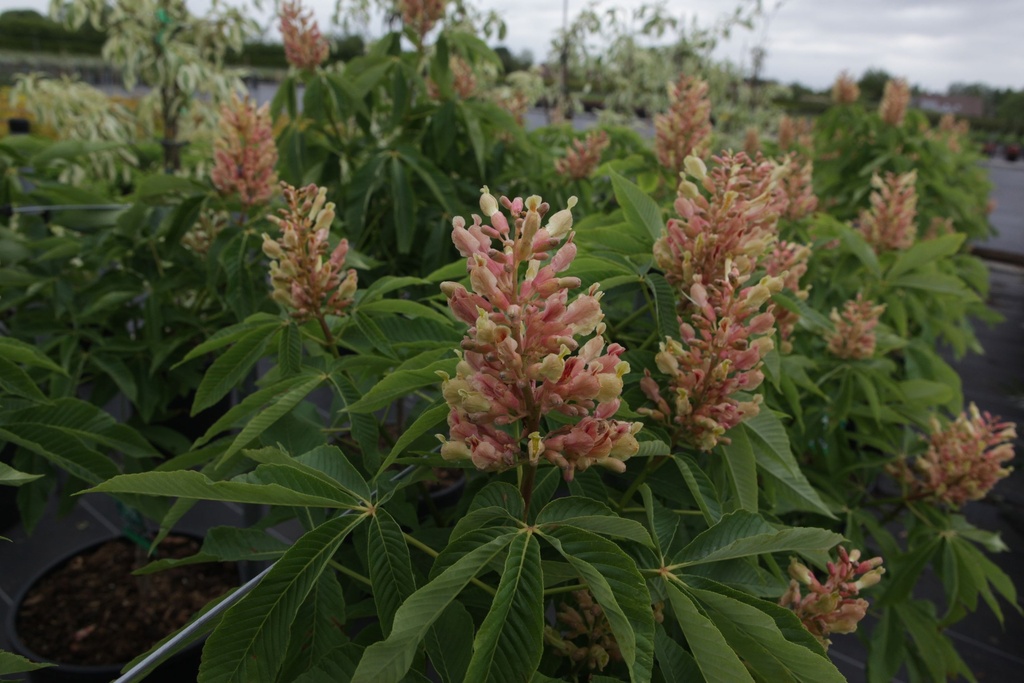
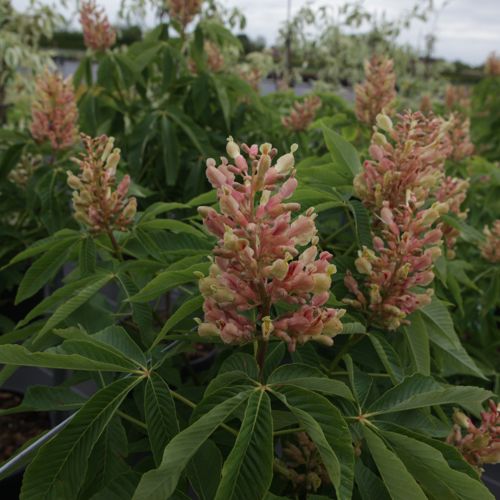
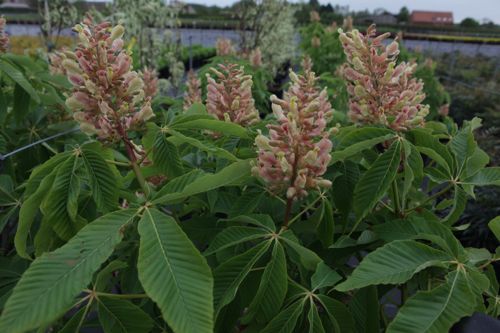
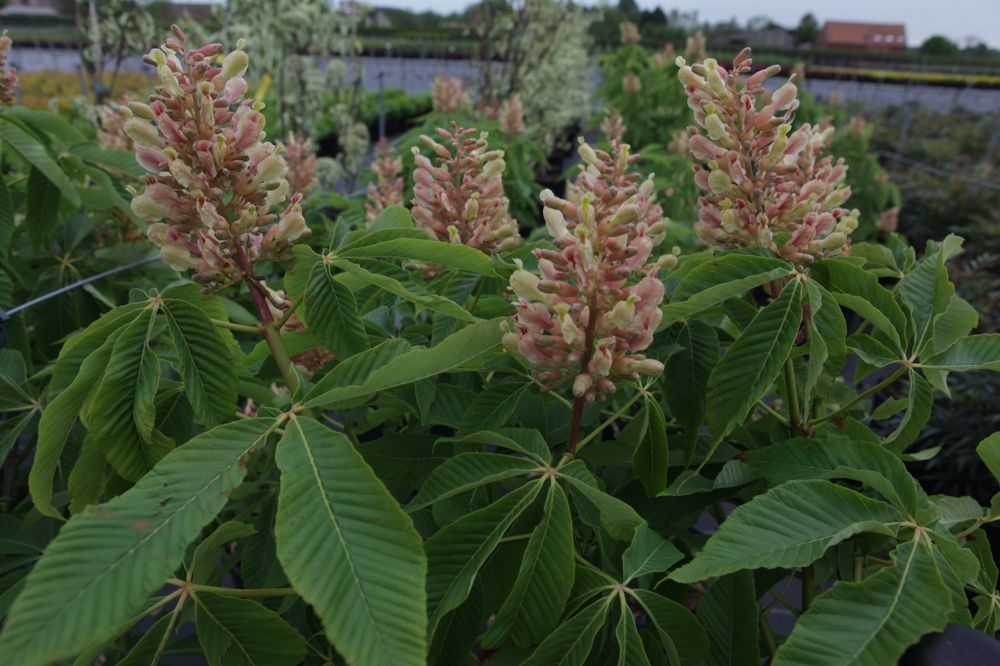
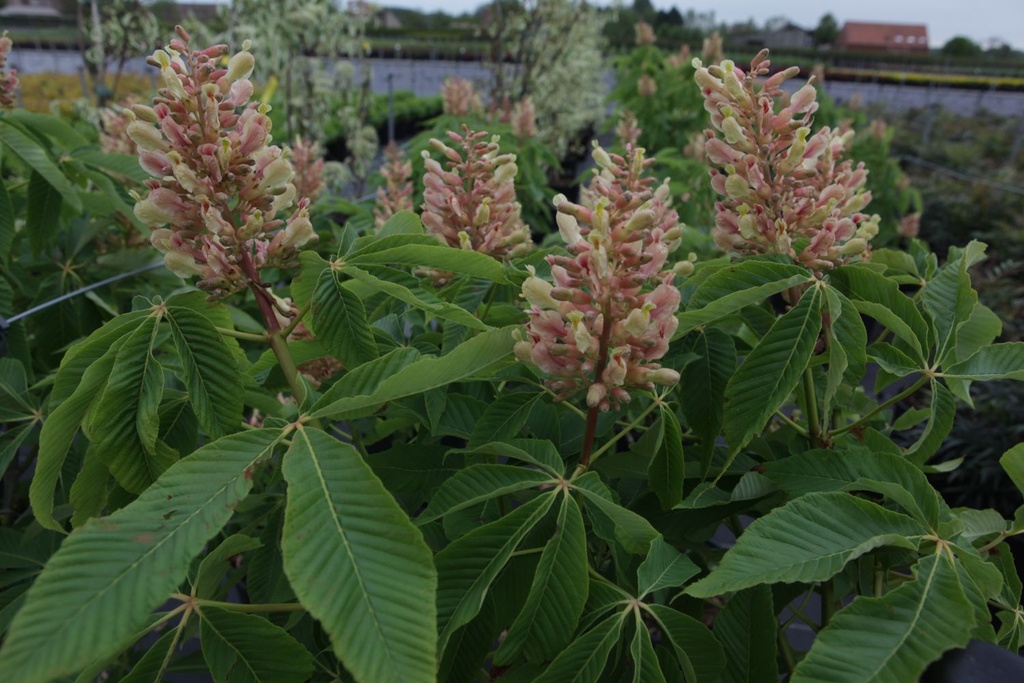
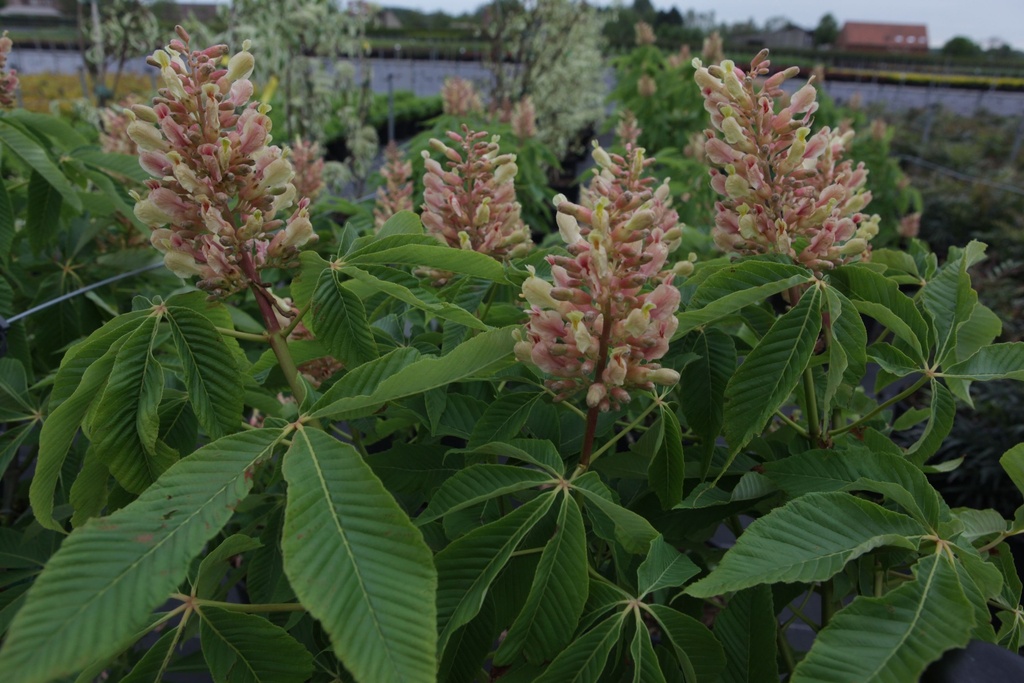
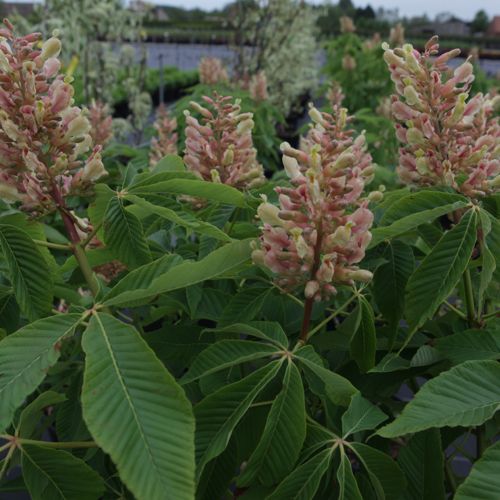
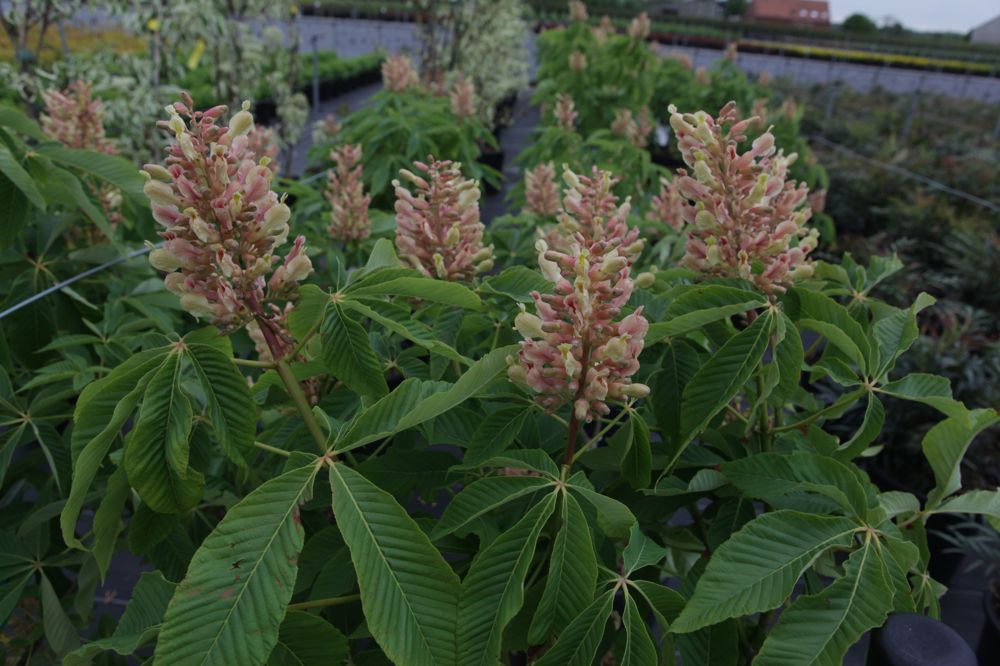
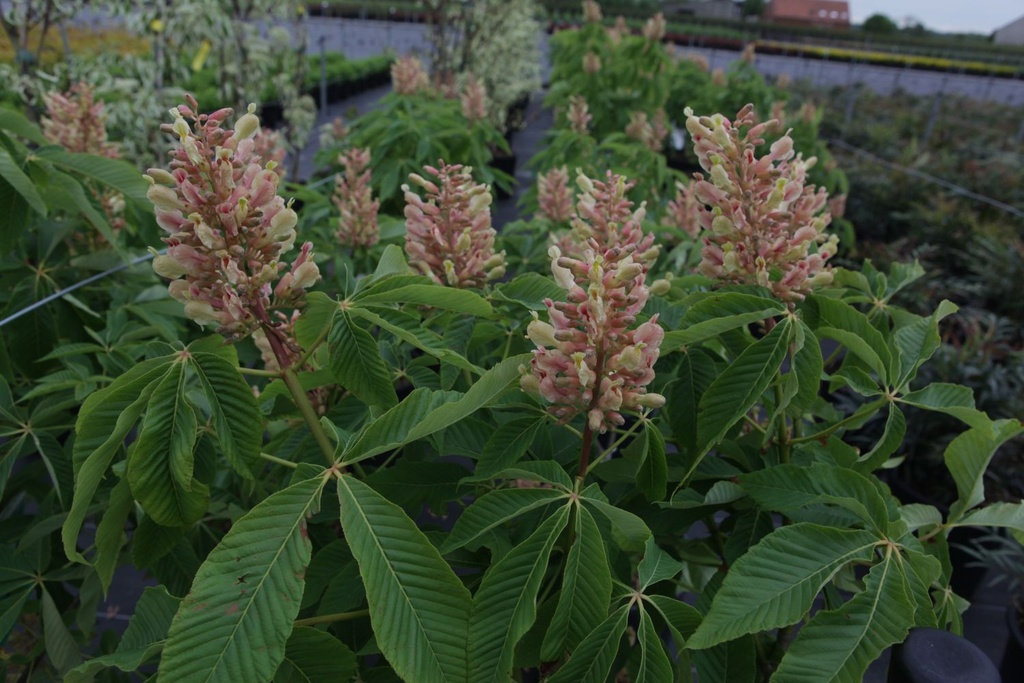
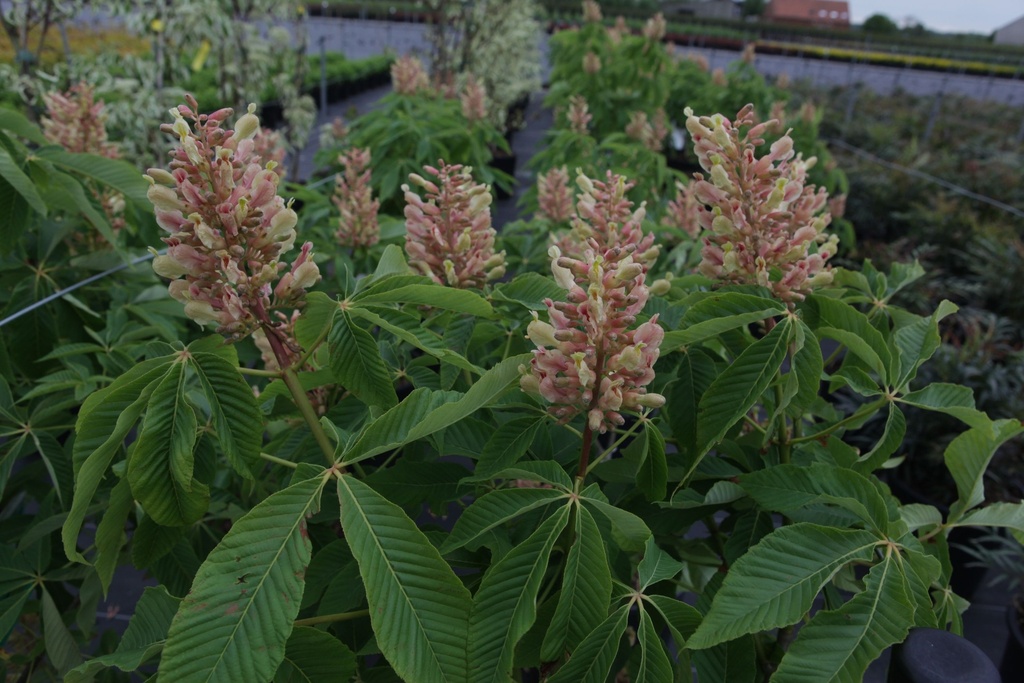
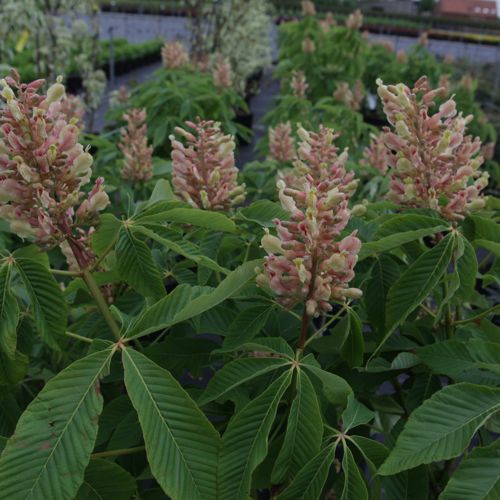
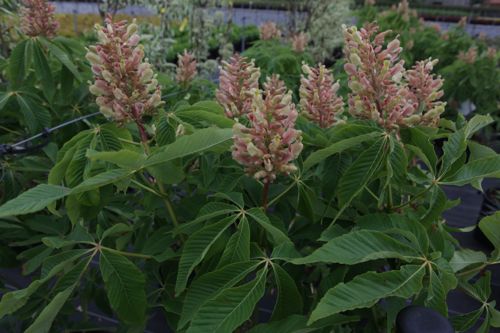
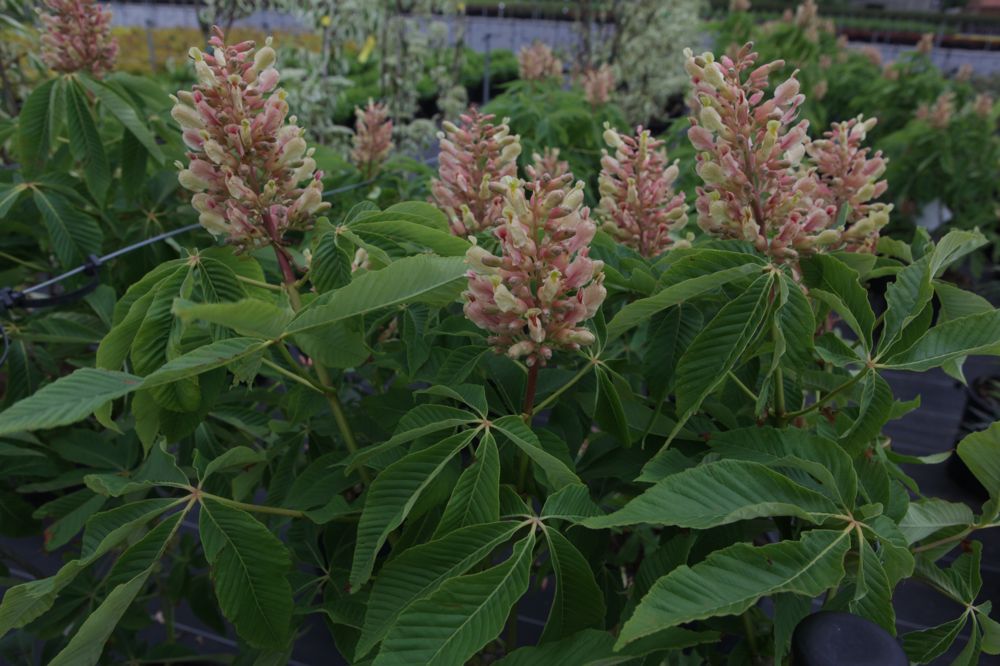
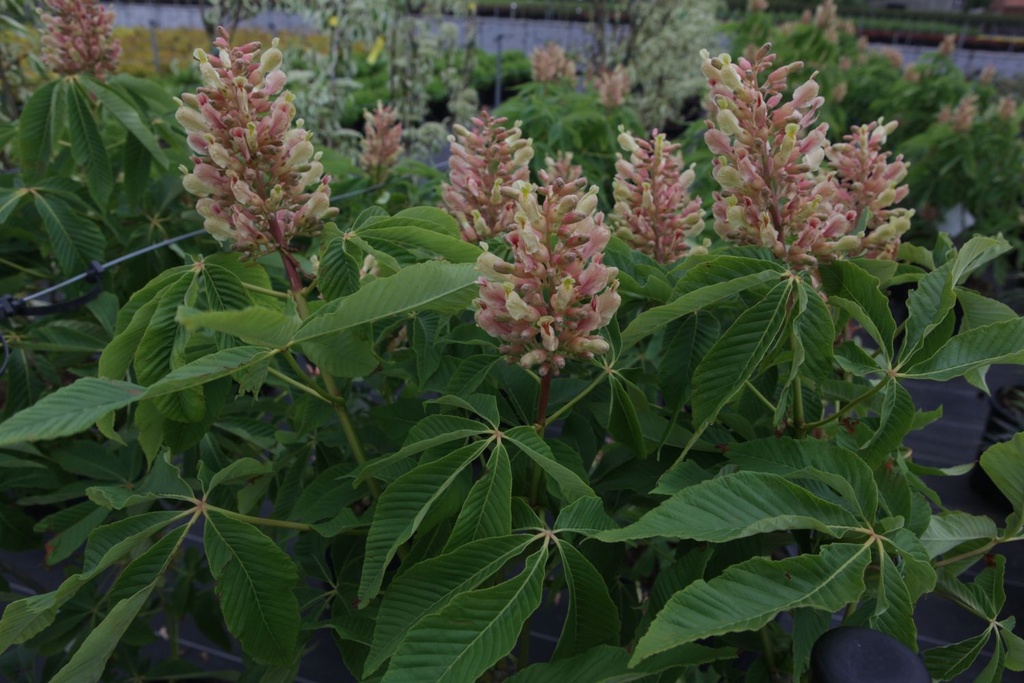
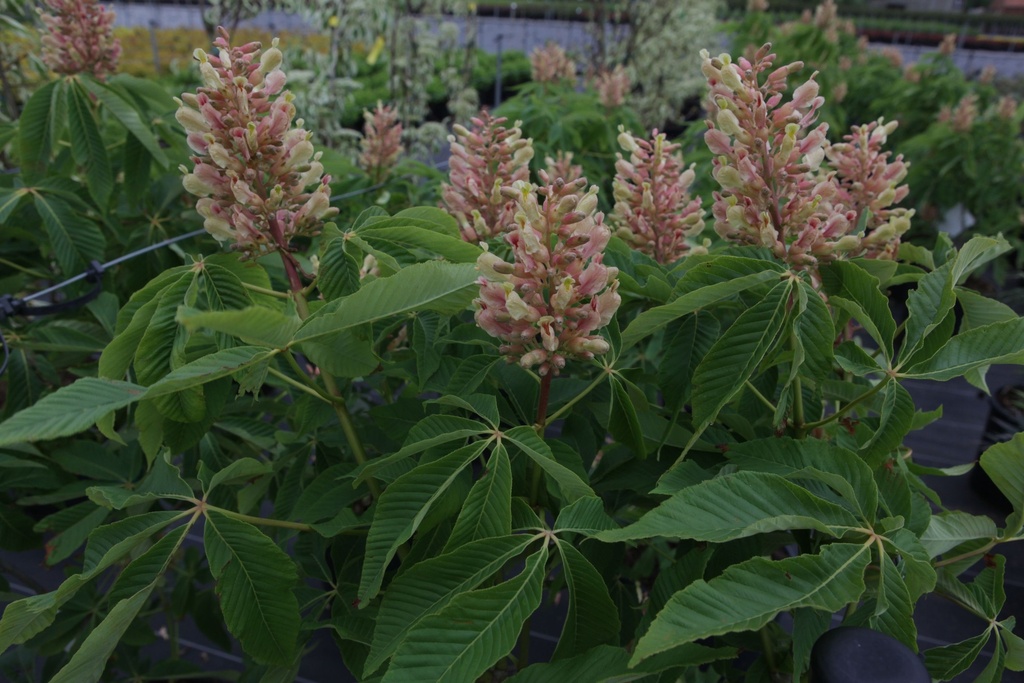
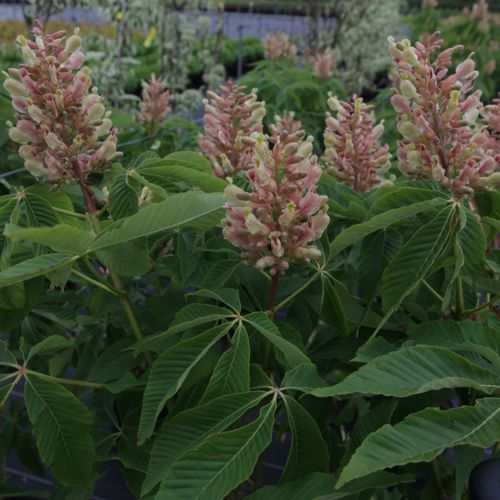
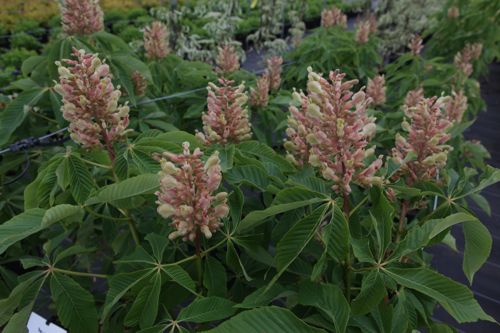
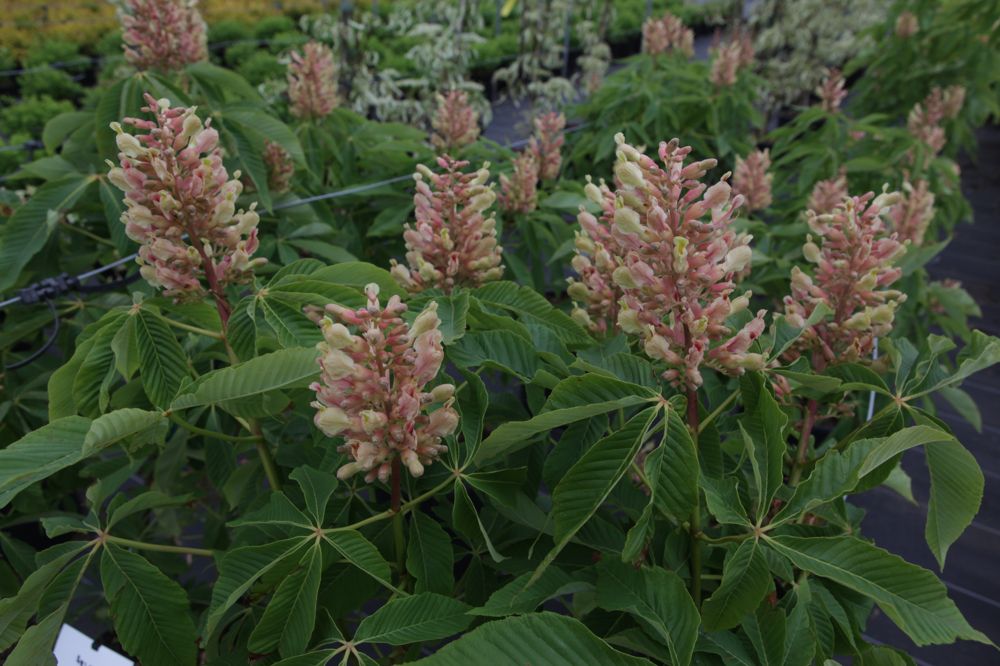
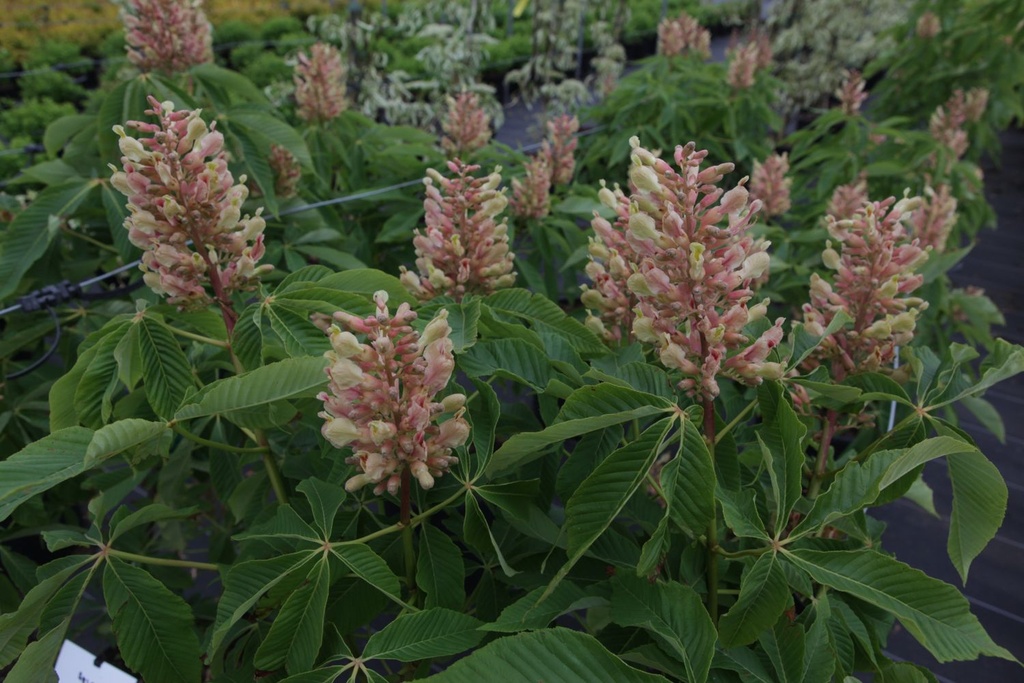
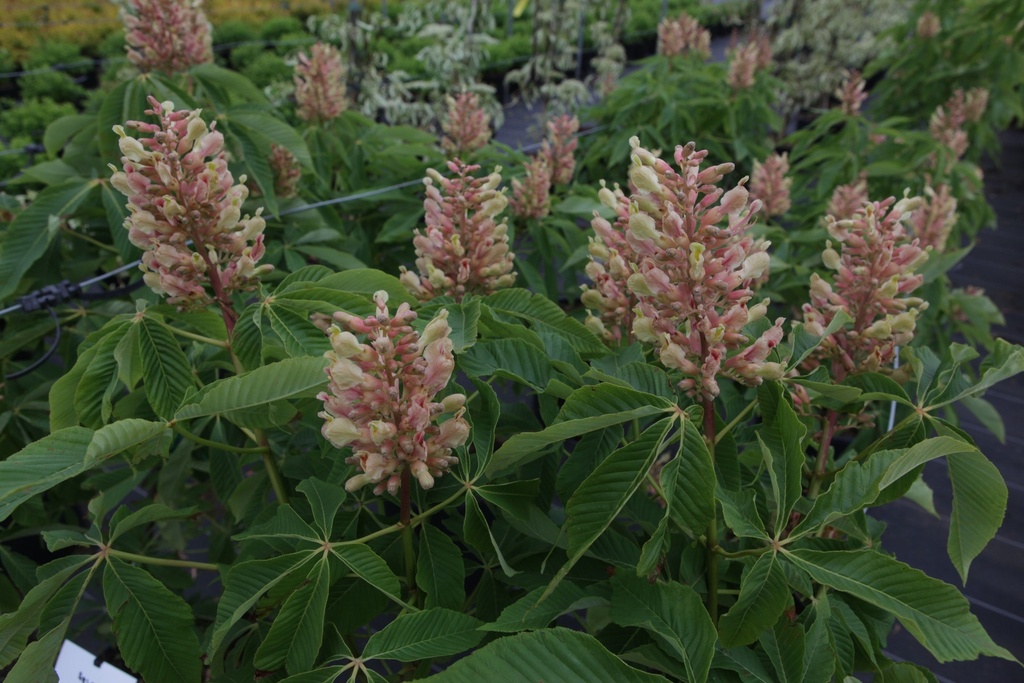
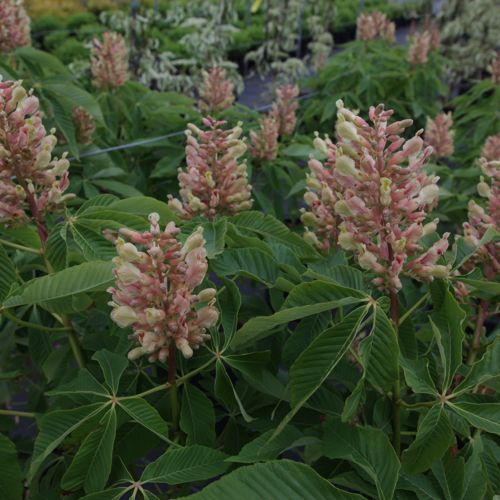
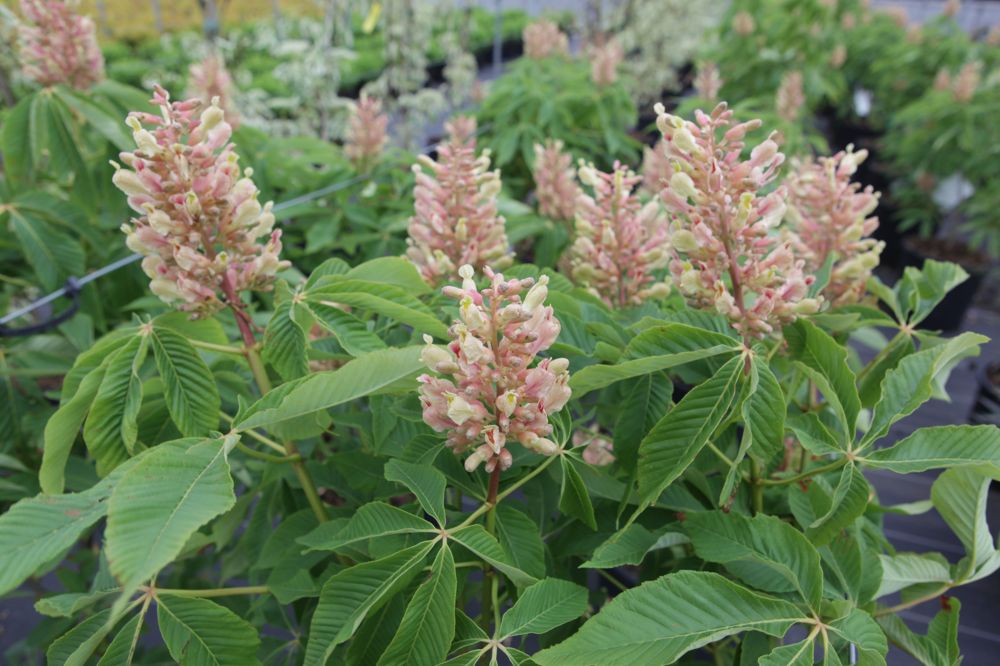
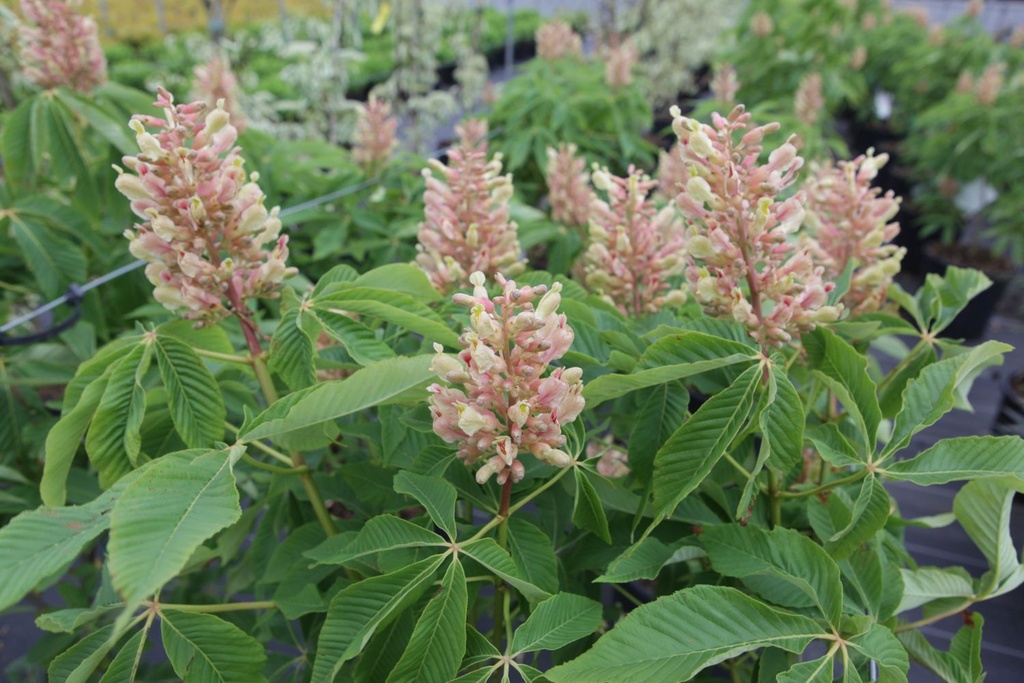
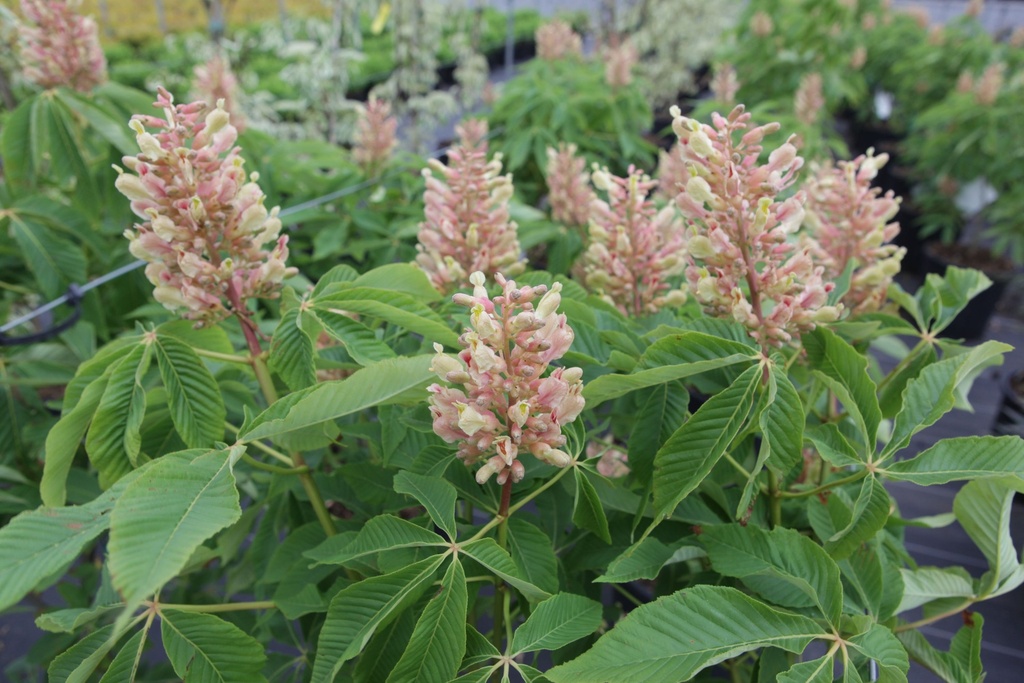
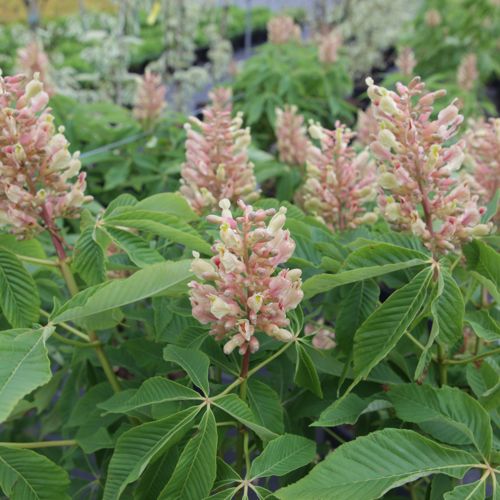
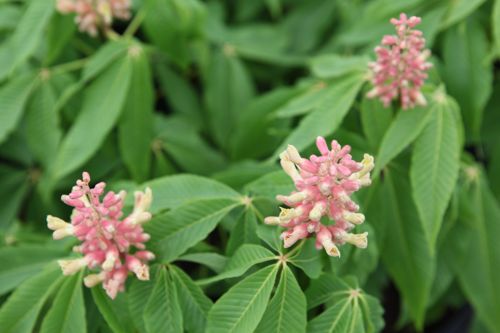
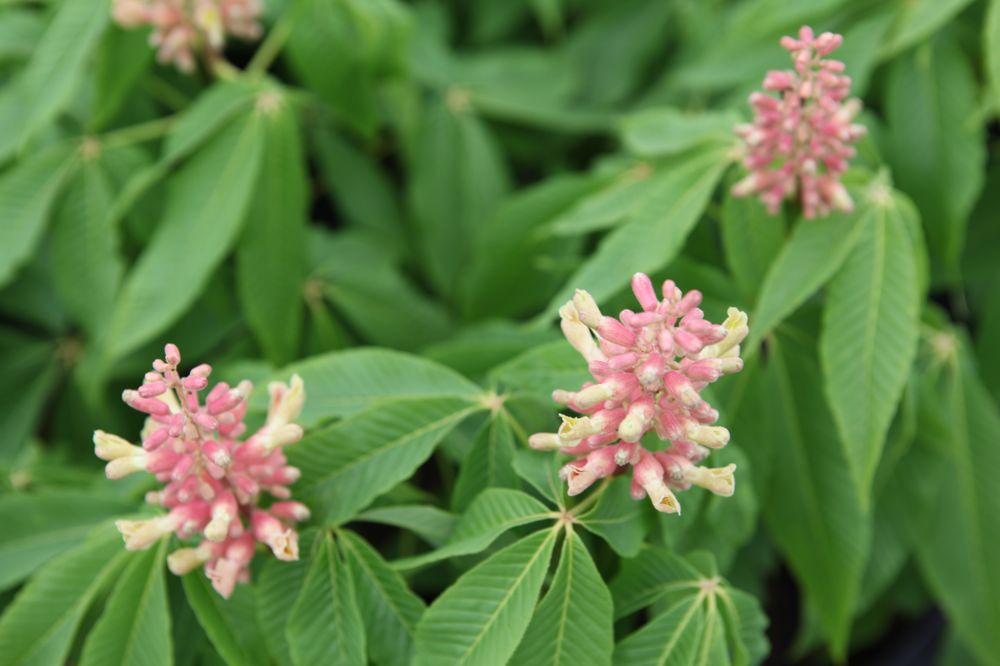
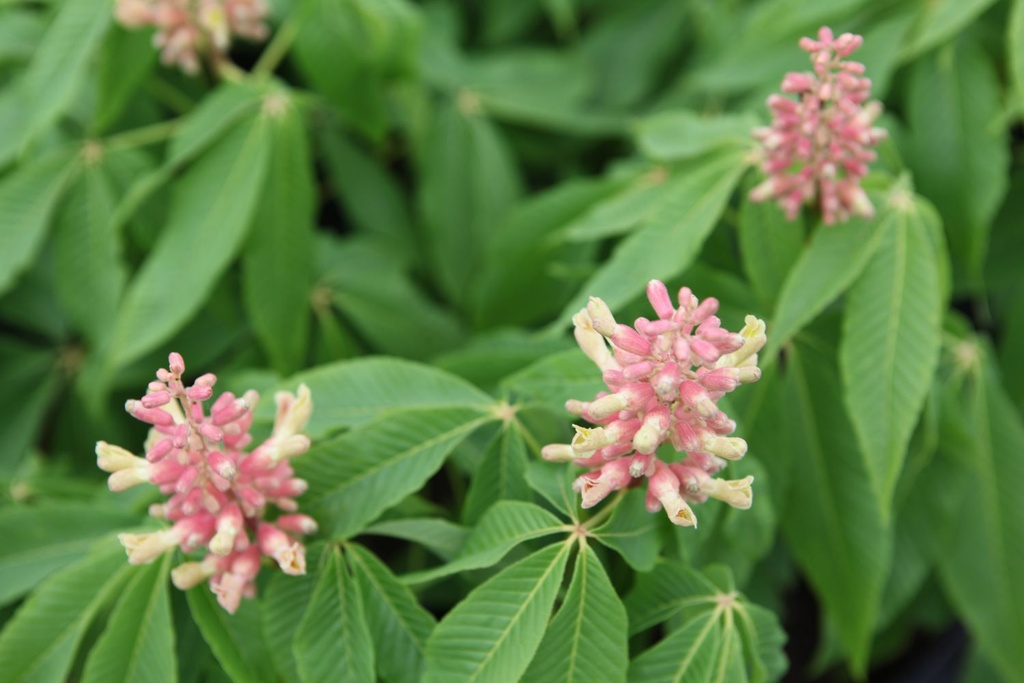
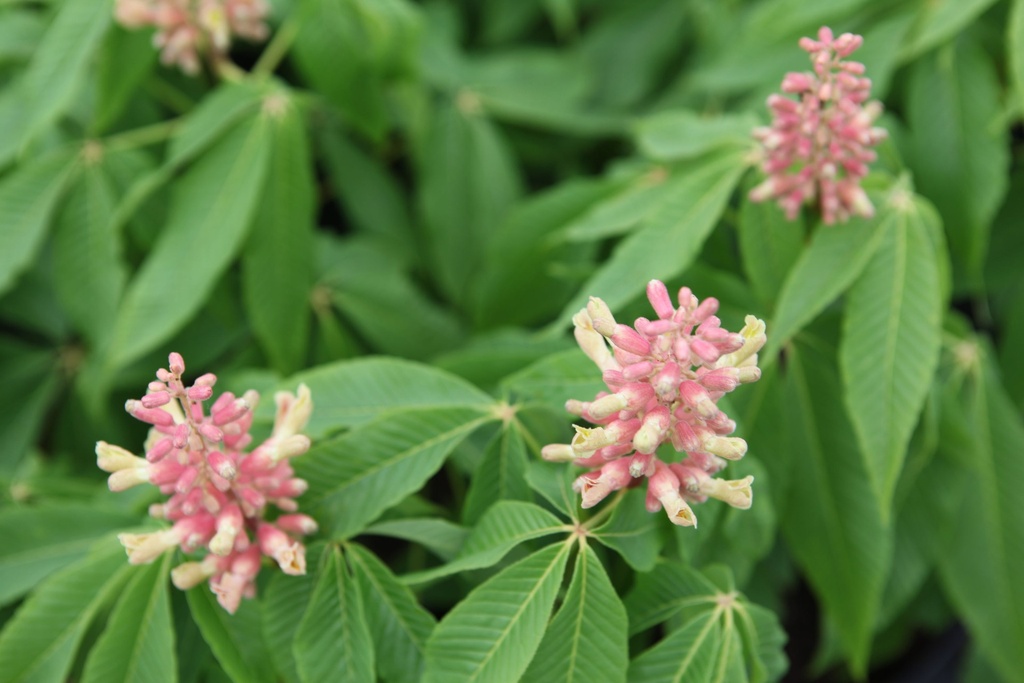
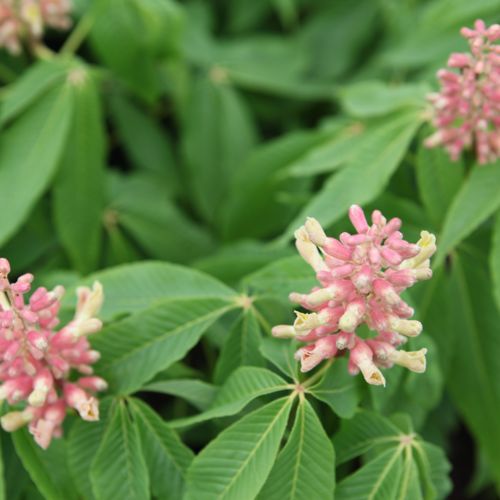
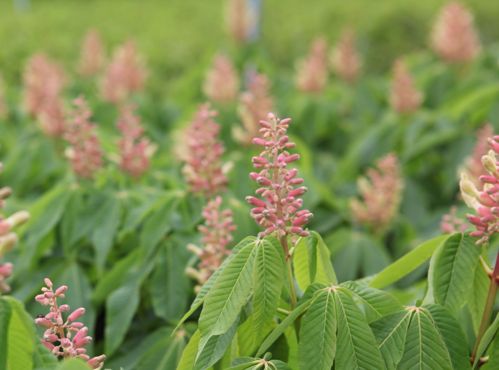
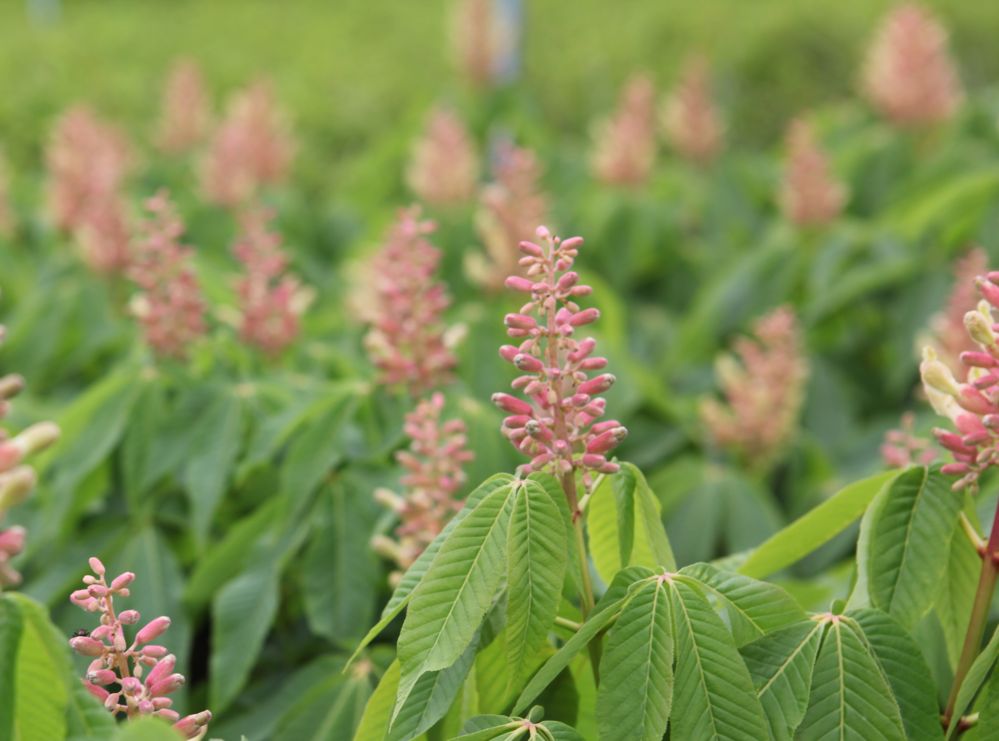
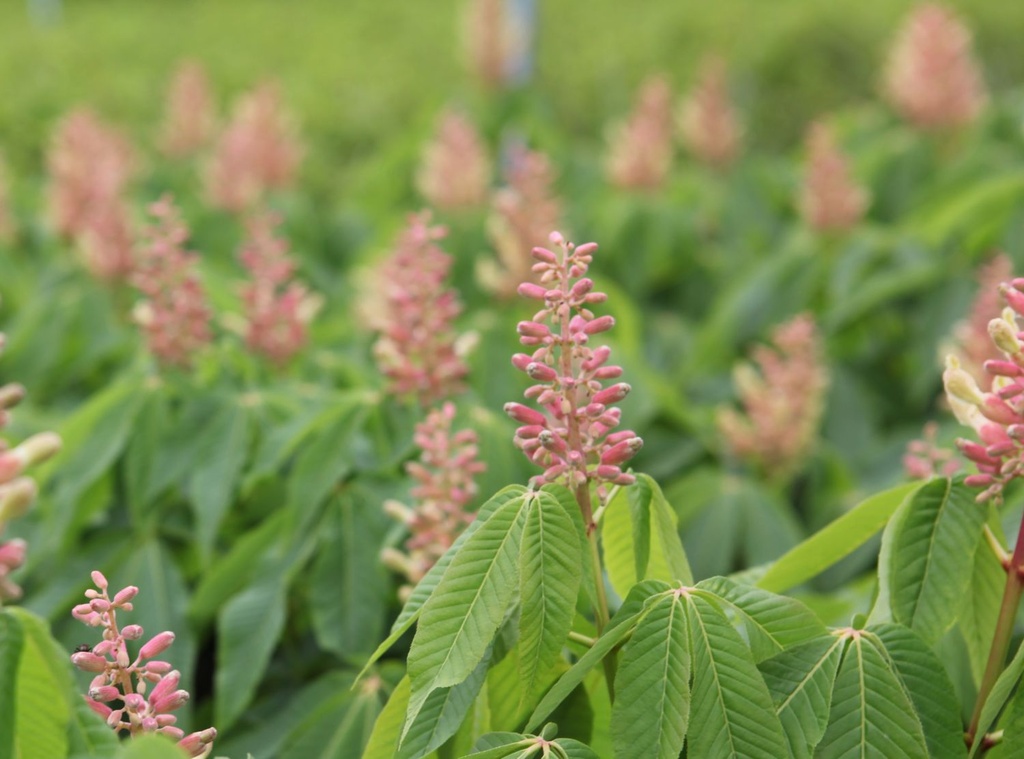
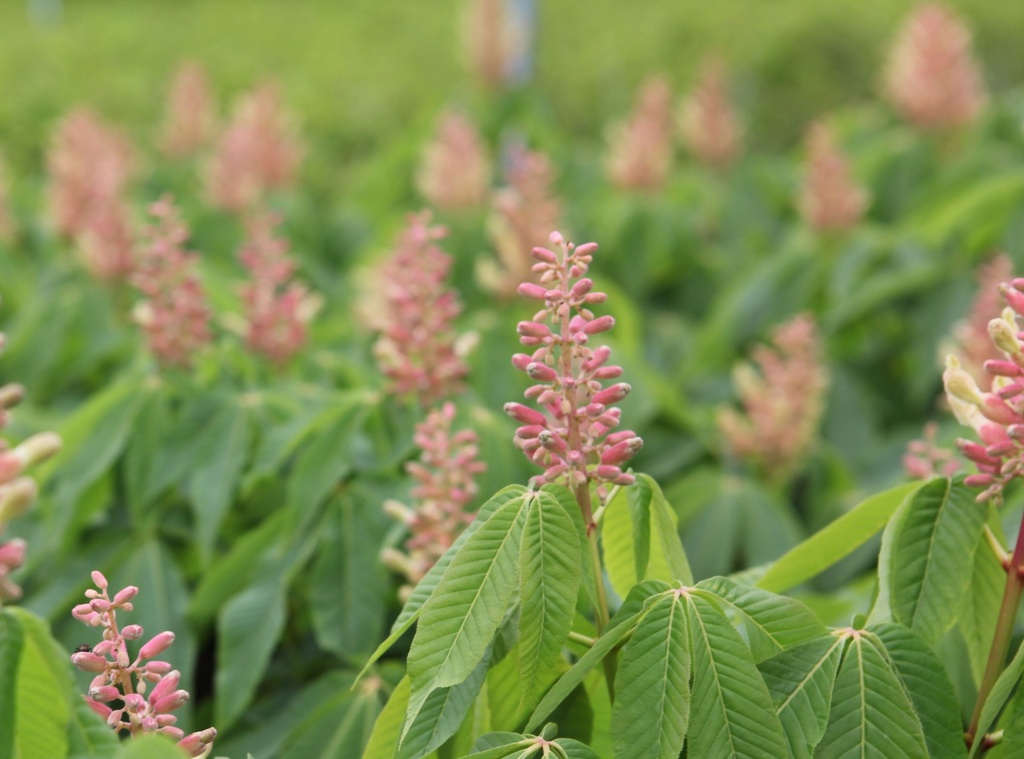
The Aesculus mutabilis 'Induta' has an compact spherical shape usually grafted on a stem. It is a slow growing plant that is sturdy and compact. The trunk is very smooth and dark grey. The thick twigs bear non-sticky, smooth buds. The decorative, bluish-green leaf has five leaflets. The underside is thickly haired and has a lighter colour.The end of each flower is yellow to salmon pink.
The three grows best in a slightly moist soil and is susceptible to salt (for icy roads)
Flowering period
Planting period
About this plant
Horse chestnut Aesculus
Horse chestnuts and buckeyes (Aesculus) are deciduous trees and shrubs from Europe, Asia and above all North America. They range from compact shrubs of about 2 m to stately park trees. Their hand-shaped leaves and upright candles of white, yellow, pink or red flowers in late spring or summer make them favourite ornamental and bee plants.
Aesculus mutabilis
Aesculus x mutabilis is a dwarf horse chestnut, a hybrid of two North American buckeyes. It forms a compact, rounded shrub or small tree of about 2 m, with fine, light green leaves that turn yellow to orange-pink in autumn. In May and June it bears short candles of deep pink to salmon flowers.
Location and soil
Prefers partial shade, but also grows in sun. Give it a moist to damp, humus-rich soil that is low in lime. Very hardy. It grows slowly and stays compact, so it also suits small gardens and large containers.
Pruning and care
Keep the soil moist during the first years and in dry summers, especially in containers. Pruning is hardly ever needed; if necessary, remove a crossing or badly placed branch. Like other American buckeyes it is generally little affected by the diseases of the common horse chestnut.
Use in the garden
A charming small tree for little gardens, front gardens, shrub borders and patio containers. The spring flowers attract pollinating insects and are followed by small oval nuts, which are toxic if eaten.
Characteristics
Botanical
| Family | Sapindaceae |
| Genus | Aesculus |
| Species | mutabilis |
| Cultivar | 'Induta' |
Flowering
| Flowering period | may, june |
| Colour (flower) | yellow, orange, pink |
Foliage
| Evergreen | no |
| Colour (foliage) | green |
Growth habit
| Height | 250 cm, 200 cm |
Location
| Winter hardiness | -25 °C |
| Soil type | acid, neutral |
| Soil type | acid, neutral |
| Location | sun, half shade |
| Soil moisture | normal |
Use
| Type (use) | solitary |