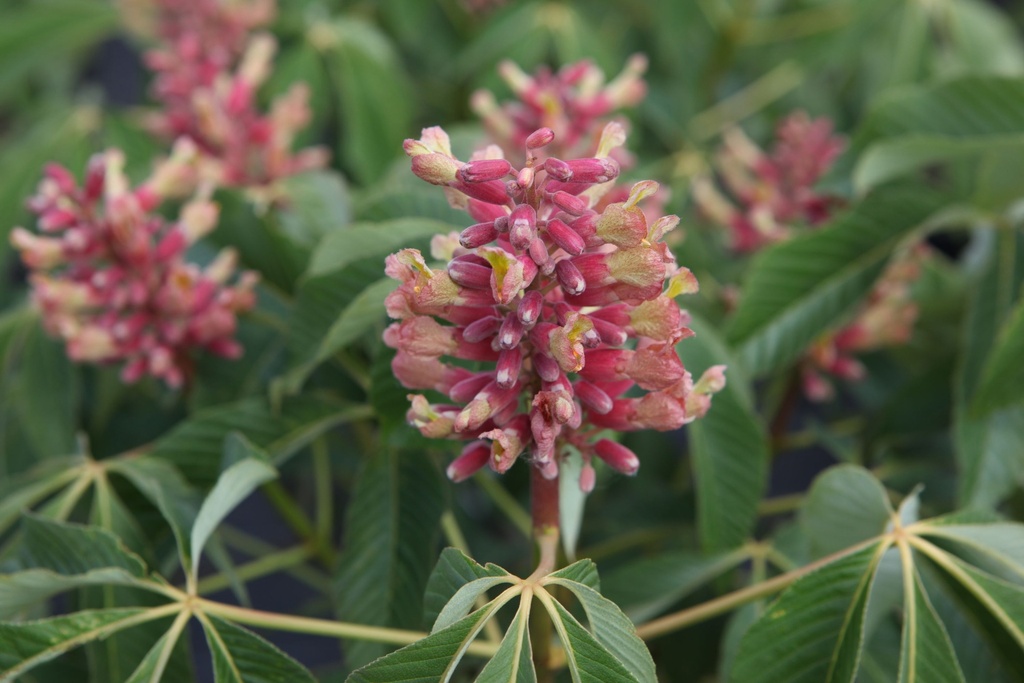
Aesculus pavia 'Koehnei'
Koehnei is a slow growing plant with a fantastic and attractive variety of foliage and flowers.
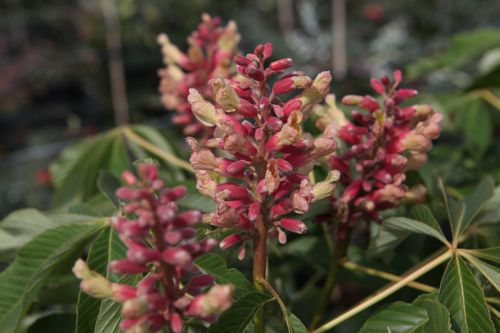
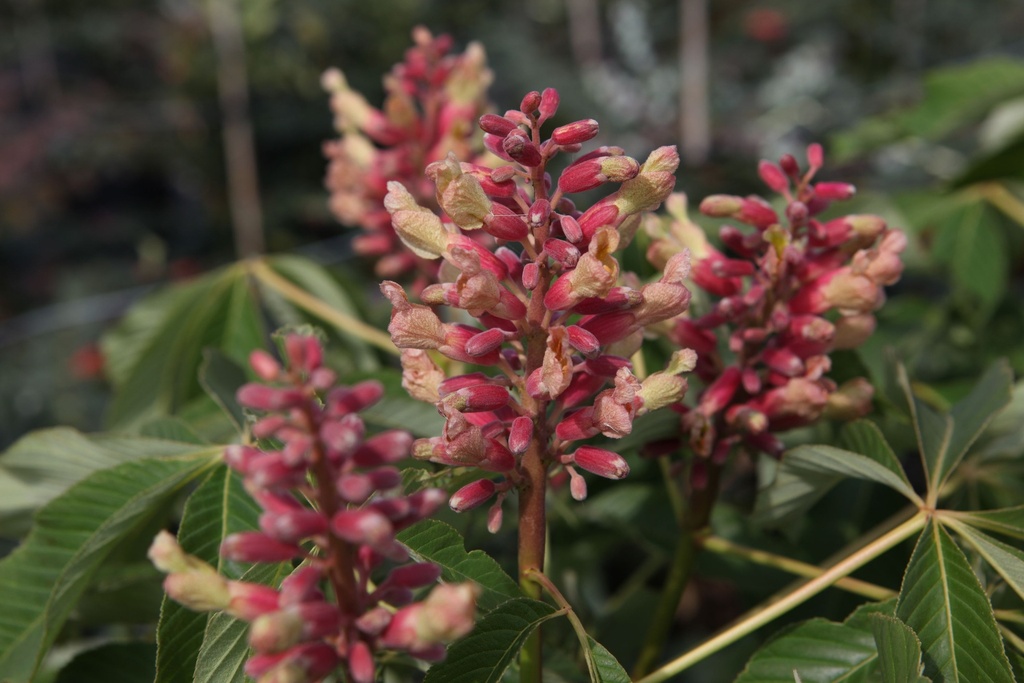
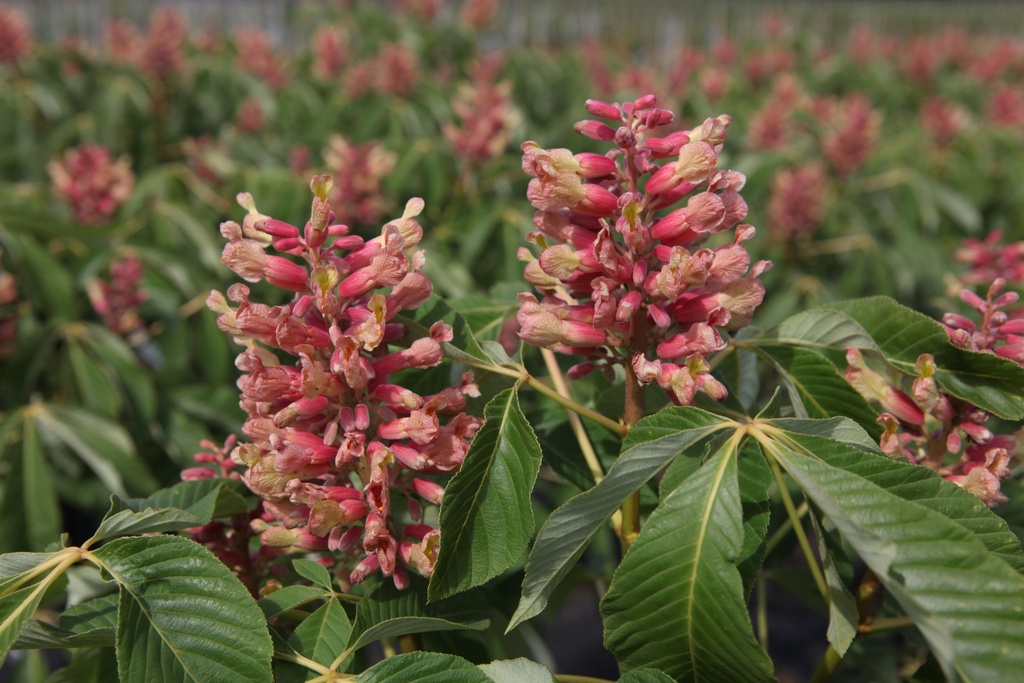
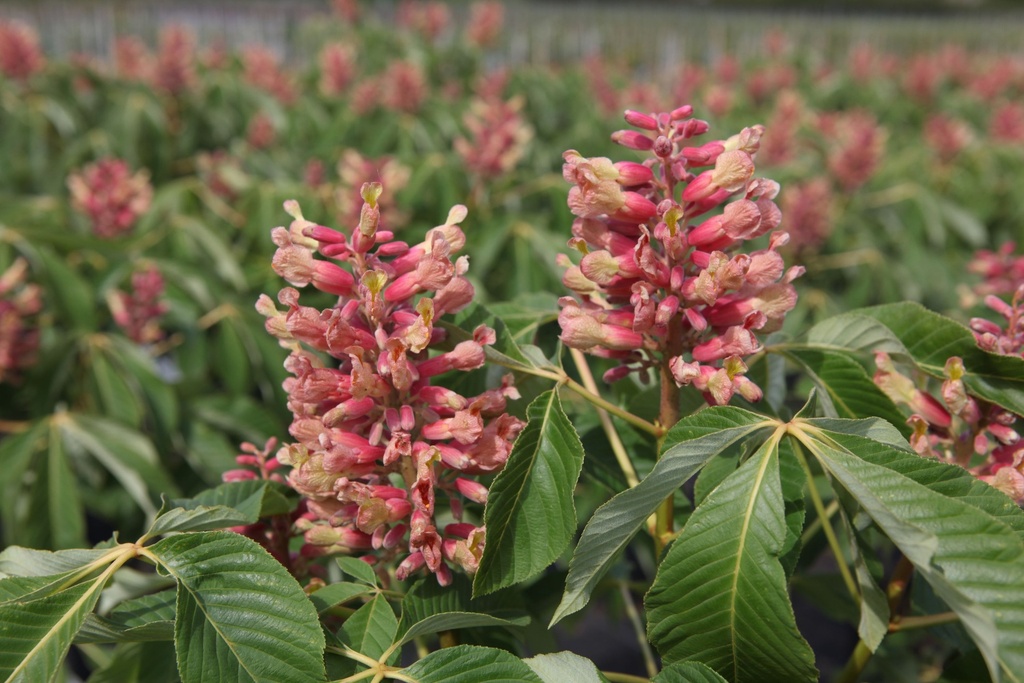
The flowers have panicles in a cone-like shape that are composed of orange-pink, tubular flowers that appear at the end of May. Typically chestnut leaves are deciduous,oblong
palmate, with oval to lance-shaped leaflets, bronze when they emerge, turning mid green in summer and yellow in autumn. The plant is not picky about his soil type.
Flowering period
Planting period
About this plant
Horse chestnut Aesculus
Horse chestnuts and buckeyes (Aesculus) are deciduous trees and shrubs from Europe, Asia and above all North America. They range from compact shrubs of about 2 m to stately park trees. Their hand-shaped leaves and upright candles of white, yellow, pink or red flowers in late spring or summer make them favourite ornamental and bee plants.
Red buckeye Aesculus pavia
The red buckeye (Aesculus pavia) comes from the moist river valleys and woodlands of the south-eastern United States. It grows as a large, often multi-stemmed shrub or small tree with a dense, rounded crown. In May and June it carries narrow upright panicles of tubular red to salmon-pink flowers; the foliage can take on rusty-red tones in autumn.
Location and soil
Plant in sun or partial shade, in a fertile soil that stays moist; it is otherwise undemanding as to soil type. In dry conditions the leaves may scorch and drop early. Hardy in Belgium. Sensitive to road salt and does not tolerate paving over its roots.
Pruning and care
Water during dry spells, especially in the first years. Pruning is rarely needed: if desired, remove crossing or badly placed branches while the plant is young and avoid large cuts. It grows slowly and is less affected by the problems of the common horse chestnut, although leaf blotch can occur.
Use in the garden
A fine specimen for small gardens, terraces and large containers, or planted as an informal screen. The flowers are much visited by bees. The smooth, light brown nuts ripen in autumn and are toxic if eaten.
Characteristics
Botanical
| Family | Sapindaceae |
| Genus | Aesculus |
| Species | pavia |
| Cultivar | 'Koehnei' |
Flowering
| Flowering period | april, may |
| Colour (flower) | red |
Foliage
| Evergreen | no |
| Colour (foliage) | green |
| Autumn colour | yellow, orange |
Growth habit
| Height | 250 cm |
Location
| Winter hardiness | -25 °C |
| Location | sun, half shade |
Use
| Type (use) | shrub, solitary |