Junberry
Amelanchier
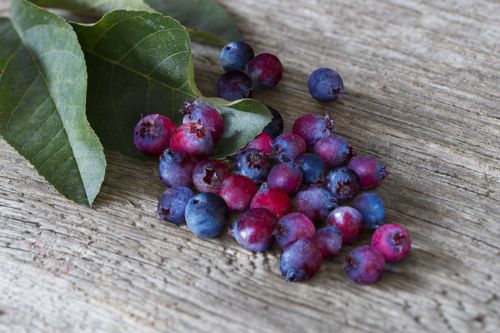
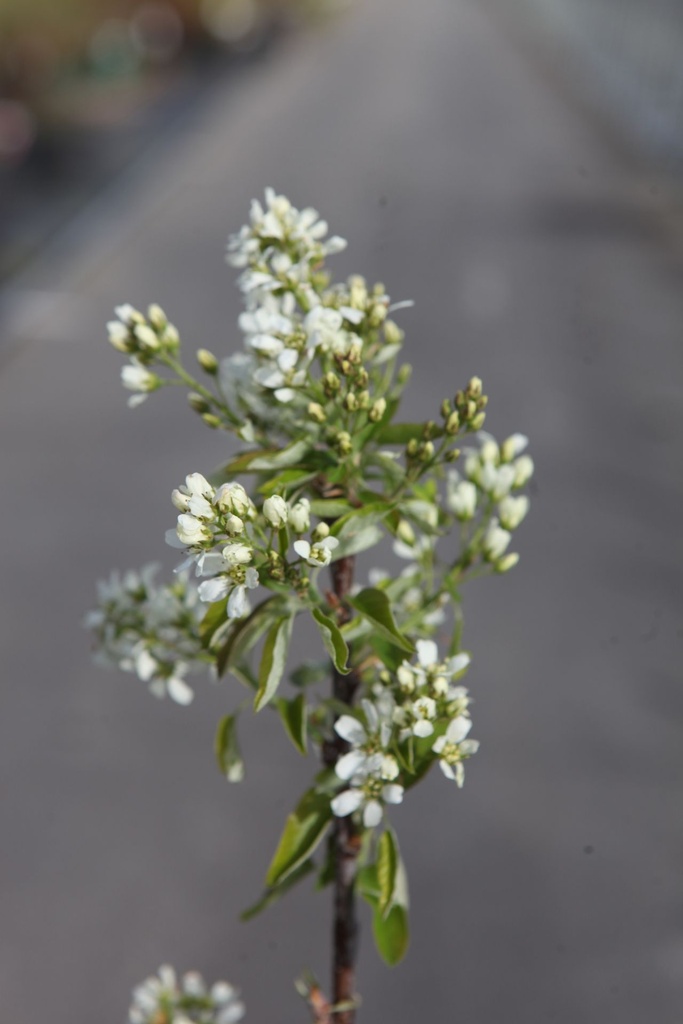
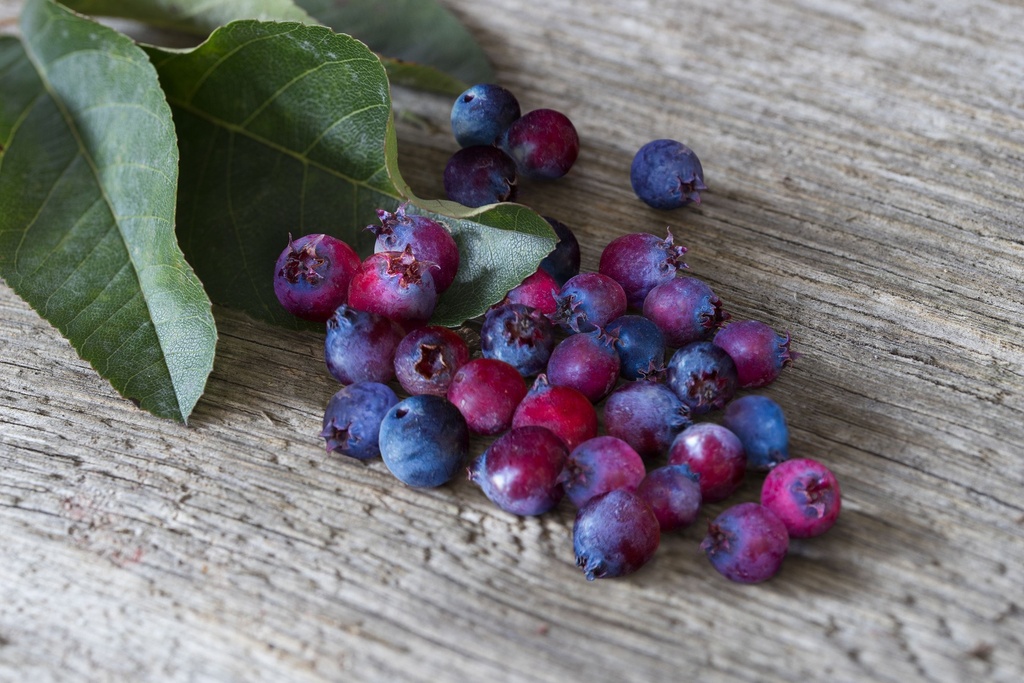
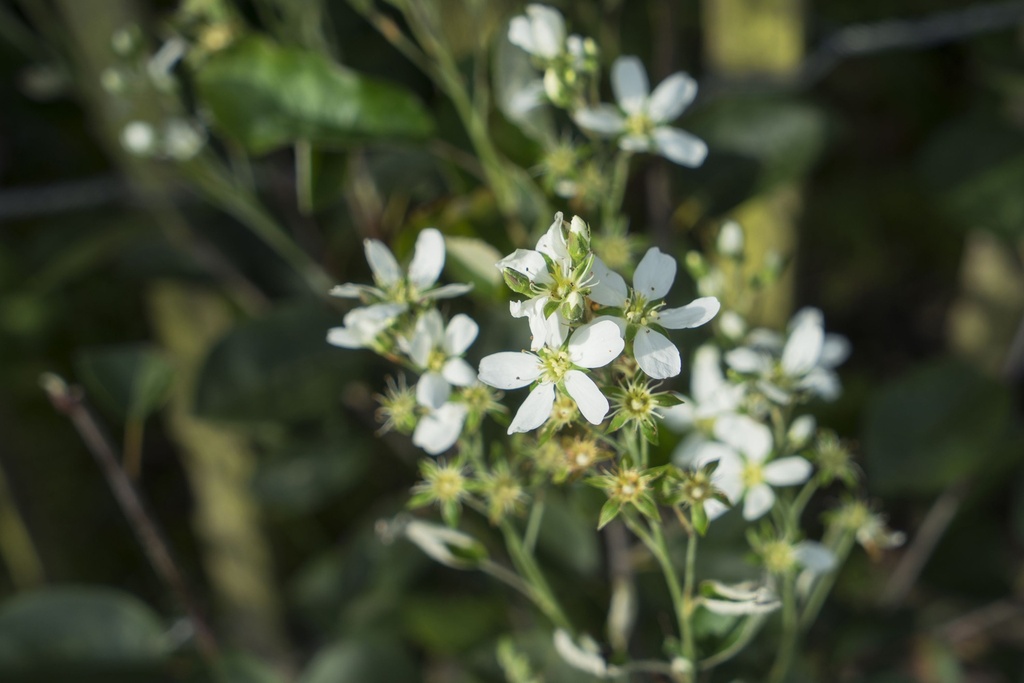
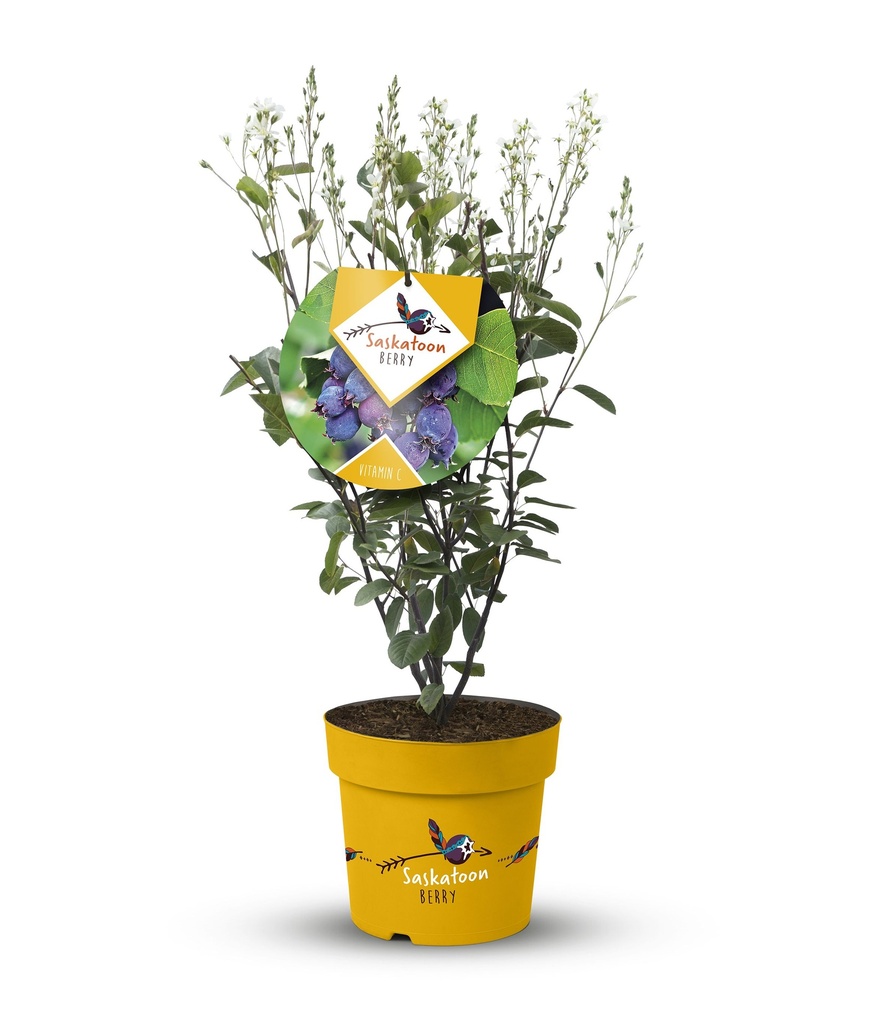
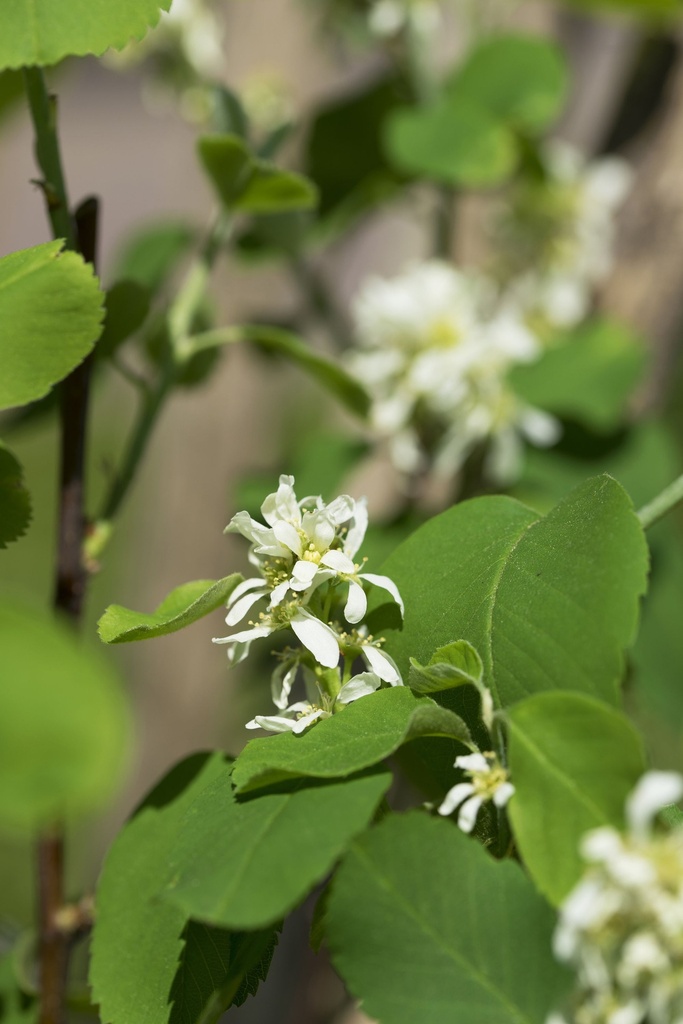
Serviceberries (Amelanchier) are deciduous shrubs and small trees, mostly from North America, with a few species from Europe and Asia. They are among the first shrubs to flower in spring, bear small edible berries in early summer and finish the year with warm orange and red autumn foliage. Many grow naturally as multi-stemmed specimens.
Location and soil
Serviceberries grow in sun or partial shade, ideally in a sheltered spot out of drying winds. Any good, moisture-retentive but well-drained garden soil suits them, including clay; most prefer neutral to slightly acid soil. They are very hardy, but dislike soil that dries out in summer.
Pruning and care
Serviceberries need little care. Pruning is optional: if needed, thin out crossing or badly placed branches in May or June, shortly after flowering. Remove root suckers in early spring if a single trunk is wanted. Water young plants regularly and mulch the base in spring.
Use in the garden
Serviceberries are ornamental through three seasons and fit as a solitary specimen, in informal or wildlife hedges and at the back of a border. Larger species work well as small multi-stemmed trees in modest gardens. The berries can be eaten raw or in jam and are popular with birds; the flowers attract pollinators.