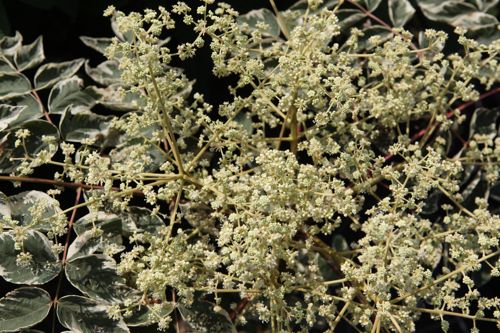
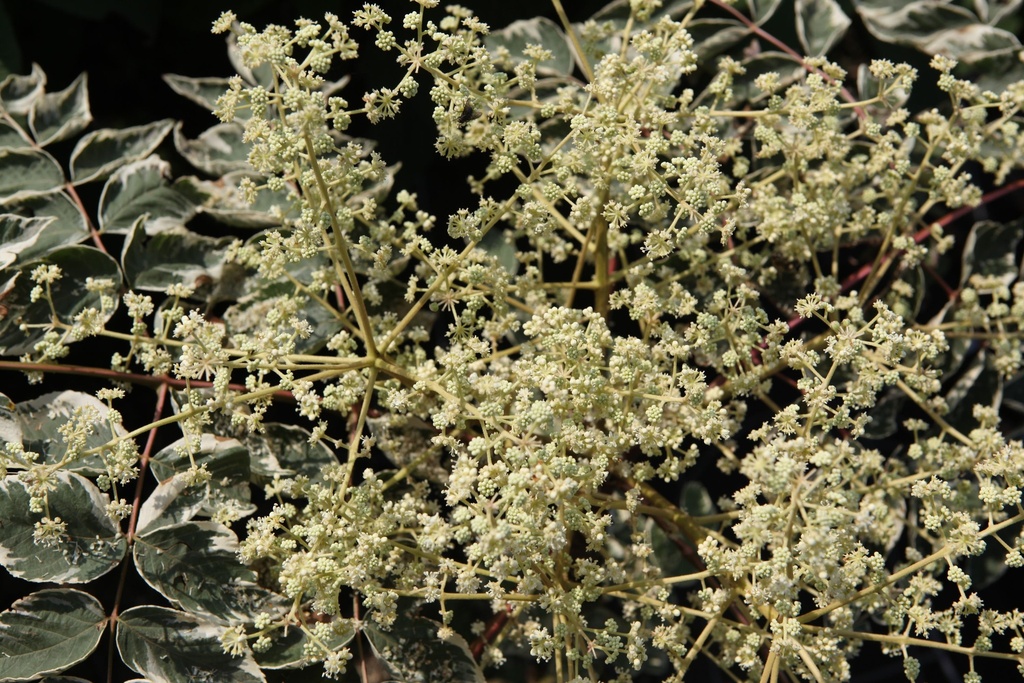
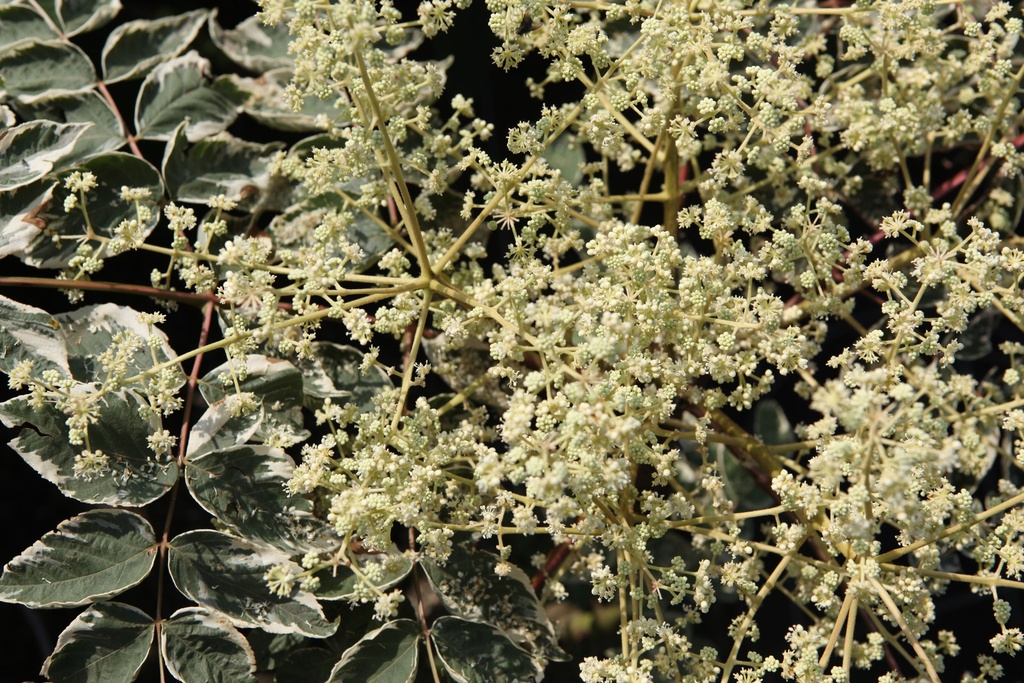
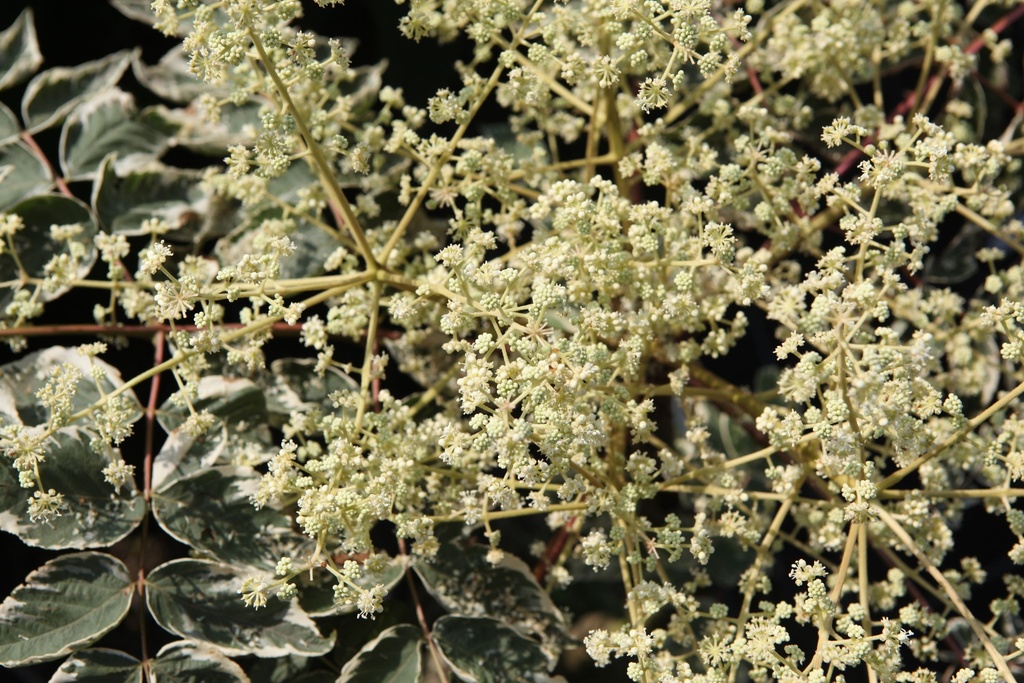
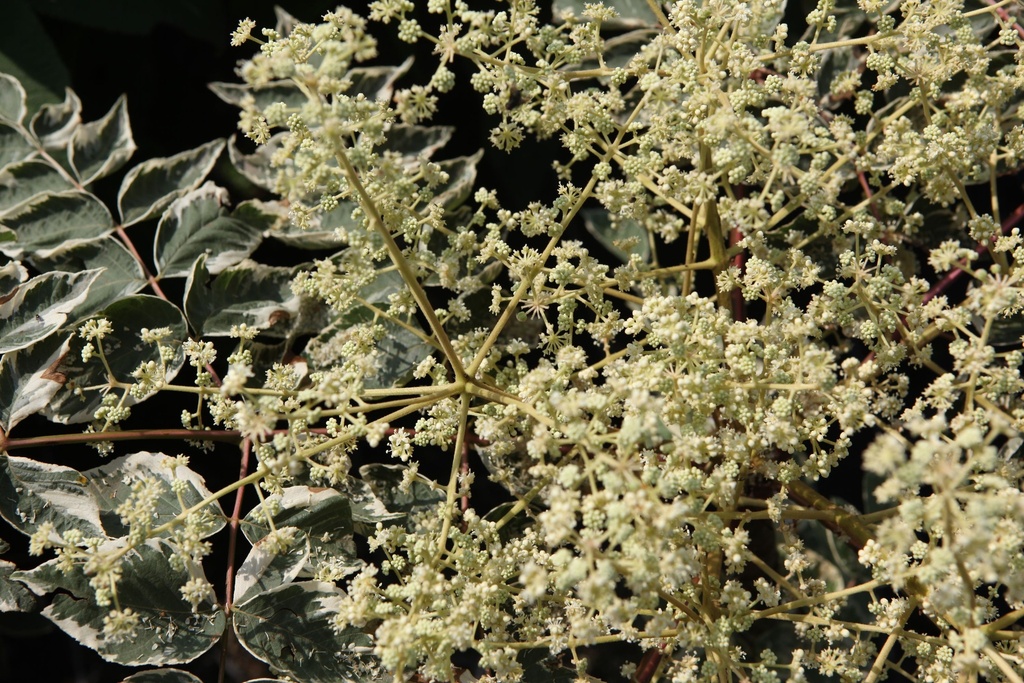
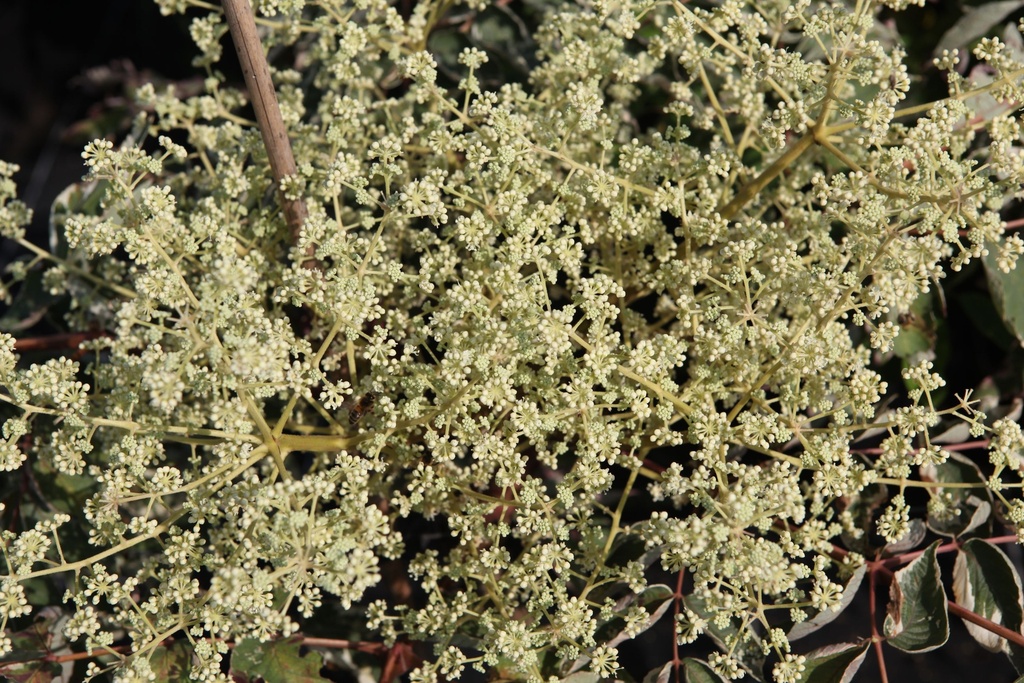
Aralia elata 'Variegata'
This striking Japanese shrub or small tree is grown as a foliage plant, although the late summer flowers make a striking impression on their own. They're small but carried in whorls on extended spikes up to 60 cm long. The leaves are huge too, often 90 cm long and divided into numerous leaflets, each about 15cm long and, edged with a creamy white border. These plants need shelter from cold winds, but besides that the Variegata is quite hardy and will also tolerate a little shade.
Flowering period
Planting period
About this plant
Spikenard Aralia
Aralias (Aralia) form a genus of 70 to 80 species of trees, shrubs and herbaceous perennials from Asia and North America, related to ivy and ginseng. They are grown mainly for their very large, doubly divided leaves, which give a garden a lush, exotic look, and for their airy sprays of small cream flowers followed by dark berries.
Japanese angelica-tree Aralia elata
Aralia elata, the Japanese angelica tree, comes from Japan, Korea, eastern Siberia and north-east China. It grows into a large, often multi-stemmed shrub or small tree with thick, sparsely branched, spiny stems that carry an umbrella of huge leaves up to about 1 m long. In autumn the foliage turns yellow to orange-red; creamy flower plumes appear from late summer into autumn, followed by small black berries.
Location and soil
Grows in sun, partial shade or even shade, in rich, humus-rich soil that stays moist, although established plants tolerate short dry spells and urban conditions. Choose a sheltered spot, as wind tears the large leaves. Very hardy, though late frosts can scorch the new growth.
Pruning and care
Grows fast and needs no regular pruning. Remove dead wood and unwanted suckers at the end of winter (February to March); the roots sucker readily and can form thickets if left alone. Wear gloves because of the sharp spines, as handling bark and roots can also irritate the skin.
Use in the garden
A highly architectural plant as a solitary specimen or in small groups, in exotic-style gardens and along woodland edges. The flowers are a rich source of food for bees, and birds eat the berries. Keep it away from play areas because of the spines.
Characteristics
Botanical
| Family | Araliaceae |
| Genus | Aralia |
| Species | elata |
| Cultivar | 'Variegata' |
Flowering
| Flowering period | june, july |
Foliage
| Evergreen | no |
| Colour (foliage) | green, white, variegated |
Growth habit
| Height | 200 cm, 300 cm |
Location
| Winter hardiness | -25 °C |
| Soil type | neutral |
| Location | sun, half shade |
| Wind resistant | sheltered |
Use
| Type (use) | shrub, solitary |