Chokeberry
Aronia
Chokeberries (Aronia) are deciduous shrubs from eastern North America and members of the rose family. They are prized for their white spring blossom, abundant red or black berries rich in antioxidants and a fiery red autumn colour. Their exceptional hardiness and tolerance of poor soil make them very easy shrubs.
Purple chokeberry
Aronia prunifolia
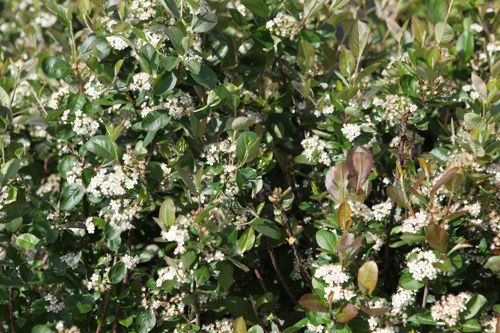
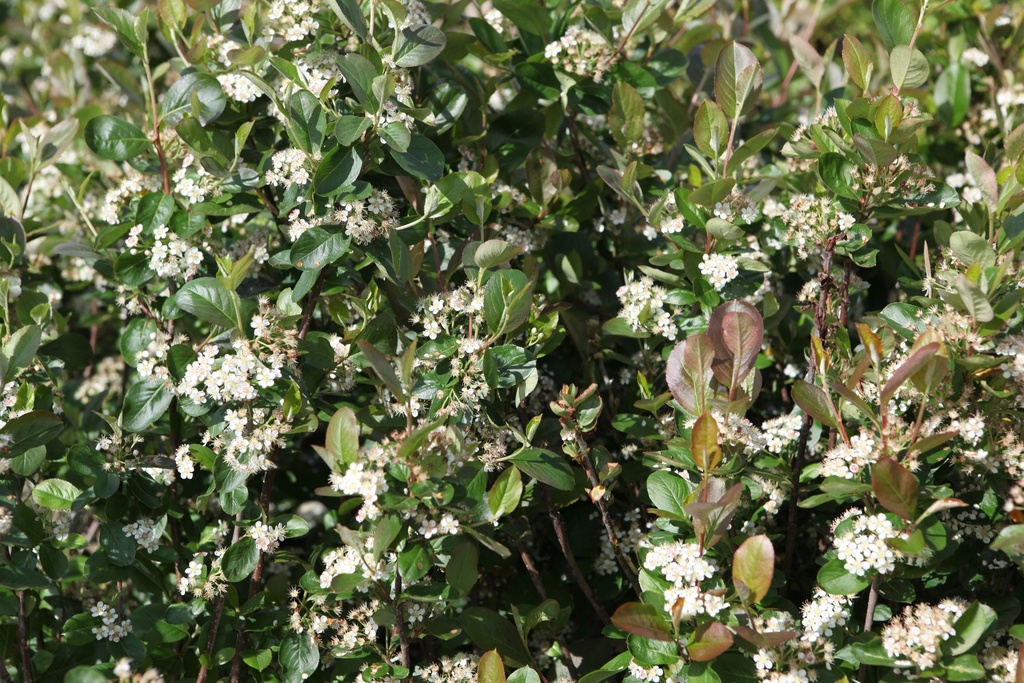
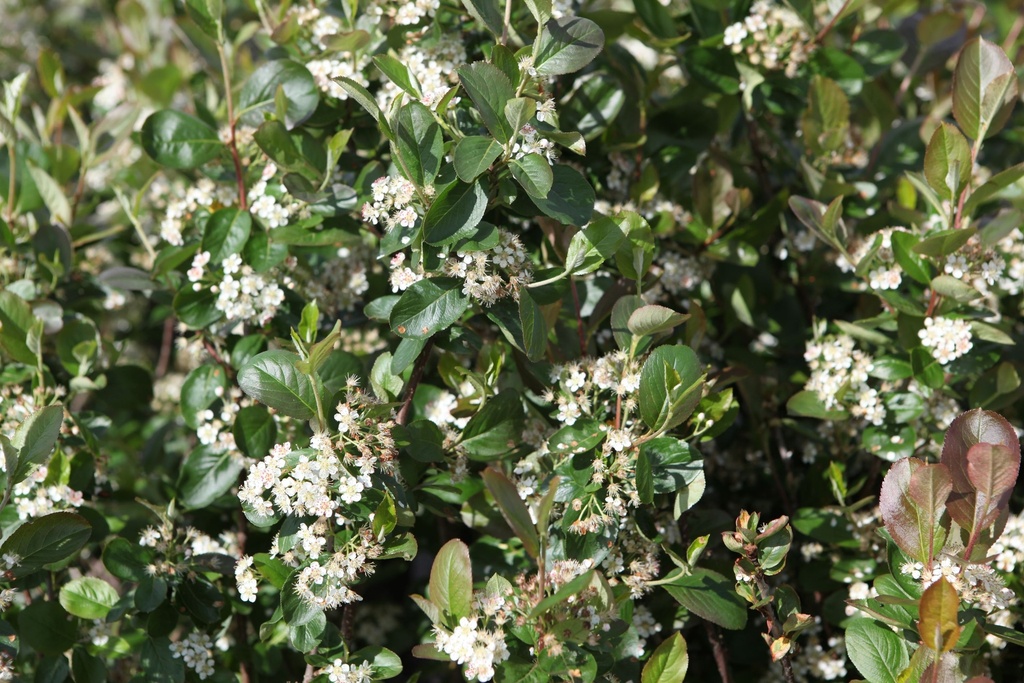
Aronia prunifolia, the purple chokeberry, is a natural hybrid between the red and the black chokeberry. It forms an upright, suckering shrub of about 1.5 to 2 m with dark green leaves that turn crimson to purple in autumn. White, pink-tinged flowers in spring are followed by large, dark purple to black berries with a fairly sweet taste.
Location and soil
Plant in sun that is not scorching or in partial shade, in a light, moist, humus-rich and well-drained soil, preferably free of lime. In shade or chalky soil the colours are duller. Very hardy.
Pruning and care
At the end of winter (February to March), shorten all branches by about half and remove dead or weak wood; this keeps the shrub compact and productive. Water during dry spells and net it against birds once the fruit ripens. Naturally resistant to pests and diseases.
Use in the garden
One of the best chokeberries for fruit: the berries ripen in September and are used for jams, jellies, syrups, juice and baking. Plant it singly, in fruit or informal hedges, or in groups of three to six. The flowers are very popular with bees.