
|
J
|
F
|
M
|
A
|
M
|
J
|
J
|
A
|
S
|
O
|
N
|
D
|
|
J
|
F
|
M
|
A
|
M
|
J
|
J
|
A
|
S
|
O
|
N
|
D
|
About this plant
What makes this plant special
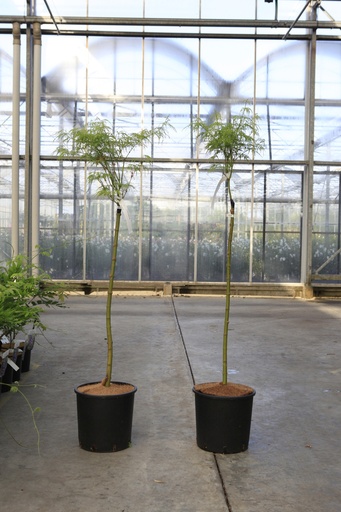
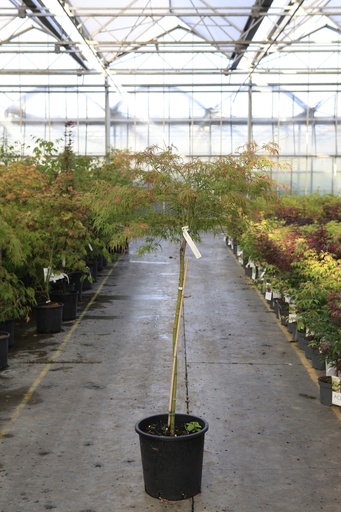
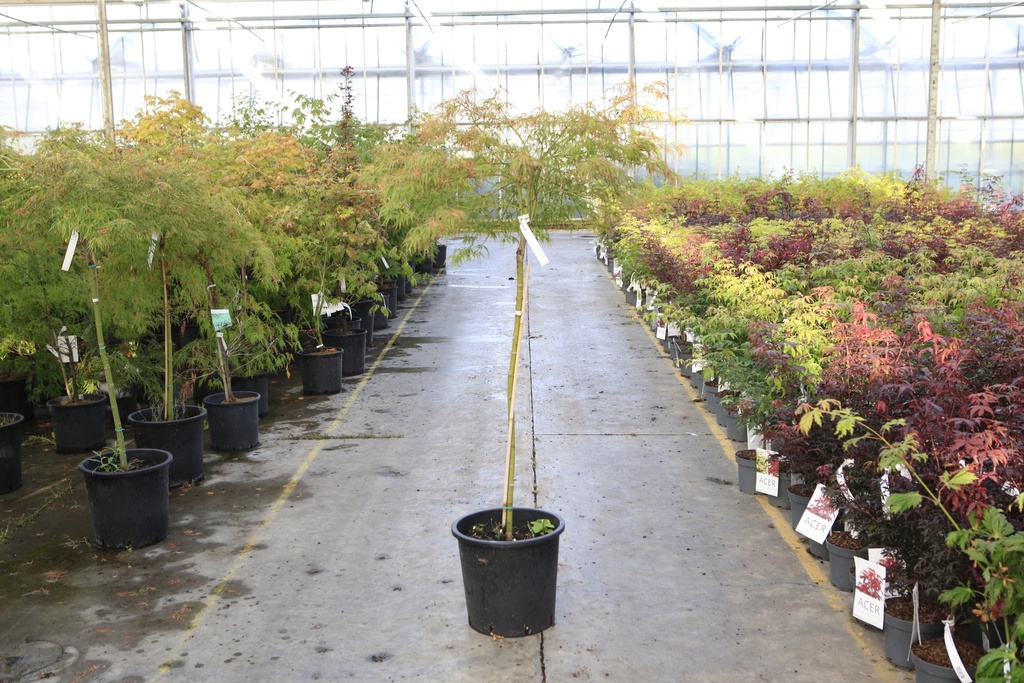
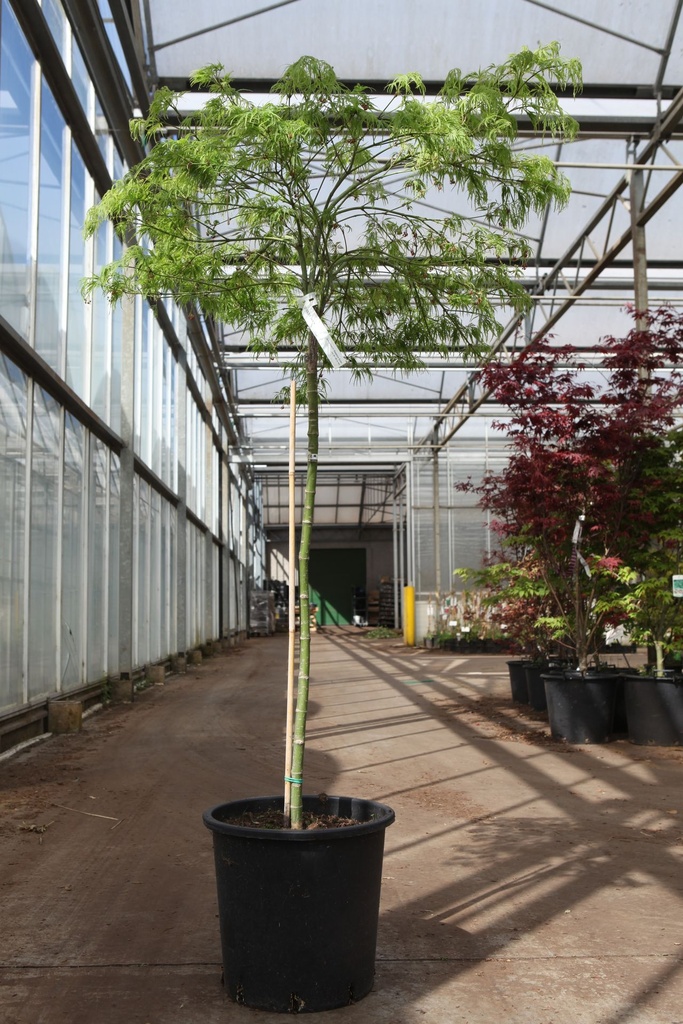
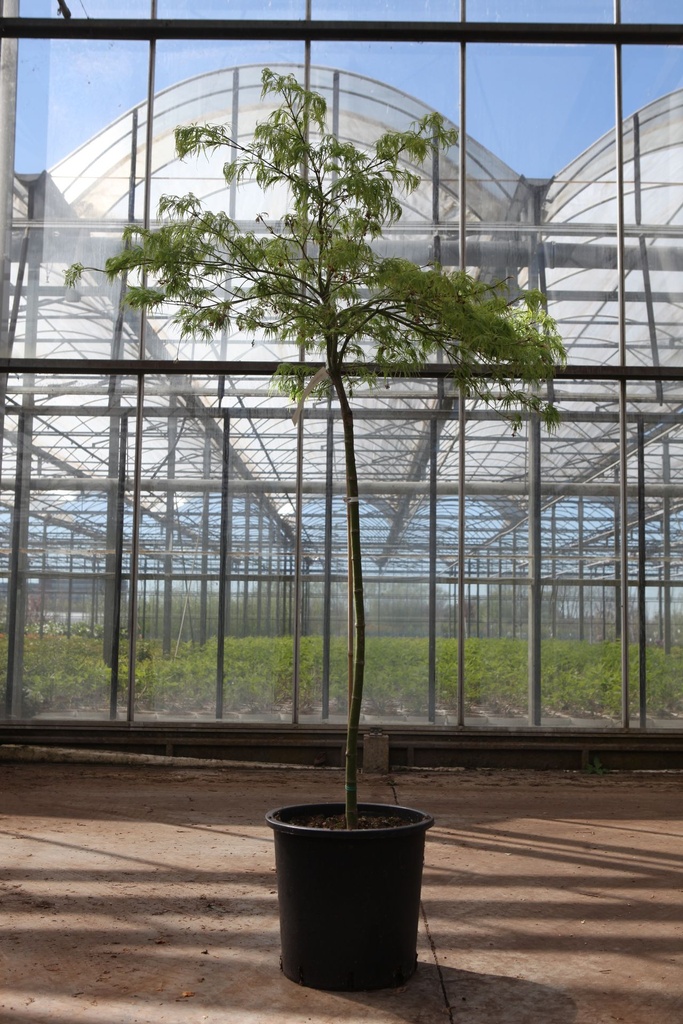
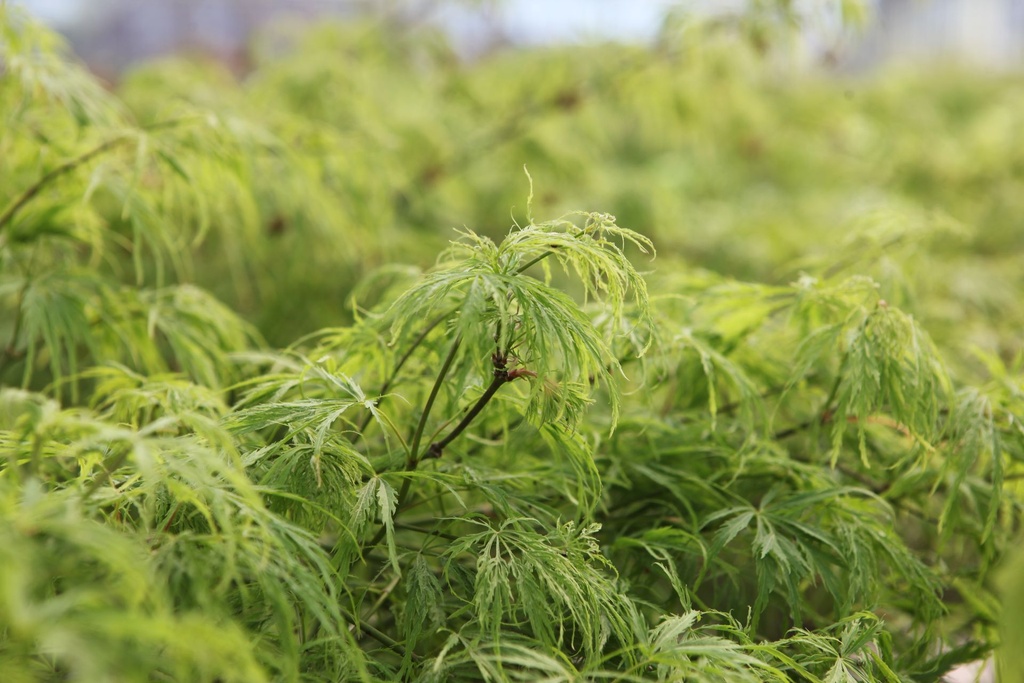
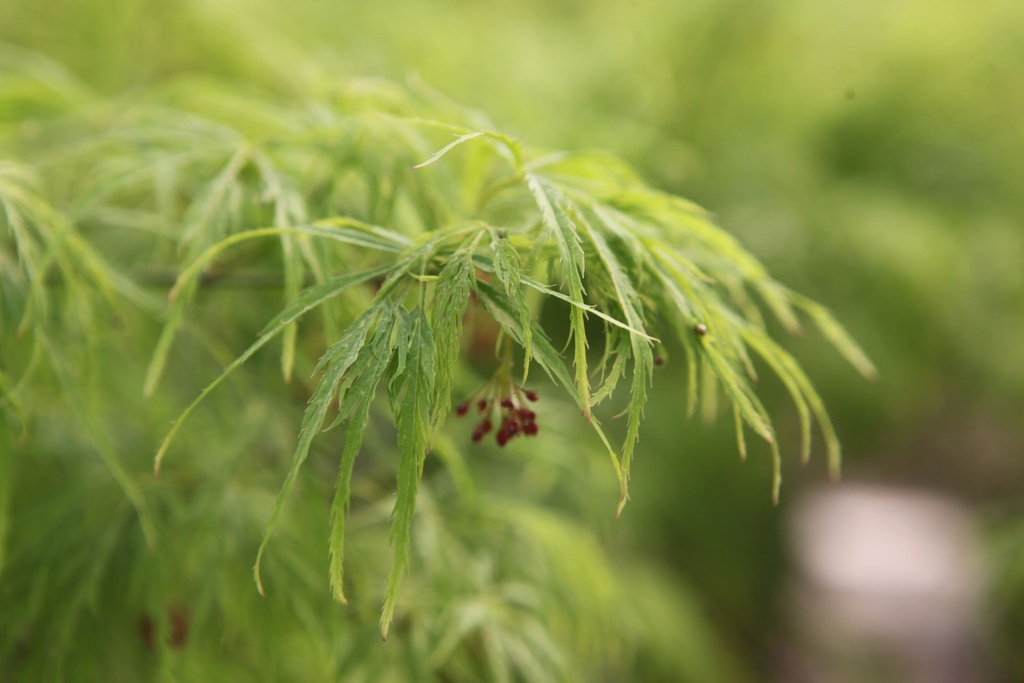
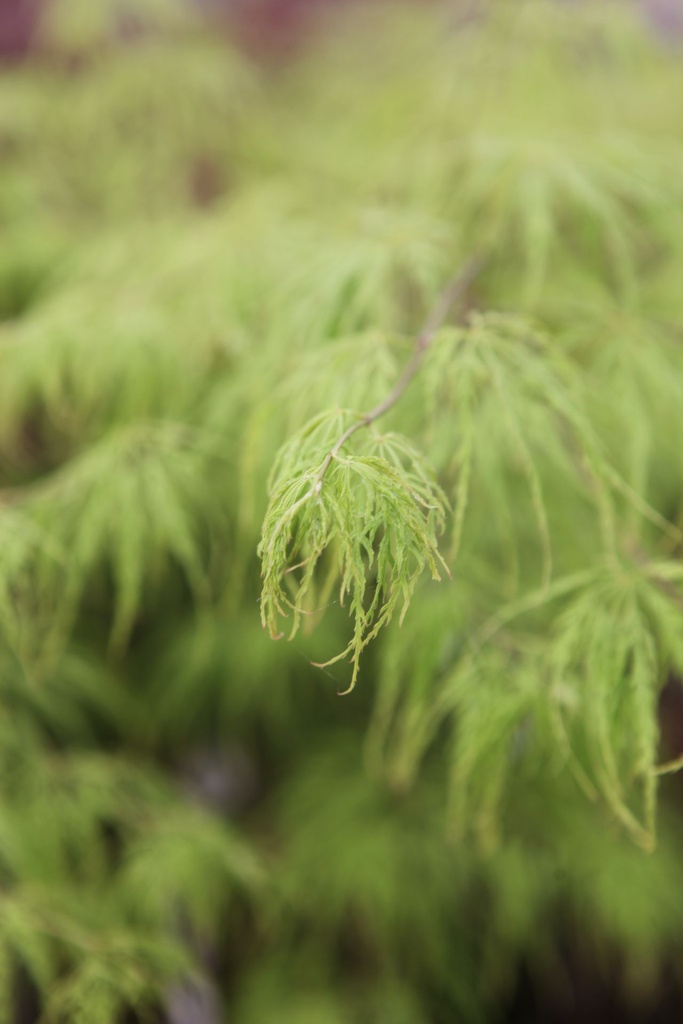
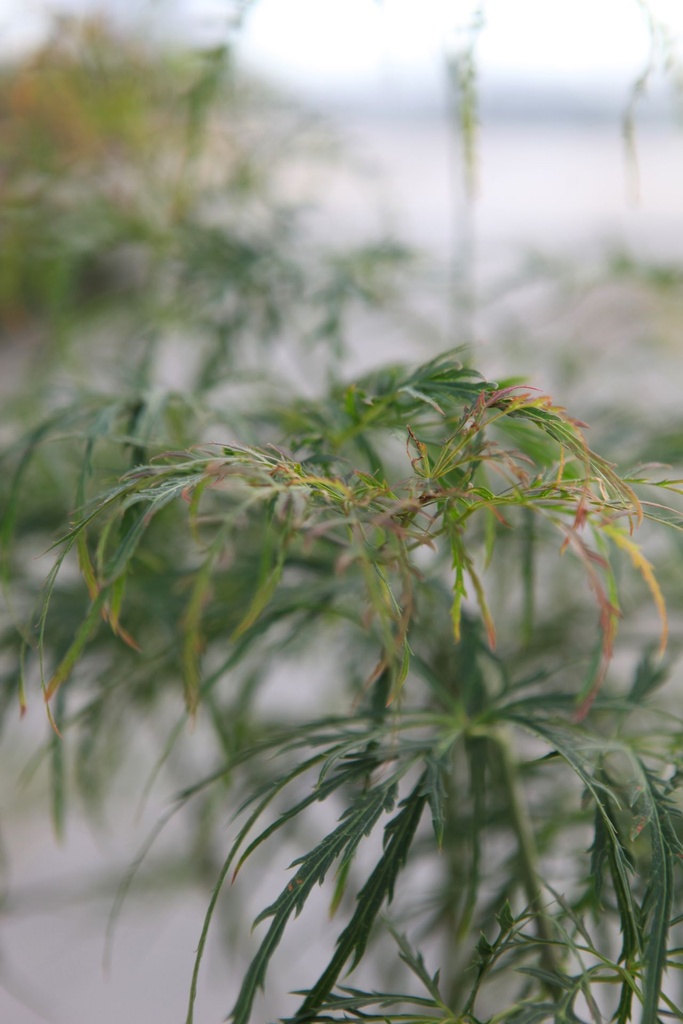
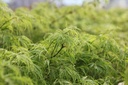
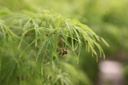
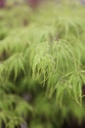
Where most cut-leaved maples are sold for their red foliage, this one keeps the fresh green of the original form, so the finely shredded leaves stand out against a dark background or beside a red cultivar. Growth is quiet and spreading, often on several stems, forming the typical mushroom shape. In autumn the green gives way to orange tones.
Maple Acer
Maples form a large genus of deciduous trees and shrubs, from slow-growing multi-stemmed garden trees to broad shade and avenue trees. The leaves sit in opposite pairs and are usually lobed; small spring flowers are followed by the typical winged fruits. Many maples colour richly in autumn, and several are planted as much for their decorative bark as for their foliage.
Japanese maple Acer palmatum
The Japanese maple comes from Japan, Korea and central China and stays, in a garden, a slow-growing large shrub or multi-stemmed small tree, often broader than tall, with a graceful, layered outline. The leaves have five to seven long-pointed lobes, unfold lime green to pink or deep red and turn orange-red to crimson in autumn. More than a thousand cultivars exist, with green, red, purple or variegated foliage.
Location and soil
Best in light or partial shade, sheltered from cold and drying winds: green-leaved forms tolerate sun, red-leaved ones need some sun to colour deeply, variegated ones are best kept out of the afternoon sun. The soil is humus-rich and well drained yet never dries out, preferably slightly acid to neutral. Fully hardy, but leaves scorch in hot, windy spots.
Pruning and care
Planting is done between October and March, no deeper than the tree stood before, as the roots run shallow; a mulch keeps them cool and moist. In the first years it needs water in dry spells, and in a pot it must never dry out. Pruning is kept to dead tips and crossing branches, between July and January, since cuts made at other times bleed. Verticillium wilt and scale insects are the best-known problems.
Use in the garden
A specimen for the small garden, a shaded border, a Japanese-style, heather or rock garden, where its outline and autumn colour carry the planting. Compact and cascading forms suit a large pot on a terrace or in a courtyard, and the species has long been a favourite for bonsai.
Plant characteristics
Botanical
| Family | Sapindaceae |
| Genus | Acer |
| Species | palmatum |
| Cultivar | 'Dissectum Viridis' |
Foliage
| Evergreen | no |
| Colour (foliage) | green |
Growth habit
| Height | 300 cm |
Location
| Winter hardiness | zone 5a (down to -28,9 °C) |
| Summer heat | up to heat zone 8 |
| Location | sun, half shade |
Use
| Type (use) | tree/standard, multistem, solitary |
Care
| Pruning | october to december |