

|
J
|
F
|
M
|
A
|
M
|
J
|
J
|
A
|
S
|
O
|
N
|
D
|
|
J
|
F
|
M
|
A
|
M
|
J
|
J
|
A
|
S
|
O
|
N
|
D
|
|
J
|
F
|
M
|
A
|
M
|
J
|
J
|
A
|
S
|
O
|
N
|
D
|
About this plant
What makes this plant special
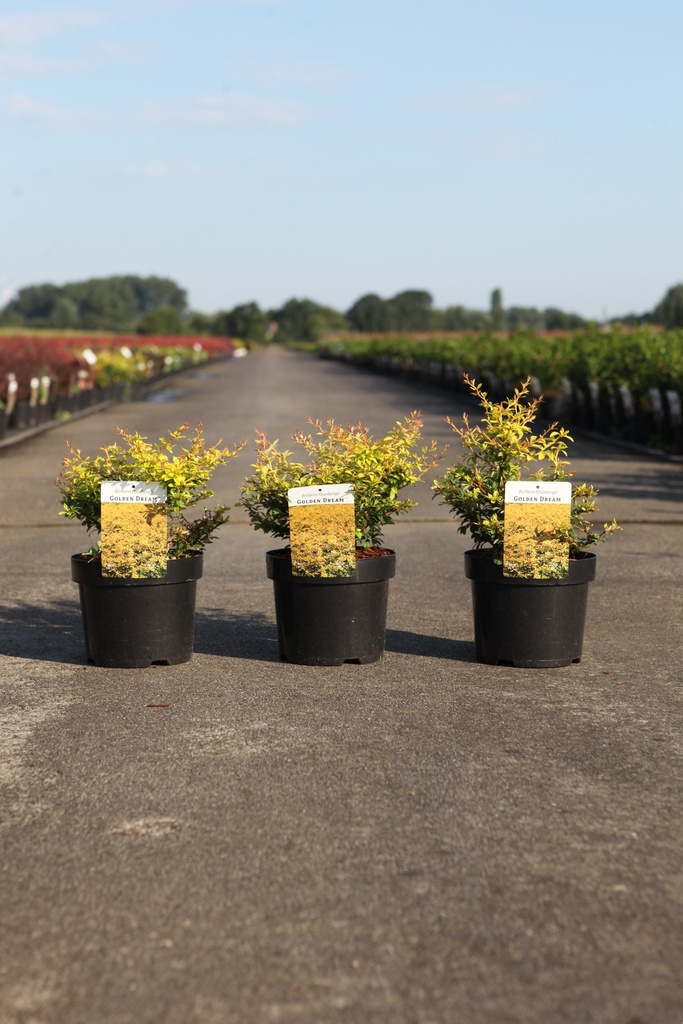
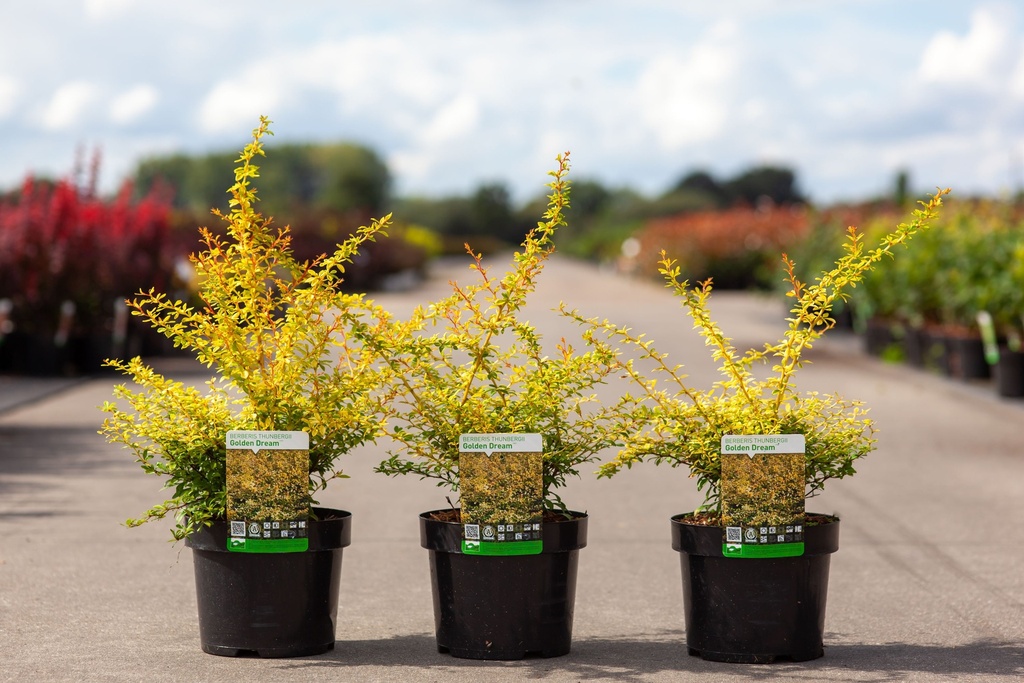
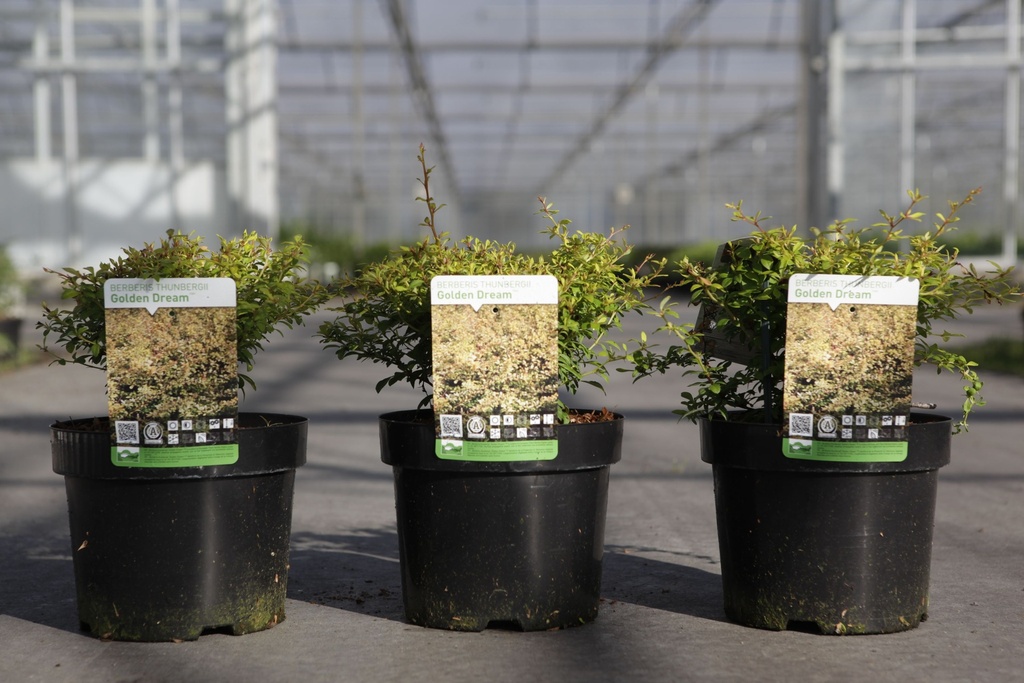
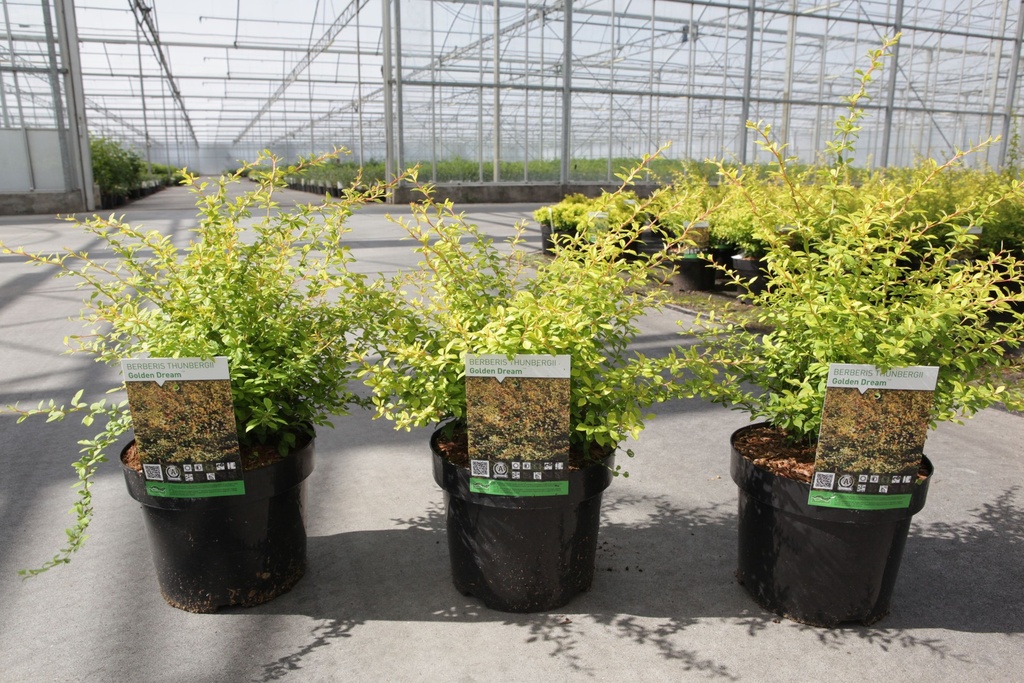
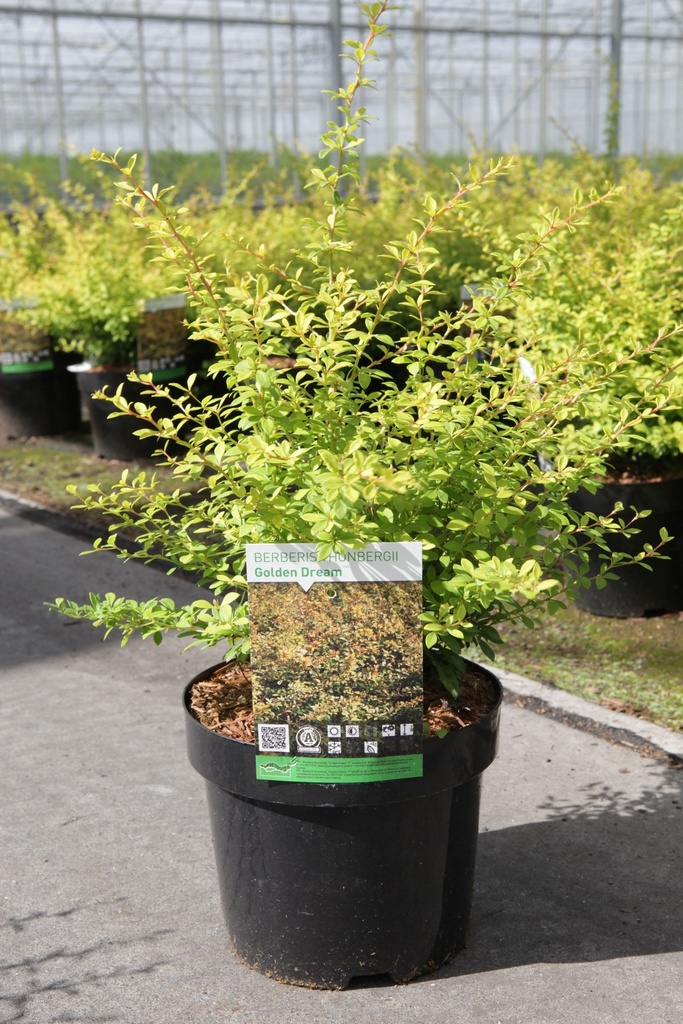
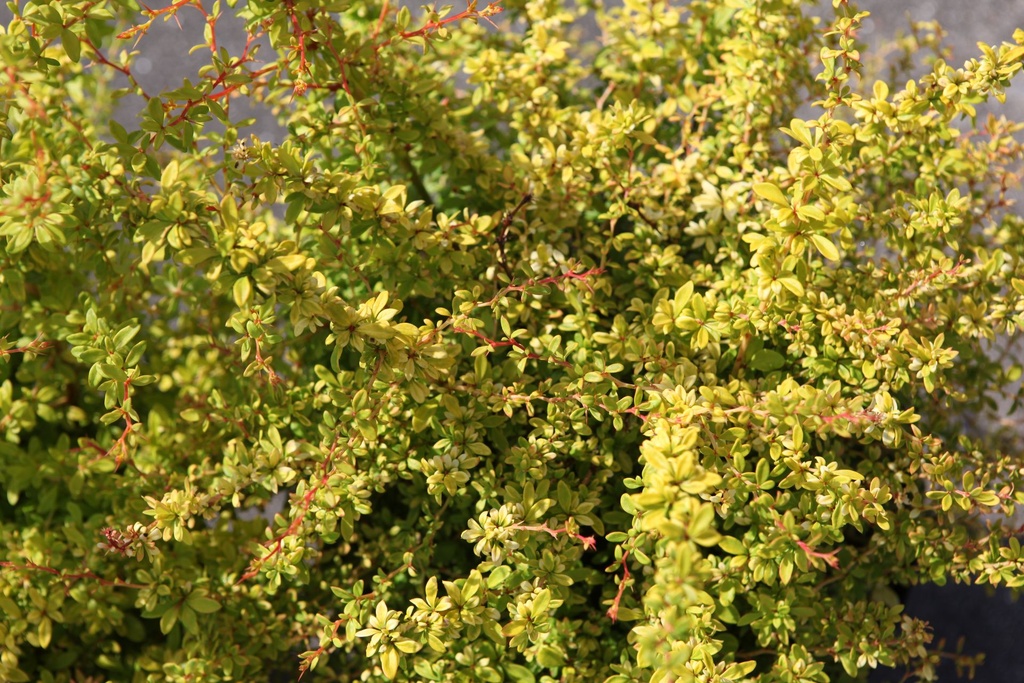
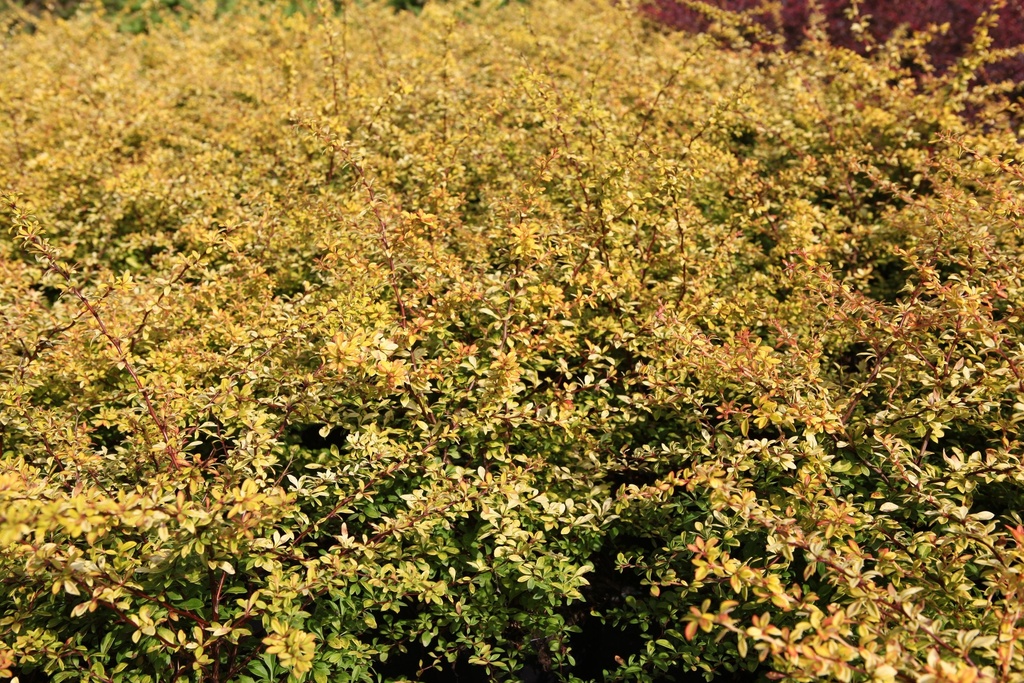
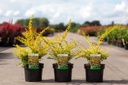
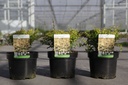
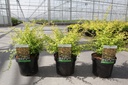
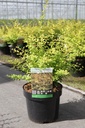
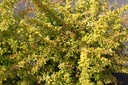
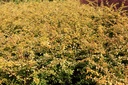
'Golden Dream' combines small yellow leaves with bright red young stems, a lively contrast in spring; the foliage turns lime green in summer and orange in autumn. Its upright to arching branches form a low, spreading shrub about 60 cm tall and 1 m wide, well suited to covering banks.
Barberry Berberis
Barberries (Berberis) are spiny shrubs from East Asia, the South American Andes and Europe, with well over 400 species, both deciduous and evergreen. They are loved for their dense growth, their yellow to orange spring flowers that attract bees, and their red or blue-black berries in autumn.
Japanese barberry Berberis thunbergii
Japanese barberry is a deciduous shrub from Japan with a dense, rounded and slightly spreading habit. Its small leaves turn bright red in autumn, and many garden forms have purple, yellow or variegated foliage. Small pale yellow flowers in April and May are followed by glossy red berries that persist into winter.
Location and soil
Plant in full sun: in too much shade the summer and autumn colours fade. It grows in almost any well-drained soil, tolerates dry and chalky ground and copes with urban conditions. It is very hardy.
Pruning and care
Hedges are cut back each year in March to encourage fresh foliage and can be trimmed again from June to August. Free-growing shrubs need little pruning, which keeps the berries. Diseases are rare on well-drained soil.
Use in the garden
A classic for medium-height hedges, free-growing or clipped, and for defensive plantings, as well as for colour in shrub borders. Birds spread the seeds; in parts of North America the species has become invasive.
Plant characteristics
Botanical
| Family | Berberidaceae |
| Genus | Berberis |
| Species | thunbergii |
| Cultivar | 'Golden Dream' |
Flowering
| Flowering period | may |
| Colour (flower) | yellow |
Foliage
| Evergreen | no |
| Colour (foliage) | yellow |
| Autumn colour | red |
Growth habit
| Height | 50 cm |
Location
| Winter hardiness | -30 °C |
| Location | sun, half shade |
Use
| Type (use) | shrub, hedge plant, fruit/berries, solitary, in group |
Care
| Pruning | march, june to august |
Plant breeders' rights
Berberis thunbergii 'Golden Dream' (PBR) is subject to European Plant Breeders Rights under nr. 20111765. Asexual propagation and/or use of the trademark without license are prohibited.