

|
J
|
F
|
M
|
A
|
M
|
J
|
J
|
A
|
S
|
O
|
N
|
D
|
|
J
|
F
|
M
|
A
|
M
|
J
|
J
|
A
|
S
|
O
|
N
|
D
|
|
J
|
F
|
M
|
A
|
M
|
J
|
J
|
A
|
S
|
O
|
N
|
D
|
About this plant
What makes this plant special
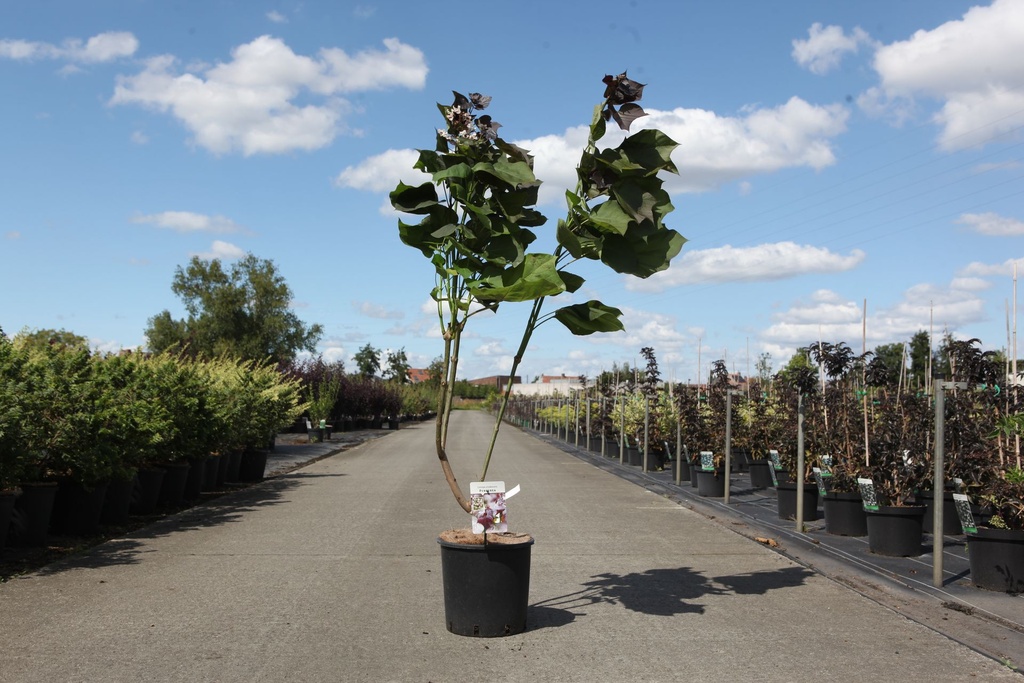
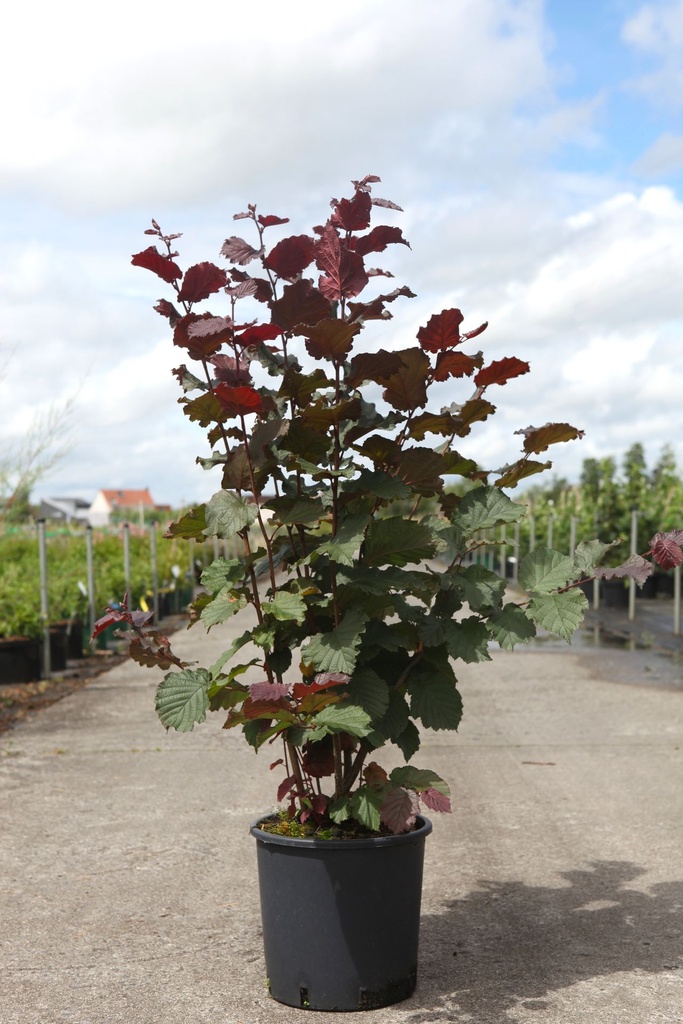
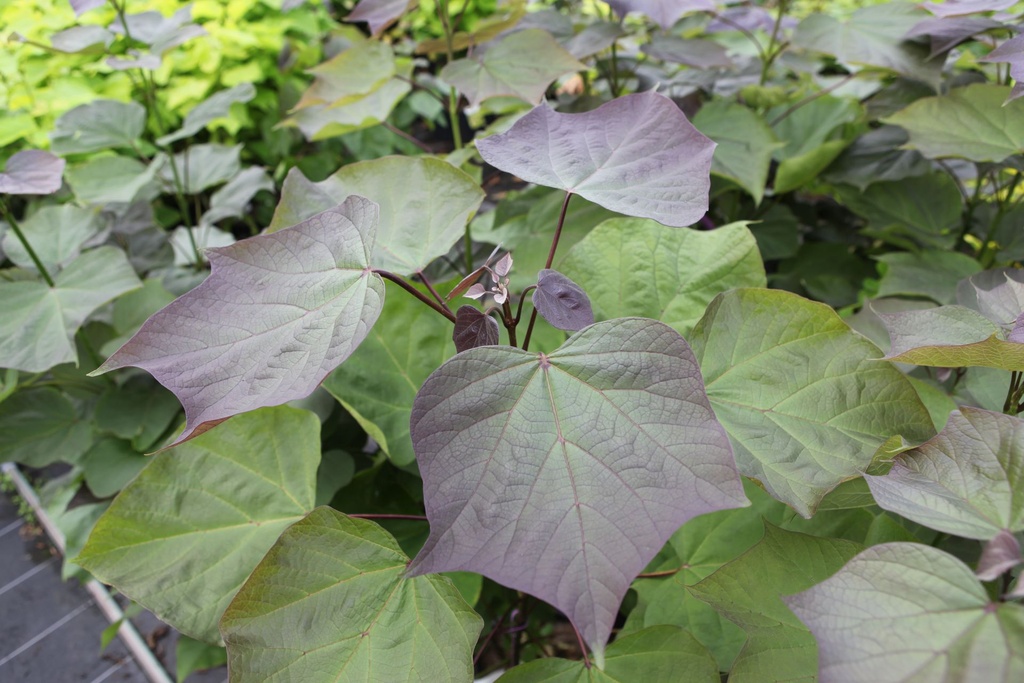
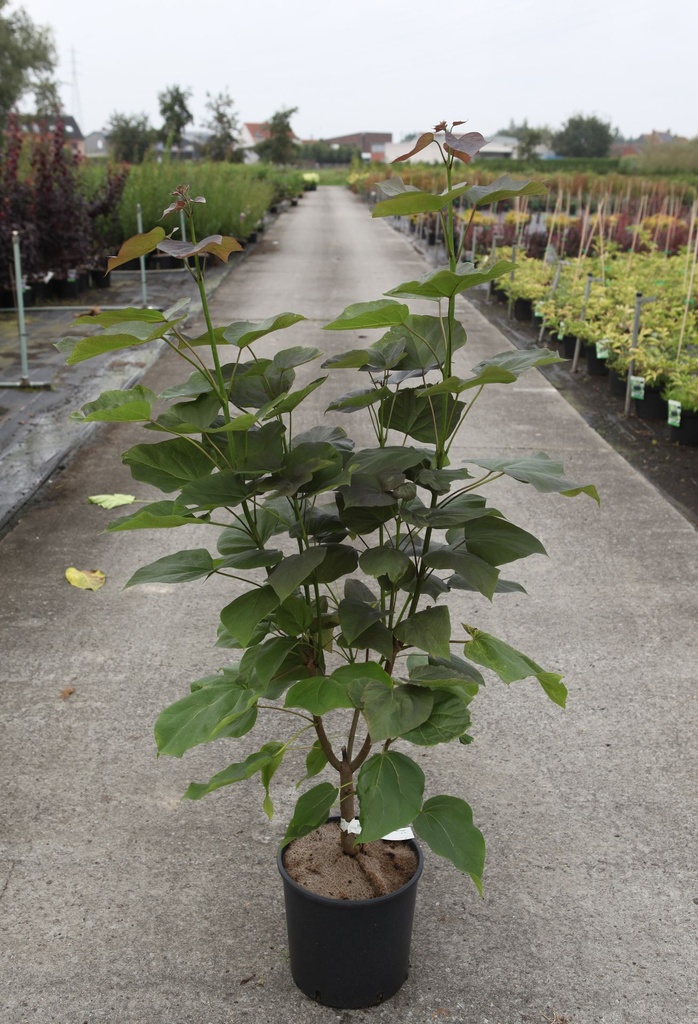
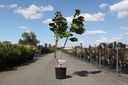
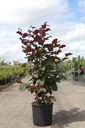
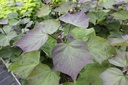
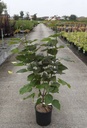
'Purpurea' is the dark-leaved selection of this hybrid: its large spring foliage is a deep purple-brown, set off by dark young shoots, and slowly turns dark green over the summer, when white flowers appear in July and August. Raised in England by A. Waterer before 1886, it is still uncommon in gardens.
Catalpa
Catalpas, or Indian bean trees (Catalpa), are deciduous trees from North America and East Asia. They grow fast into a broad, shady crown with very large, heart-shaped leaves. In summer they carry upright panicles of bell-shaped flowers, followed by long, thin pods that stay on the bare branches well into winter.
Catalpa erubescens
Catalpa x erubescens is a garden hybrid between the southern catalpa and the Chinese Catalpa ovata, raised in France in the 19th century. It grows into a medium-sized tree, often from a multi-stemmed base, with a pyramidal crown that later becomes rounded. Young leaves are tinged purple-brown and often three-pointed; they turn dark green in summer. White, yellow-throated flowers appear in July and August.
Location and soil
Grows in sun or light shade on any deep, well-drained soil and is undemanding otherwise; avoid wet or compacted ground, which can lead to root rot. It is very hardy, but its brittle wood calls for a spot out of the wind. It does not tolerate paving over the root zone.
Pruning and care
Water well after planting and during dry weeks while the tree establishes. Prune only to remove dead, damaged or crossing branches, between November and March, ideally in late winter. A firmer cut-back is tolerated and brings out the coloured young foliage.
Use in the garden
A striking specimen or shade tree for parks, avenues and larger gardens, valued for its coloured spring foliage. It also fits into a mixed border as a multi-stemmed tree. The flowers are a good source of food for bees, and the slender pods hang on into winter.
Plant characteristics
Botanical
| Family | Bignoniaceae |
| Genus | Catalpa |
| Species | erubescens |
| Cultivar | 'Purpurea' |
Flowering
| Flowering period | july to august |
| Colour (flower) | white |
Foliage
| Evergreen | no |
| Colour (foliage) | green, violet |
Growth habit
| Height | >1000 cm, 1000 cm |
Location
| Winter hardiness | zone 6a (down to -23,3 °C) |
| Summer heat | up to heat zone 9 |
Care
| Pruning | november to march |