




About this plant
Castanea
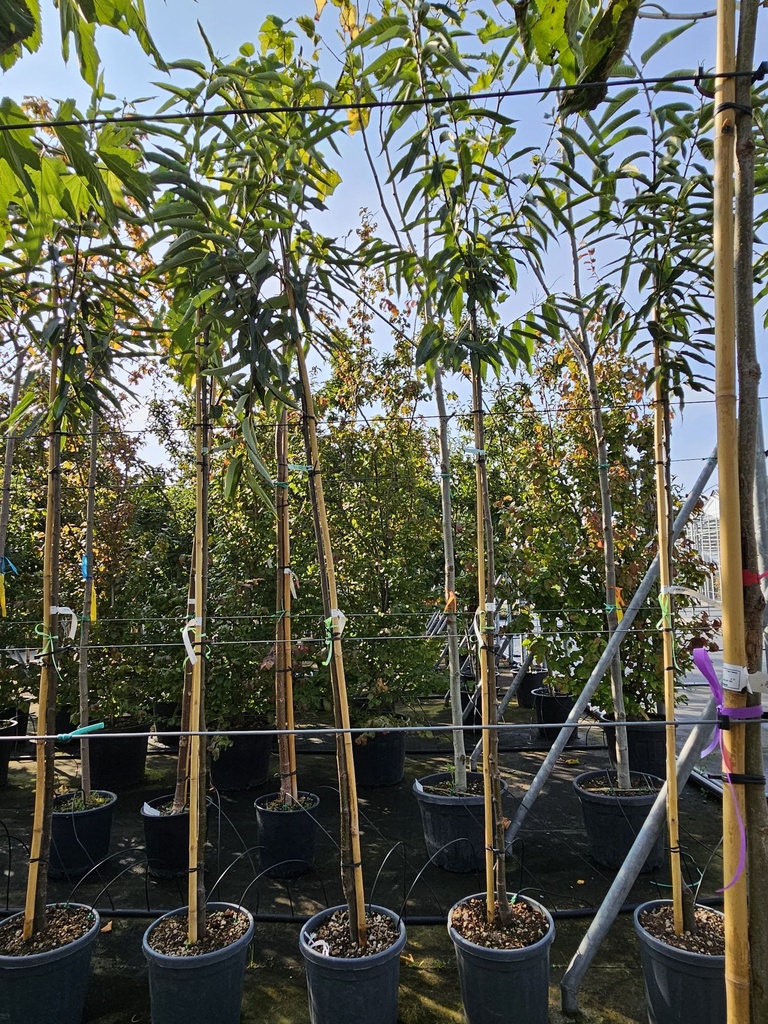
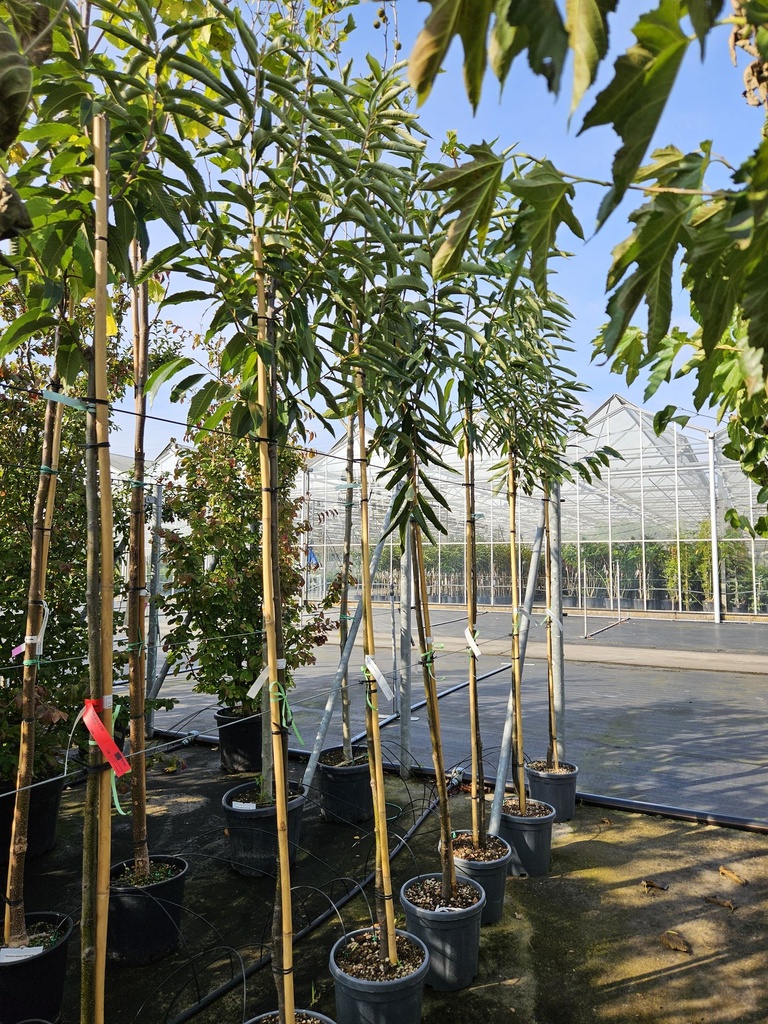
Chestnuts (Castanea) are deciduous trees and shrubs from the beech family, found in the temperate regions of Europe, North America, China and Japan. They are known for their long, glossy, saw-toothed leaves, fragrant catkins in early summer and edible nuts held in a very spiny husk, and they can live for centuries.
Castanea sativa
The sweet chestnut grows wild around the Mediterranean, the Black Sea and the Caspian Sea and was spread through Europe by the Romans. It becomes a broad tree of 20 to 30 m with a short, heavy trunk whose deeply furrowed bark twists around the stem. Long, honey-scented creamy catkins appear in June and July, followed by spiny husks containing glossy brown chestnuts that ripen in September and October.
Location and soil
Plant in sun or partial shade in a deep, sandy, well-drained and lime-free soil, ideally slightly acidic. It does not tolerate chalk or standing water. Very hardy in Belgium; only late spring frost can occasionally damage the new shoots.
Pruning and care
Prune lightly once a year in February or March: shape the young tree and gradually remove the lowest branches so you can walk beneath it later. Water during dry summers, especially from late July, when next year's flower buds are being formed. Some varieties need a second chestnut nearby for good fruit set.
Use in the garden
A long-lived tree for parks, large gardens, avenues and orchards, grown for its edible chestnuts, which are roasted, boiled or made into flour and purée. It is also an important timber tree, and its summer flowers are visited by many bees.
Plant characteristics
Care
| Pruning | february, march |
Related products

Castanea sativa 'Bouche de Betizac'
cont. 15L 160 cm standard

Castanea sativa 'Bouche de Betizac'
cont. 18L half standard