

|
J
|
F
|
M
|
A
|
M
|
J
|
J
|
A
|
S
|
O
|
N
|
D
|
|
J
|
F
|
M
|
A
|
M
|
J
|
J
|
A
|
S
|
O
|
N
|
D
|
|
J
|
F
|
M
|
A
|
M
|
J
|
J
|
A
|
S
|
O
|
N
|
D
|
About this plant
What makes this plant special
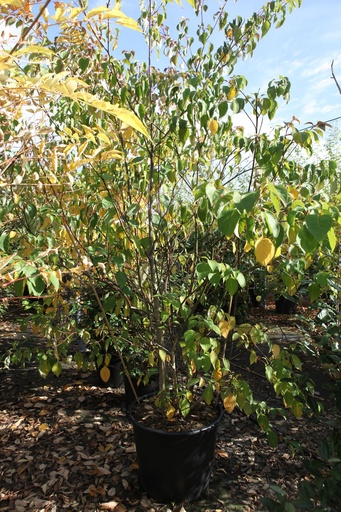
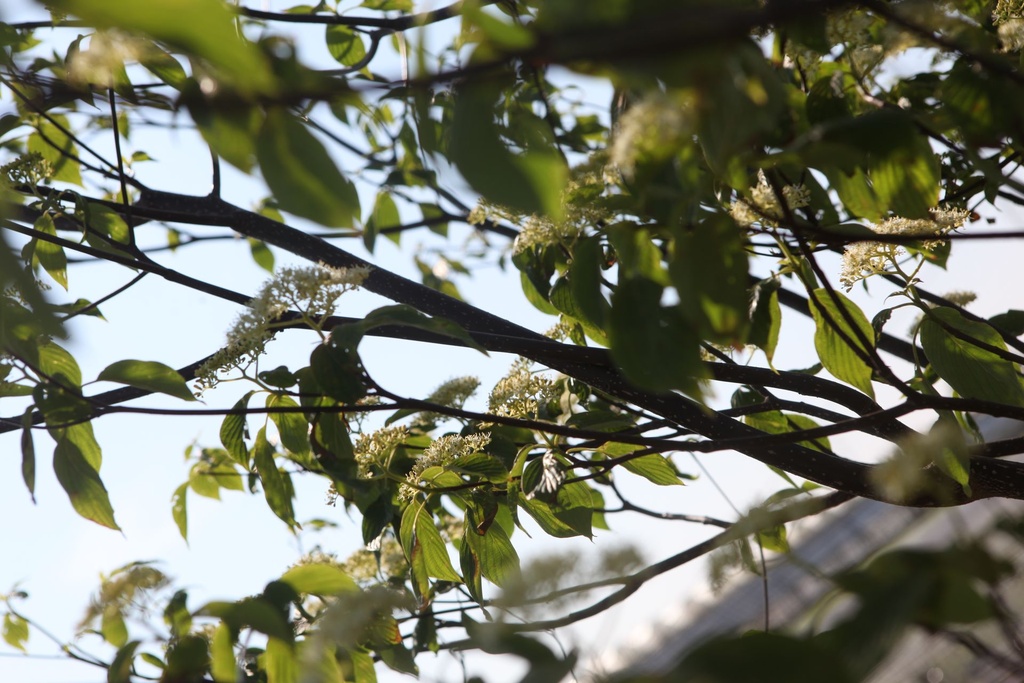
One of the largest dogwoods, it slowly develops into a tree of around 12 m with a spread of 7 to 8 m. The flower heads, 10 to 15 cm across, are lightly fragrant and popular with pollinators, and the reddish young shoots and layered branches remain striking in winter. Give it room as a lawn specimen in moist, not too chalky soil.
Dogwood Cornus
Dogwoods (Cornus) are deciduous or evergreen shrubs, small trees and a few creeping perennials from the temperate northern hemisphere. Some are grown for their brightly coloured winter stems, others for the showy white or pink bracts around their tiny flowers, and many for their fiery autumn colour and berries that birds enjoy.
Giant dogwood Cornus controversa
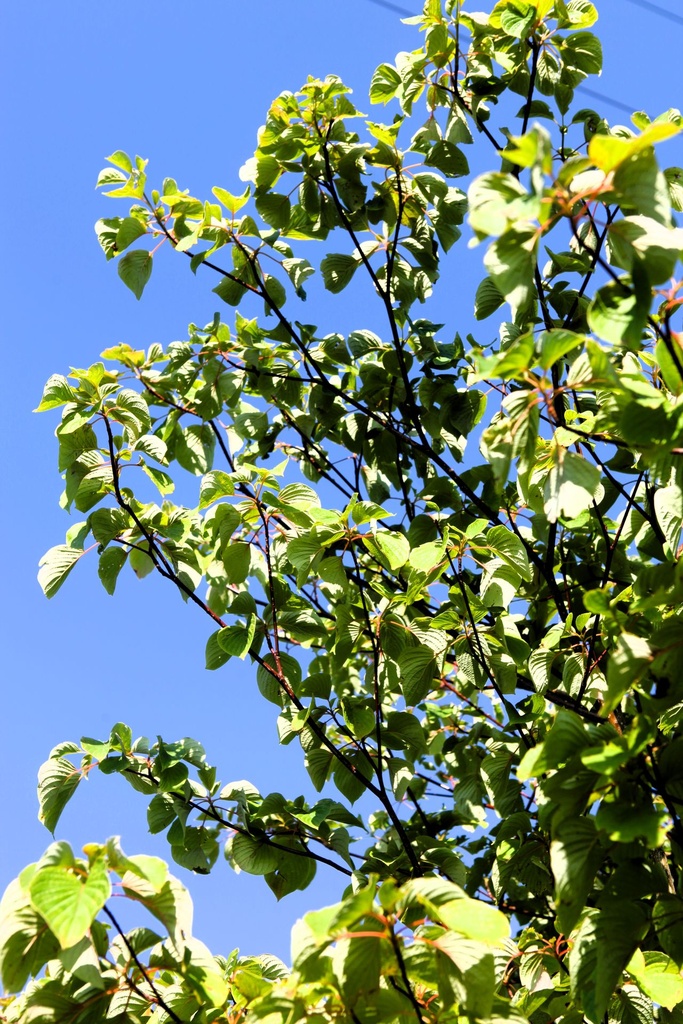
Giant dogwood (Cornus controversa) is a tree from Japan, China and the Himalaya whose branches grow almost horizontally in distinct tiers. Its glossy, alternate leaves are bluish beneath and turn purple-red in autumn. In late spring broad, flat heads of small creamy flowers line the branches, followed by blue-black berries.
Location and soil
It needs room, as it can grow to around 12 m over time. Plant it in sun or partial shade in a cool, humus-rich soil that is neutral to slightly acid; on chalky soil, add acidic organic matter. It is hardy in Belgium.
Pruning and care
No pruning is needed, as the tiered shape develops on its own. If a correction is unavoidable, make it in summer or autumn, because the tree bleeds sap in spring. Mulch and feed regularly.
Use in the garden
A striking specimen for a lawn or large border, where its layered silhouette becomes a focal point all year round. It combines well with azaleas, pieris and rhododendrons.
Plant characteristics
Botanical
| Family | Cornaceae |
| Genus | Cornus |
| Species | controversa |
Flowering
| Flowering period | may to june |
| Colour (flower) | white |
Foliage
| Evergreen | no |
| Colour (foliage) | green |
Growth habit
| Height | 500 cm |
Location
| Winter hardiness | -25 °C |
| Soil type | acid, neutral |
| Soil type | acid, neutral |
| Location | sun, half shade |
| Soil moisture | moist |
Use
| Type (use) | shrub, tree/standard, solitary |
Care
| Pruning | february to march |