




|
J
|
F
|
M
|
A
|
M
|
J
|
J
|
A
|
S
|
O
|
N
|
D
|
|
J
|
F
|
M
|
A
|
M
|
J
|
J
|
A
|
S
|
O
|
N
|
D
|
|
J
|
F
|
M
|
A
|
M
|
J
|
J
|
A
|
S
|
O
|
N
|
D
|
About this plant
What makes this plant special
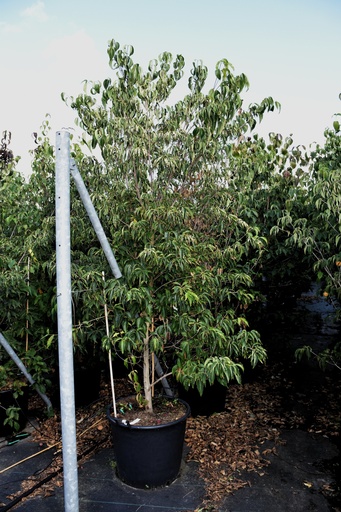
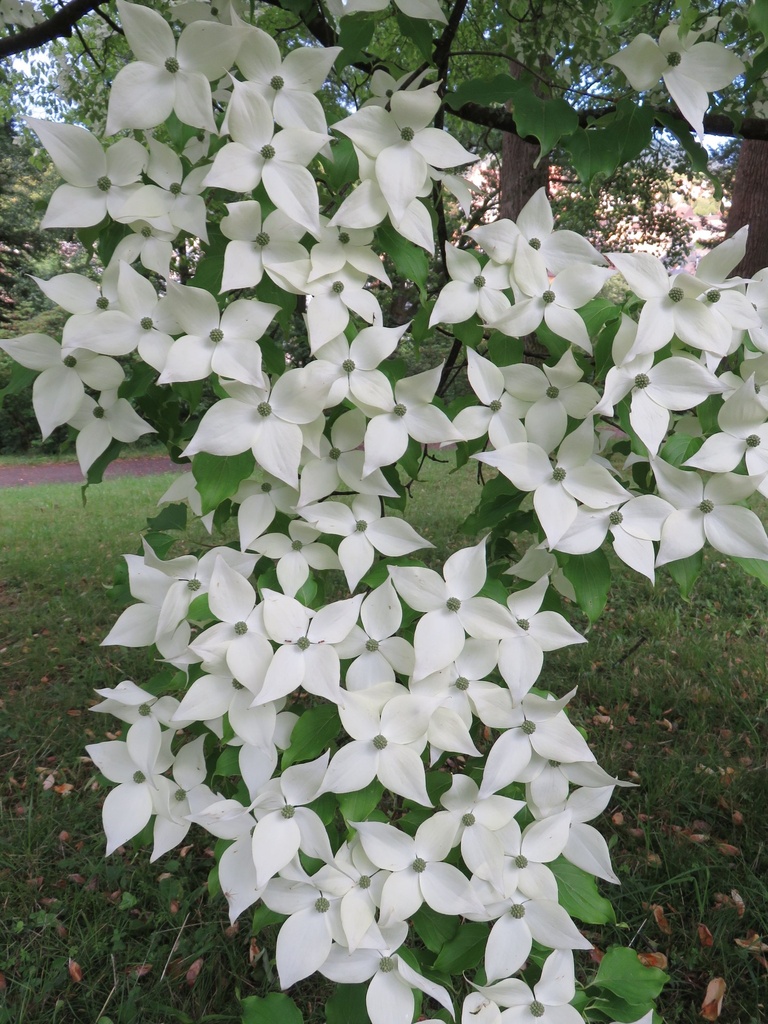
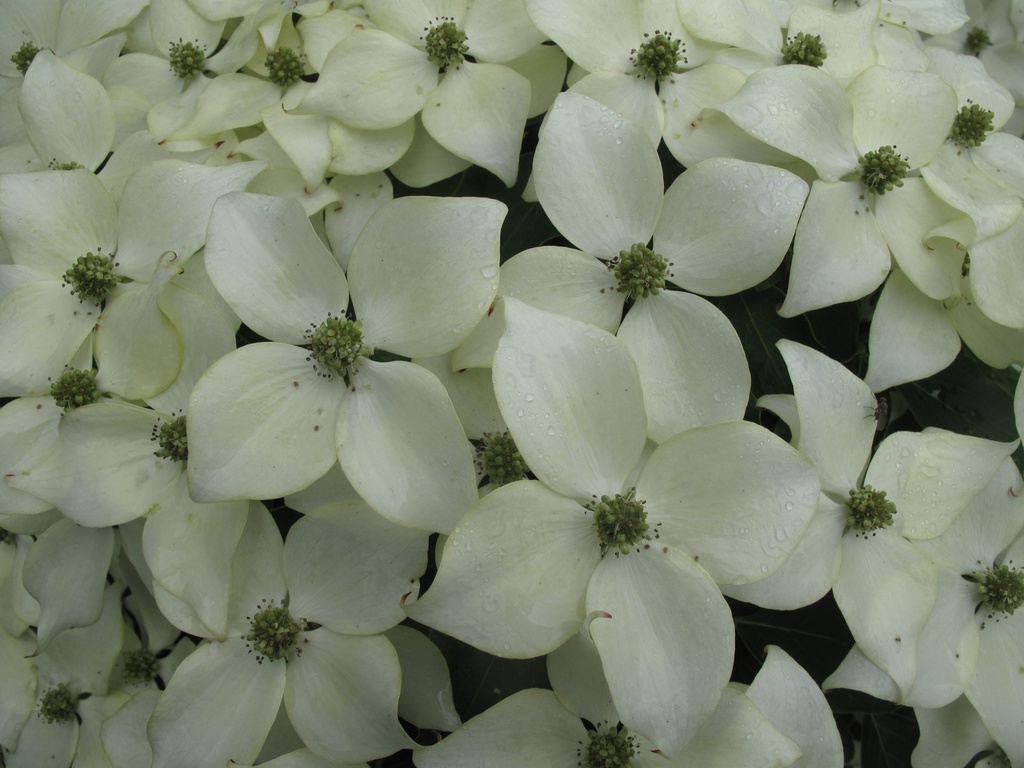
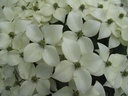
The Chinese form of kousa dogwood is more vigorous than the type and carries larger, pure white bracts that almost cover the foliage in June and July, taking on a pink blush as they fade. It can eventually reach 7 m with a spread of 5 m, but grows slowly, staying around 4 m after ten years.
Dogwood Cornus
Dogwoods (Cornus) are deciduous or evergreen shrubs, small trees and a few creeping perennials from the temperate northern hemisphere. Some are grown for their brightly coloured winter stems, others for the showy white or pink bracts around their tiny flowers, and many for their fiery autumn colour and berries that birds enjoy.
Kousa dogwood Cornus kousa
Kousa dogwood (Cornus kousa) is a large shrub or small tree from Japan, Korea and China with spreading, often tiered branches. From late May into July four pointed white to pink bracts cover the plant, followed by red, strawberry-like fruits and bright red autumn colour. Old trunks develop flaking bark.
Location and soil
It thrives in sun or partial shade in a deep, fertile, humus-rich soil that is well drained and neutral to acid, though a little lime is tolerated. Clay is fine if it does not stay wet in winter. It comes into leaf late, so it usually escapes spring frosts, and it is hardy.
Pruning and care
No regular pruning is needed; remove dead or crossing branches in March. Water regularly during the first two summers and keep a mulch of pine bark. It resists anthracnose far better than the American flowering dogwood.
Use in the garden
An excellent flowering tree for small gardens: as a specimen in the lawn, in a border or in a large container. The fruits are edible and attract birds.
Plant characteristics
Botanical
| Family | Cornaceae |
| Genus | Cornus |
| Species | kousa |
| Cultivar | 'chinensis' |
Flowering
| Flowering period | may to june |
| Colour (flower) | white |
Foliage
| Evergreen | no |
| Colour (foliage) | green |
| Autumn colour | red |
Growth habit
| Height | 300 cm, 500 cm |
| Growth rate | slow |
Location
| Winter hardiness | -30 °C, -25 °C |
| Location | sun, half shade |
Use
| Type (use) | shrub, tree/standard, fruit/berries, solitary |
| Fruits/berries | red |
Care
| Pruning | march |