

|
J
|
F
|
M
|
A
|
M
|
J
|
J
|
A
|
S
|
O
|
N
|
D
|
|
J
|
F
|
M
|
A
|
M
|
J
|
J
|
A
|
S
|
O
|
N
|
D
|
|
J
|
F
|
M
|
A
|
M
|
J
|
J
|
A
|
S
|
O
|
N
|
D
|
About this plant
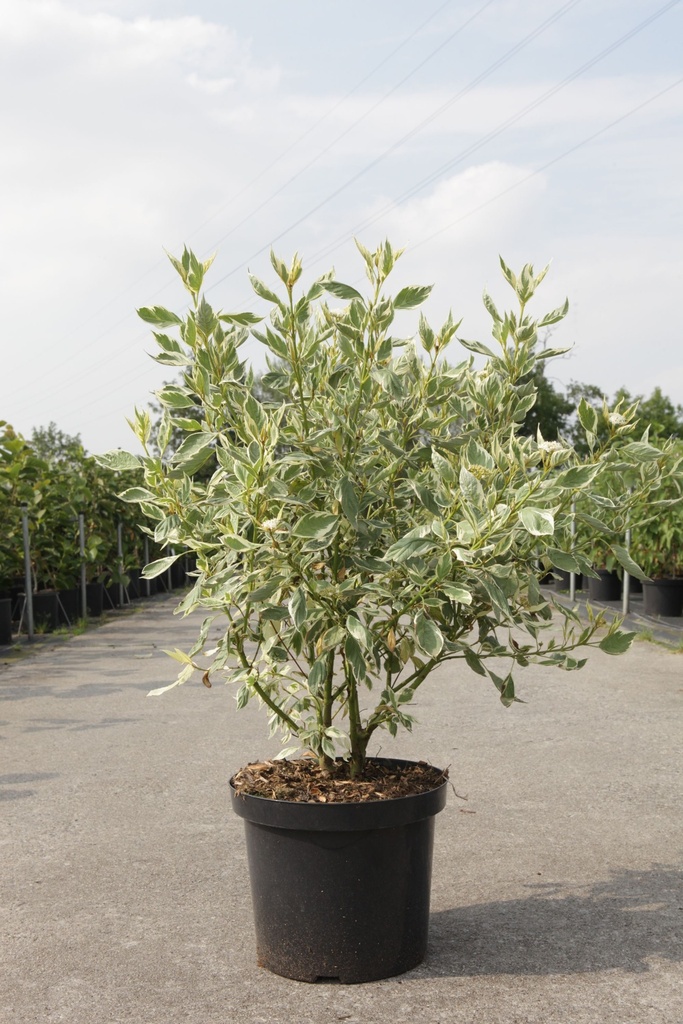
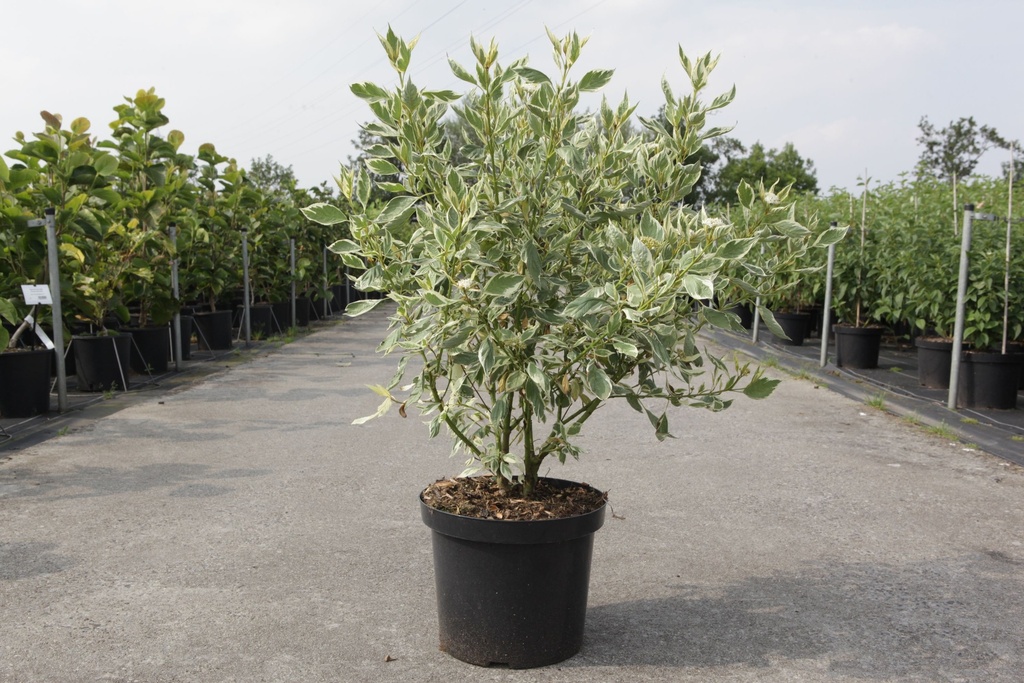
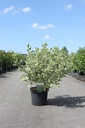
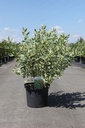
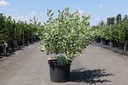
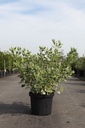
Dogwood Cornus
Dogwoods (Cornus) are deciduous or evergreen shrubs, small trees and a few creeping perennials from the temperate northern hemisphere. Some are grown for their brightly coloured winter stems, others for the showy white or pink bracts around their tiny flowers, and many for their fiery autumn colour and berries that birds enjoy.
Red osier dogwood Cornus sericea
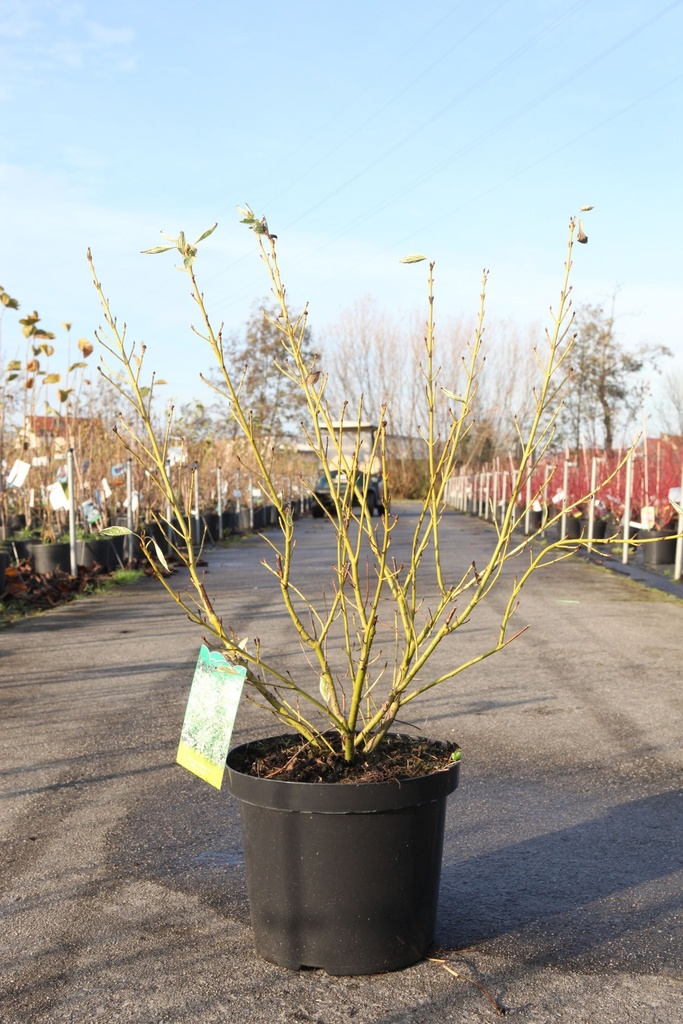
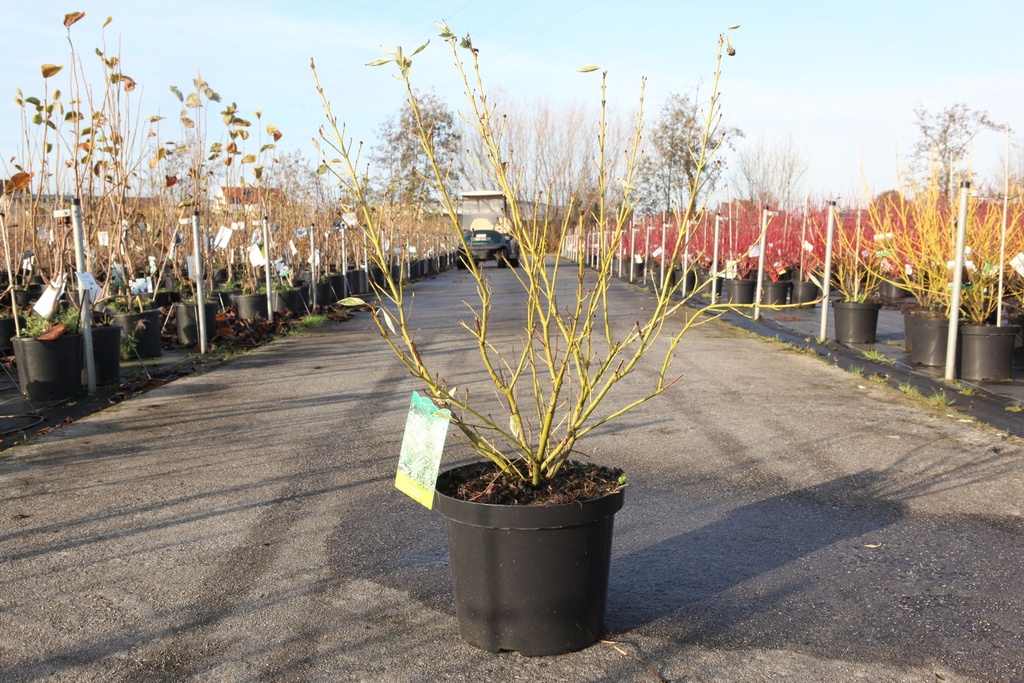
The red osier dogwood comes from North America and forms a spreading, suckering deciduous shrub of about 2 m. It is grown above all for its smooth winter stems, which depending on the form are bright red, yellow or yellow-green. Flat clusters of white flowers appear in May and June, followed by whitish berries.
Location and soil
Grows in sun to shade, with the best stem colour in full sun. Accepts almost any soil, including heavy clay and wet ground, and tolerates waterside conditions. Extremely winter-hardy.
Pruning and care
Young wood colours best, so prune once a year in February or March. Either cut back hard for many bright new stems, or remove a third to half of the oldest stems to keep a natural shape. Suckers can be removed if the shrub spreads too far.
Use in the garden
Excellent for winter interest in borders and mass plantings, for stabilising banks and for damp spots near ponds and streams. Combining red- and yellow-stemmed forms creates a strong winter contrast.
Plant characteristics
Botanical
| Family | Cornaceae |
| Genus | Cornus |
| Species | sericea |
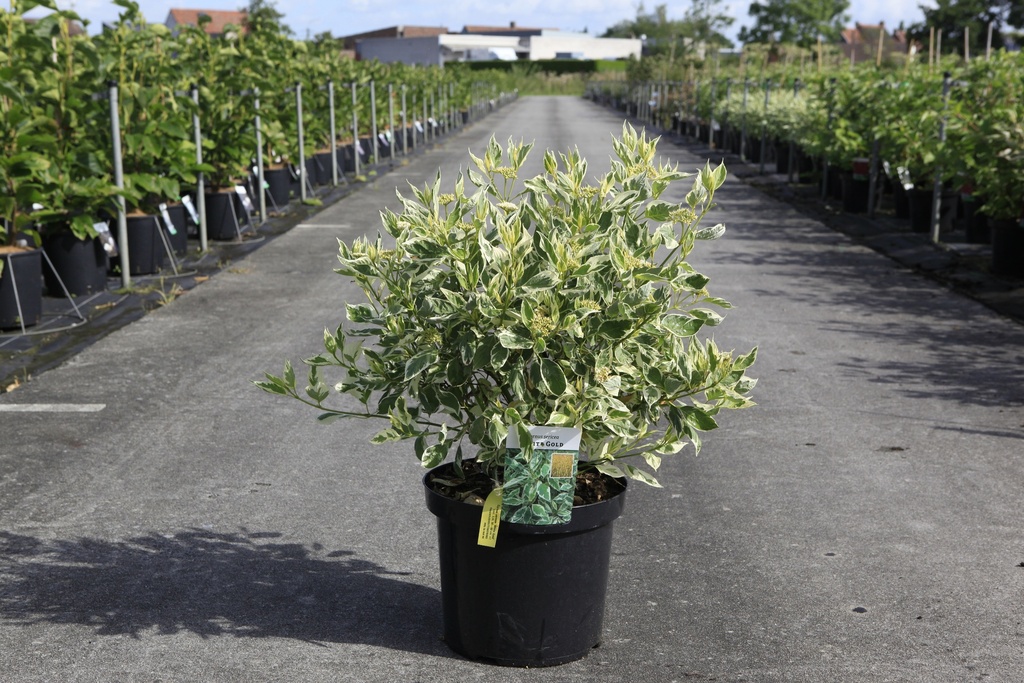
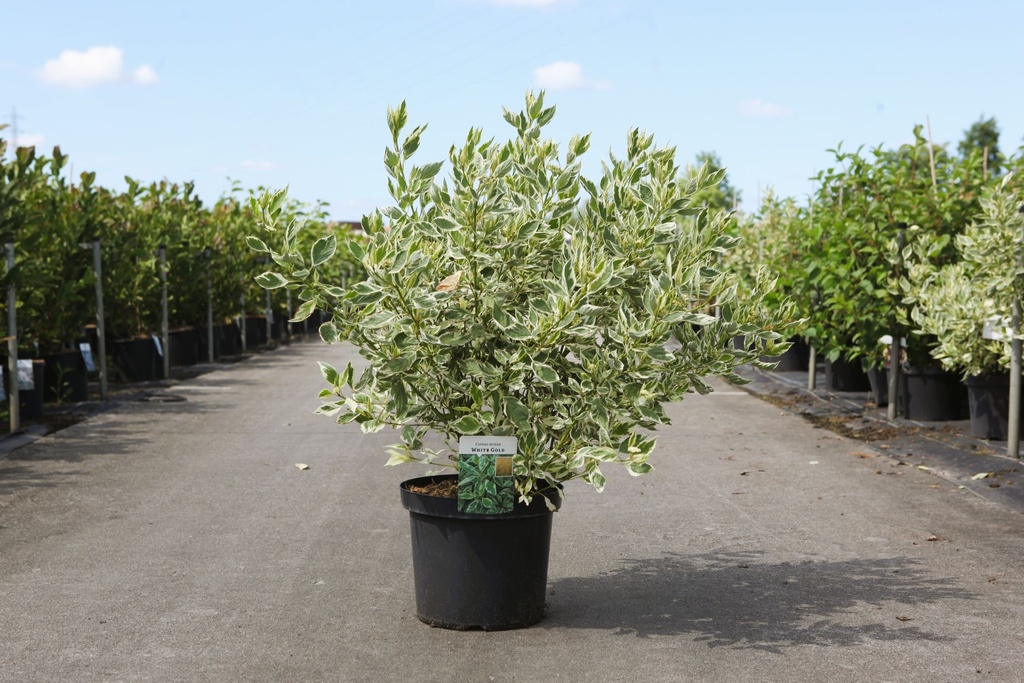
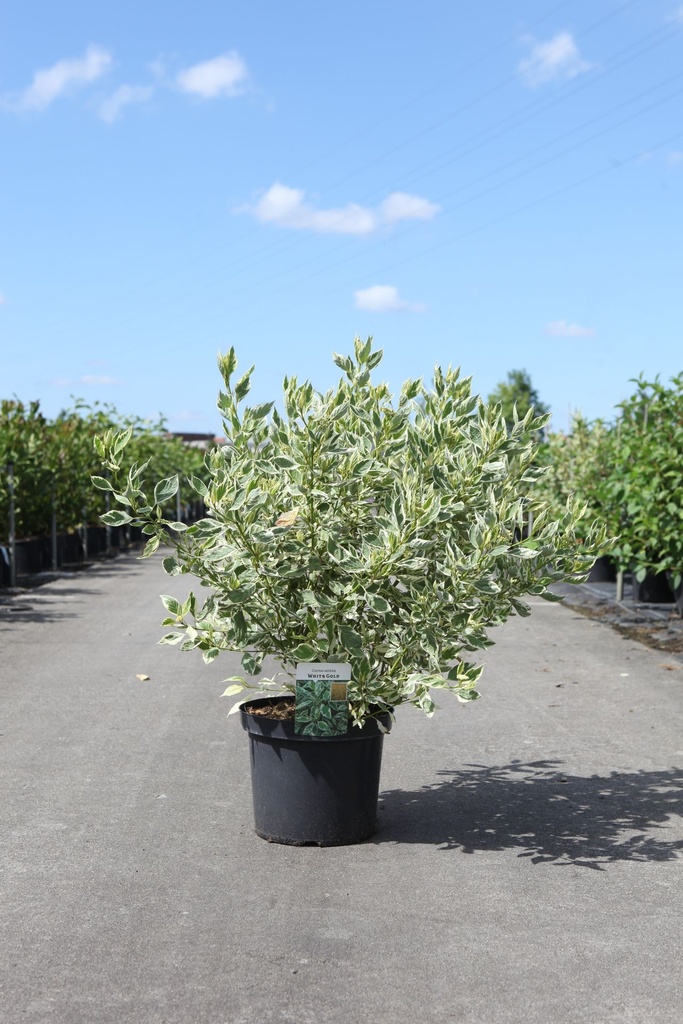
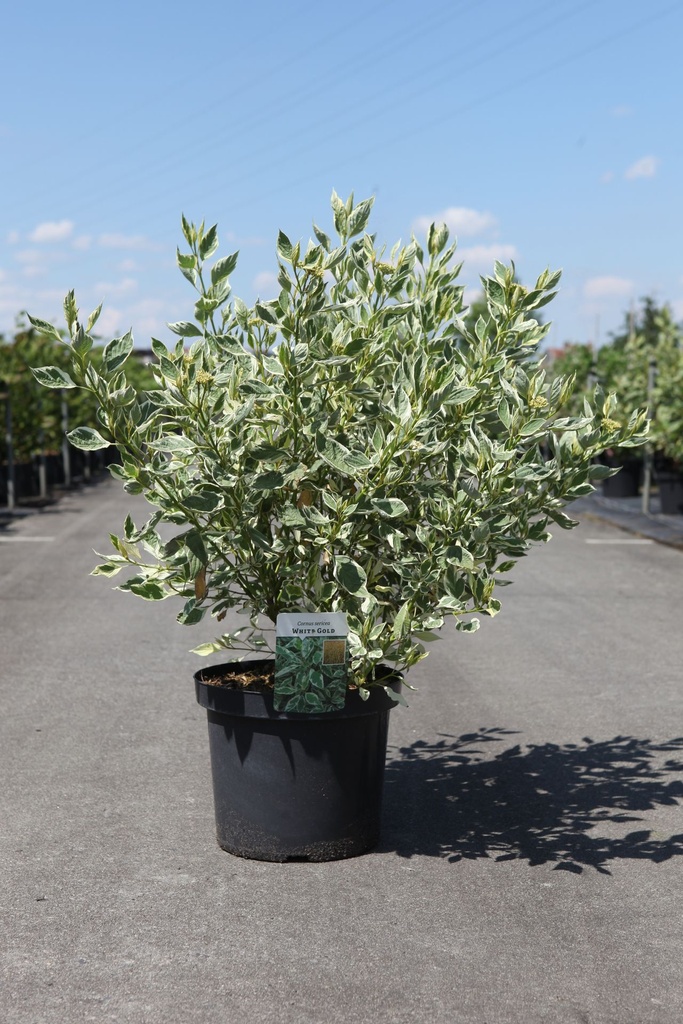
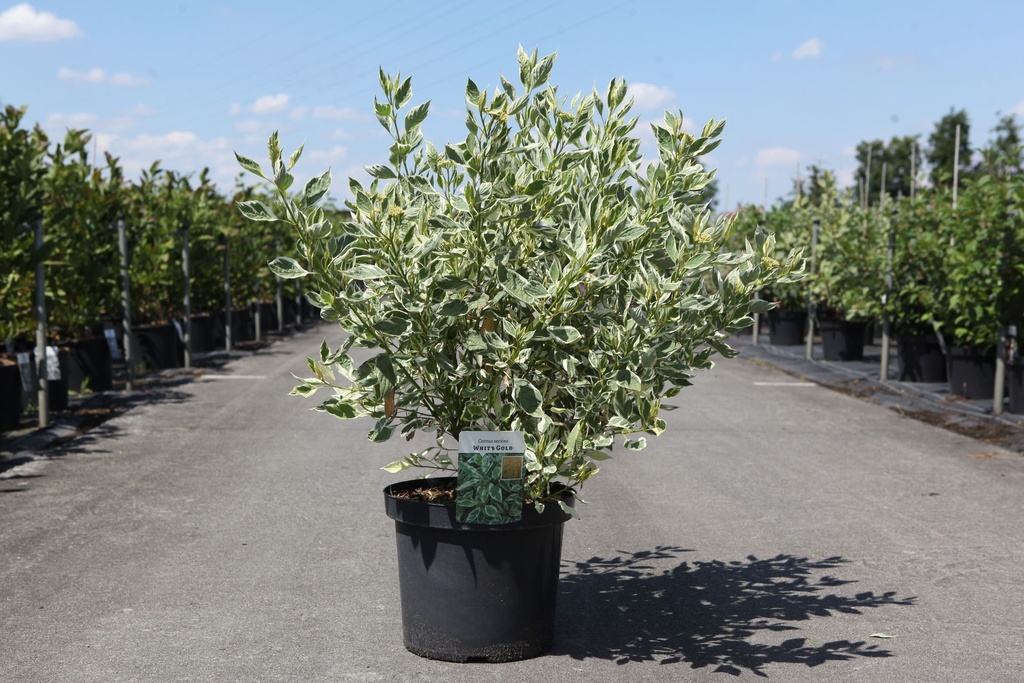
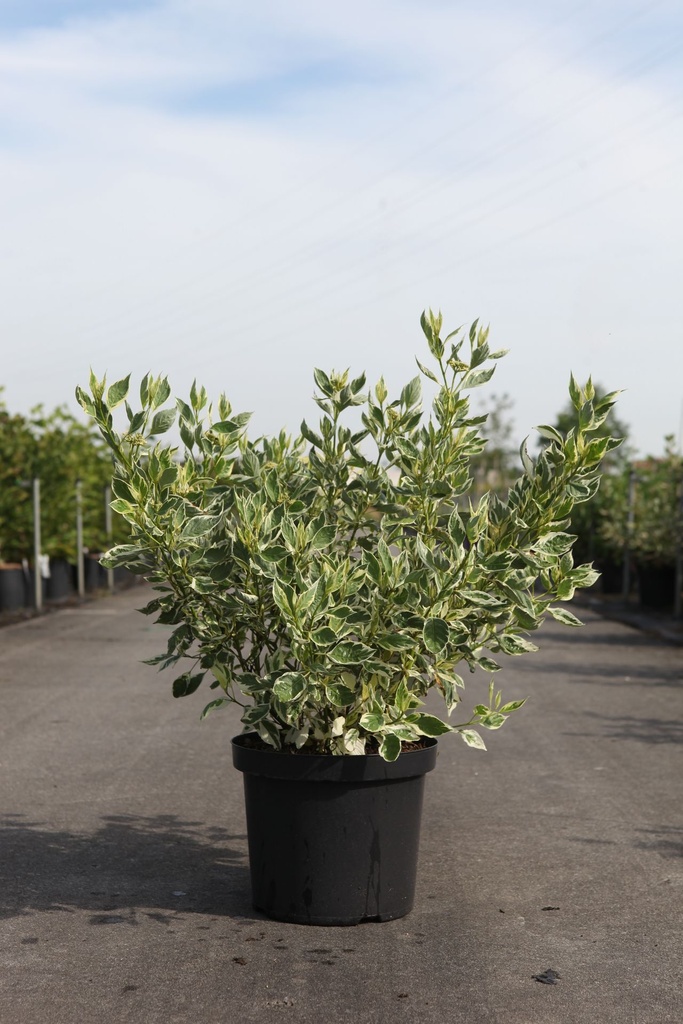
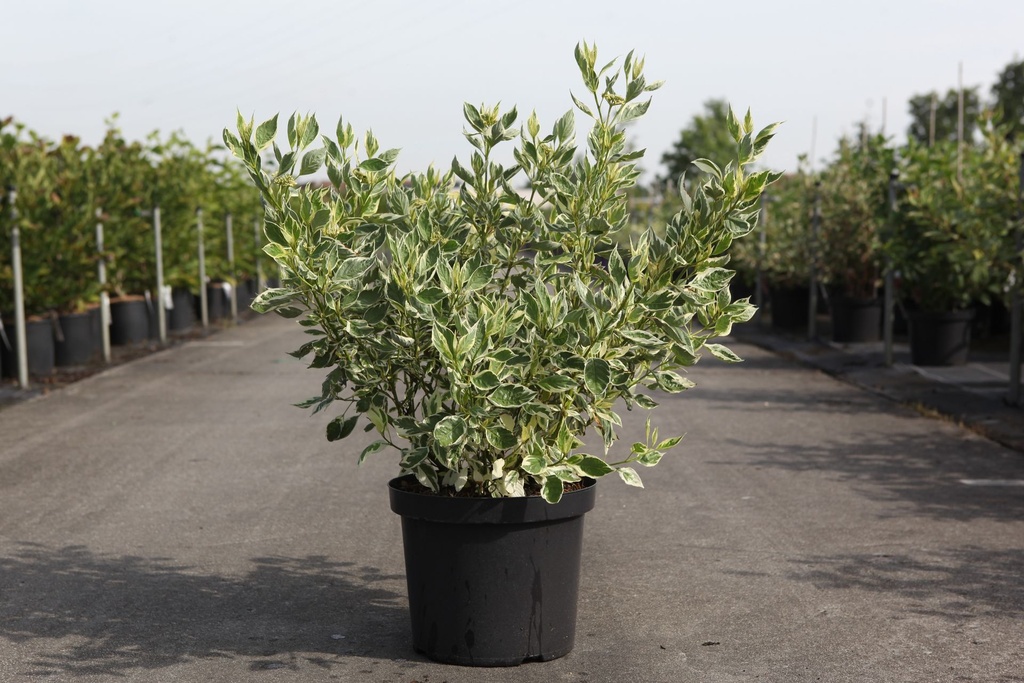
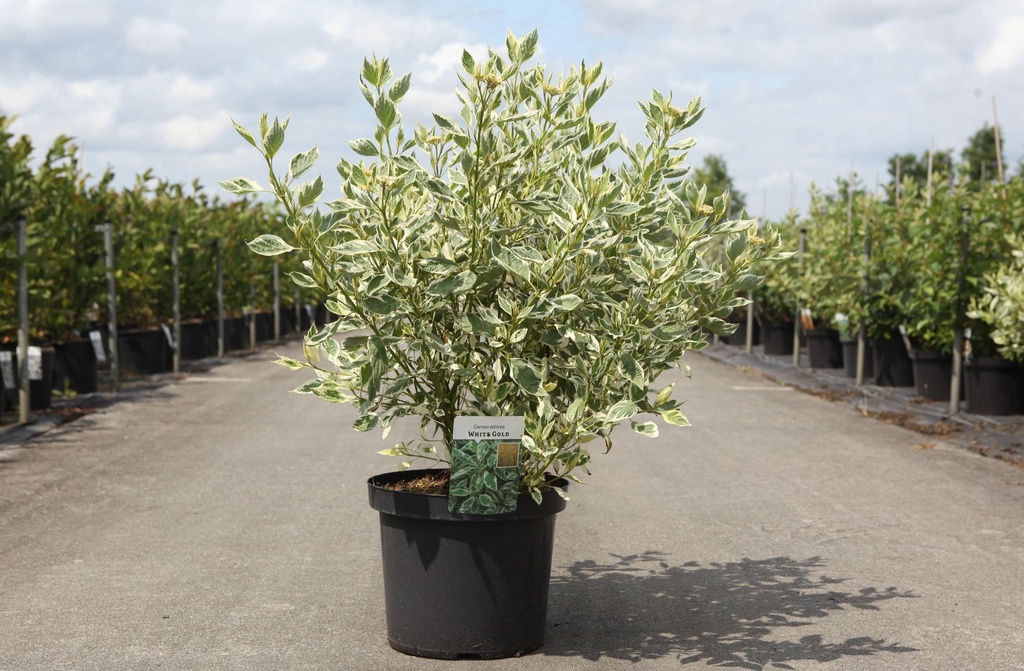
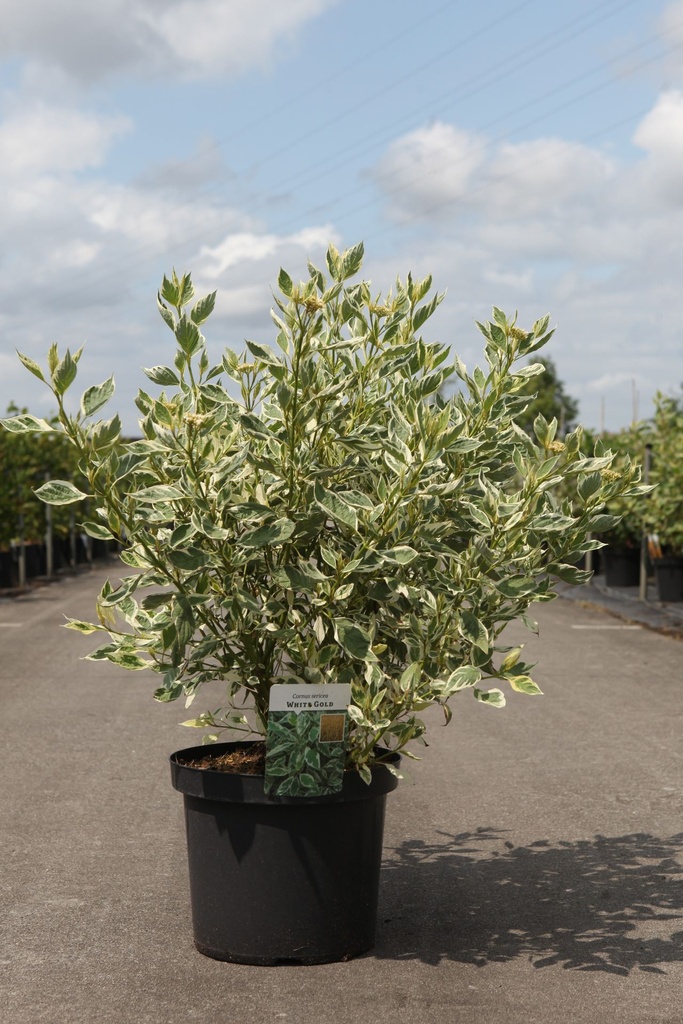
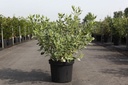
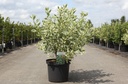
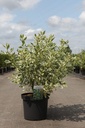
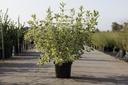
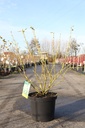
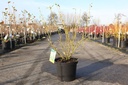
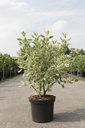
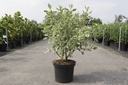
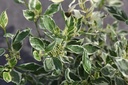
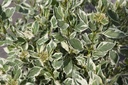
| Cultivar | 'White Gold' |
Flowering
| Flowering period | may to july |
| Colour (flower) | white |
Foliage
| Evergreen | no |
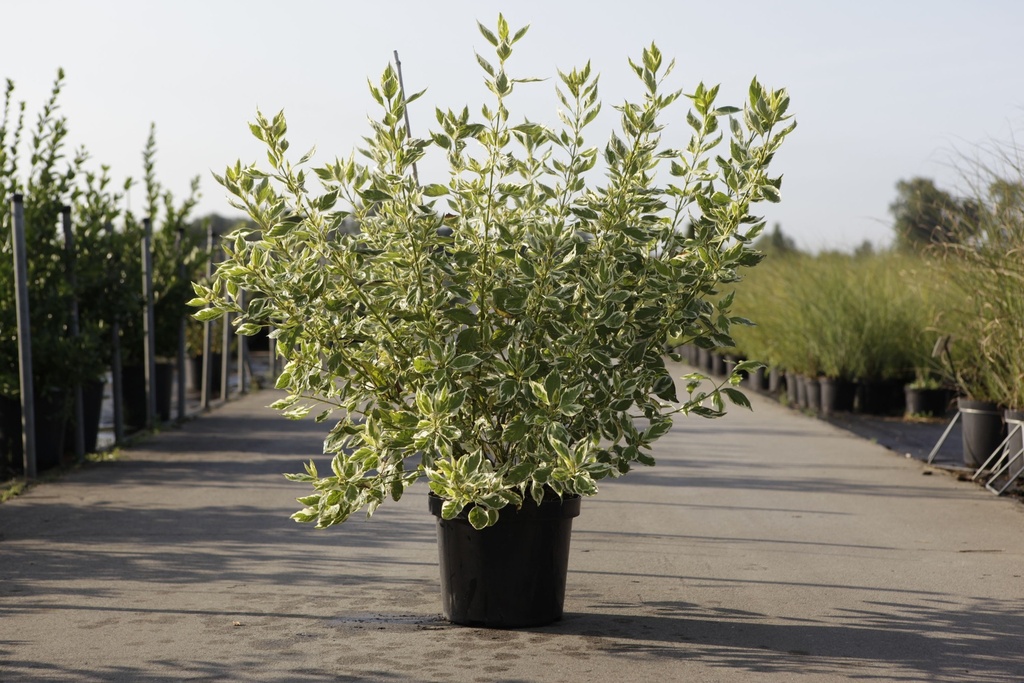
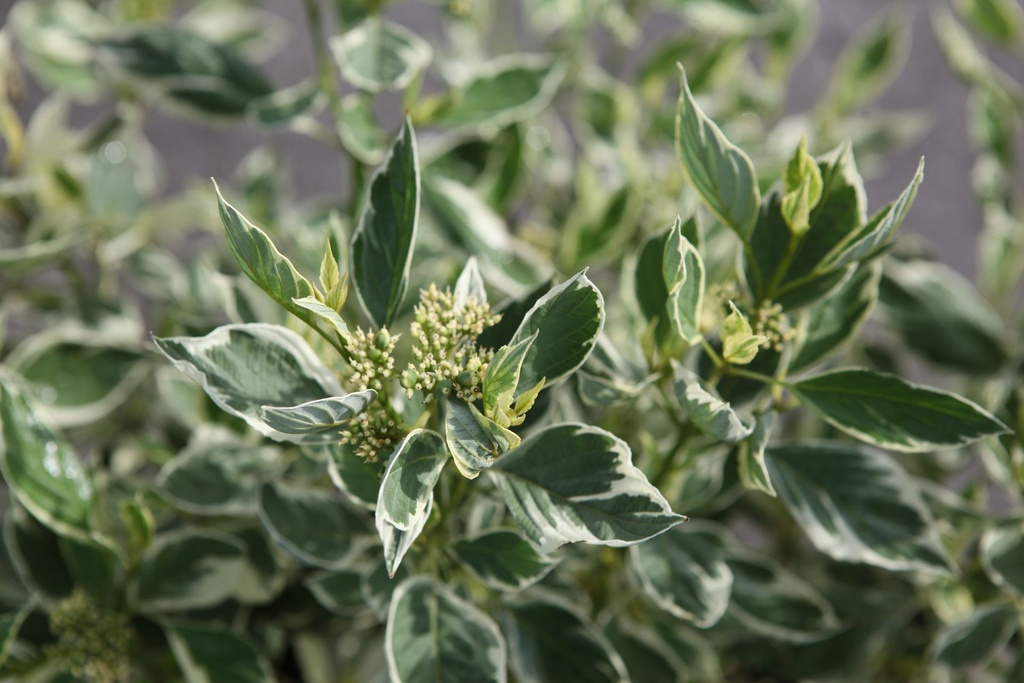
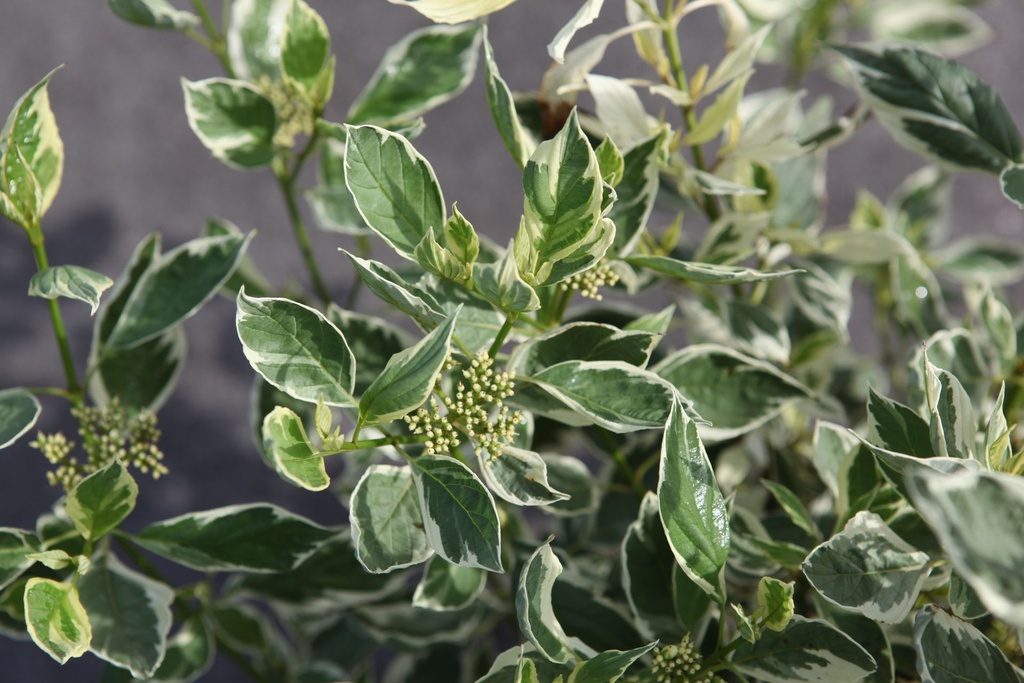
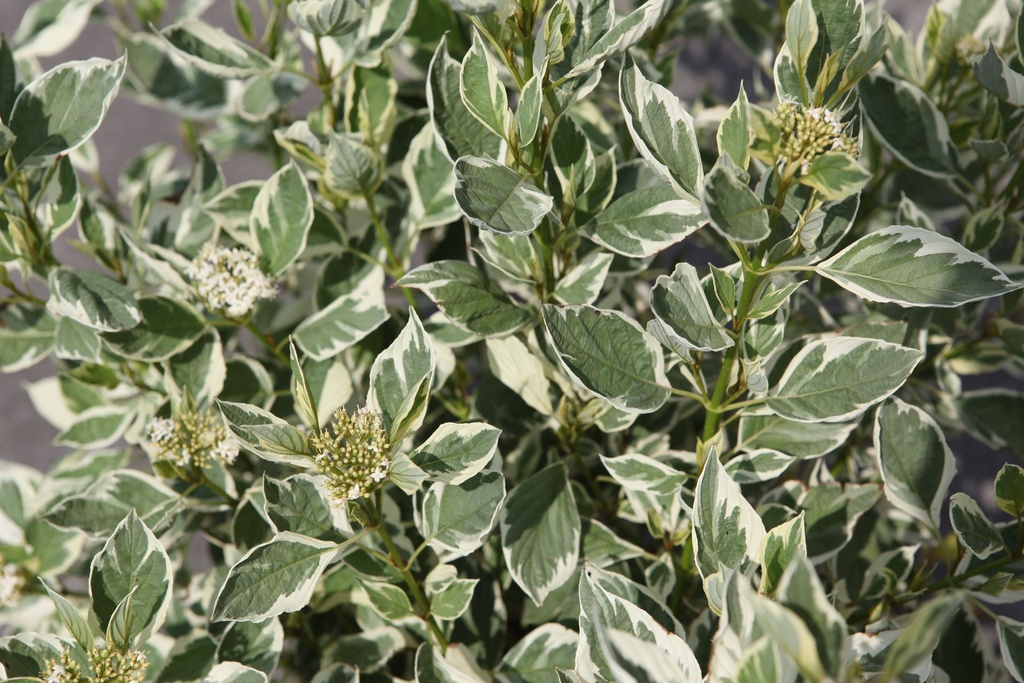
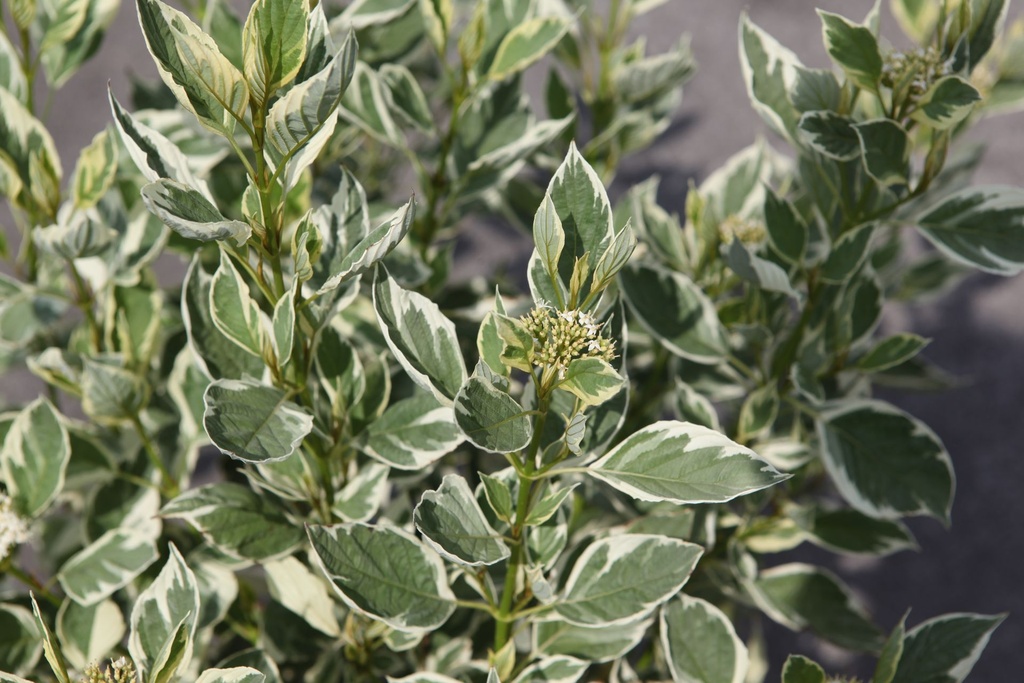
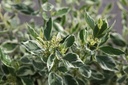
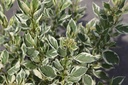
| Colour (foliage) | green, white, variegated |
| Autumn colour | red, violet |
Growth habit
| Height | 150 cm |
Location
| Winter hardiness | -30 °C |
| Soil type | acid, neutral |
| Location | sun |
| Wind resistant | yes |
| Soil moisture | moist, normal |
Use
| Type (use) | shrub, fruit/berries, ground cover, terrace plant |
Care
| Pruning | yes, february to march |

