



About this plant
Redvein enkianthus Enkianthus
Enkianthus is a genus of about ten deciduous shrubs and small trees from the woods and thickets of Japan and China, related to heathers and rhododendrons. In spring they produce hanging clusters of small, often scented bells; in autumn the foliage turns brilliant gold, orange and scarlet. Slow-growing and elegant, they are still rarely seen in gardens.
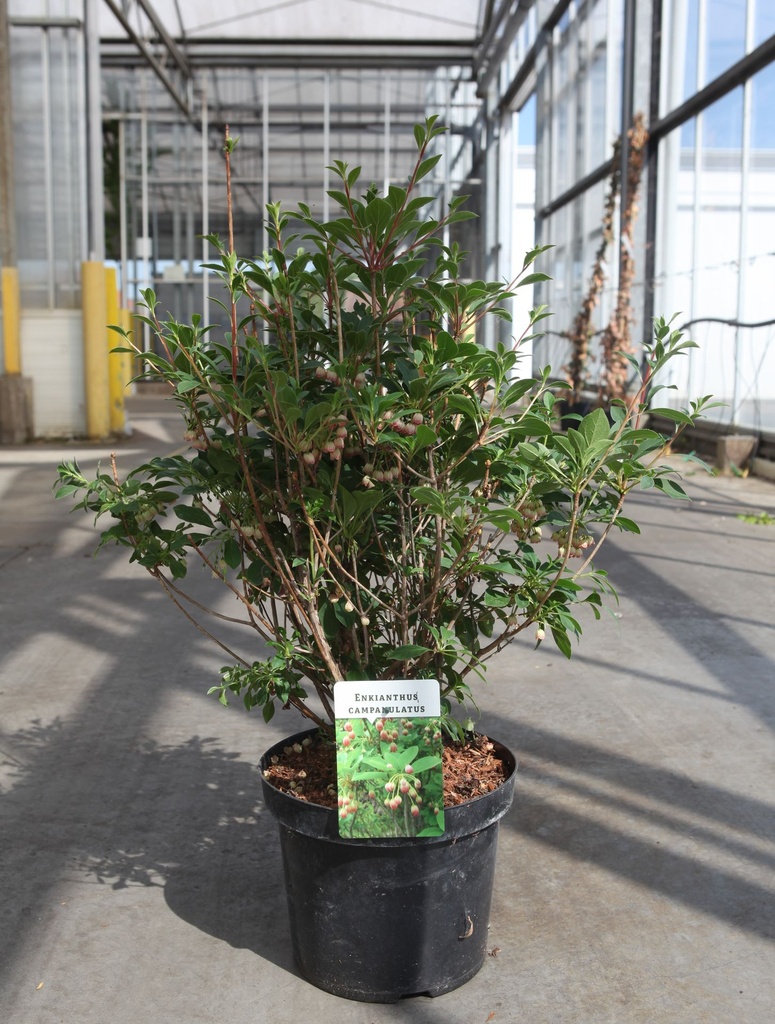
Glockige Prachtglocke Enkianthus campanulatus
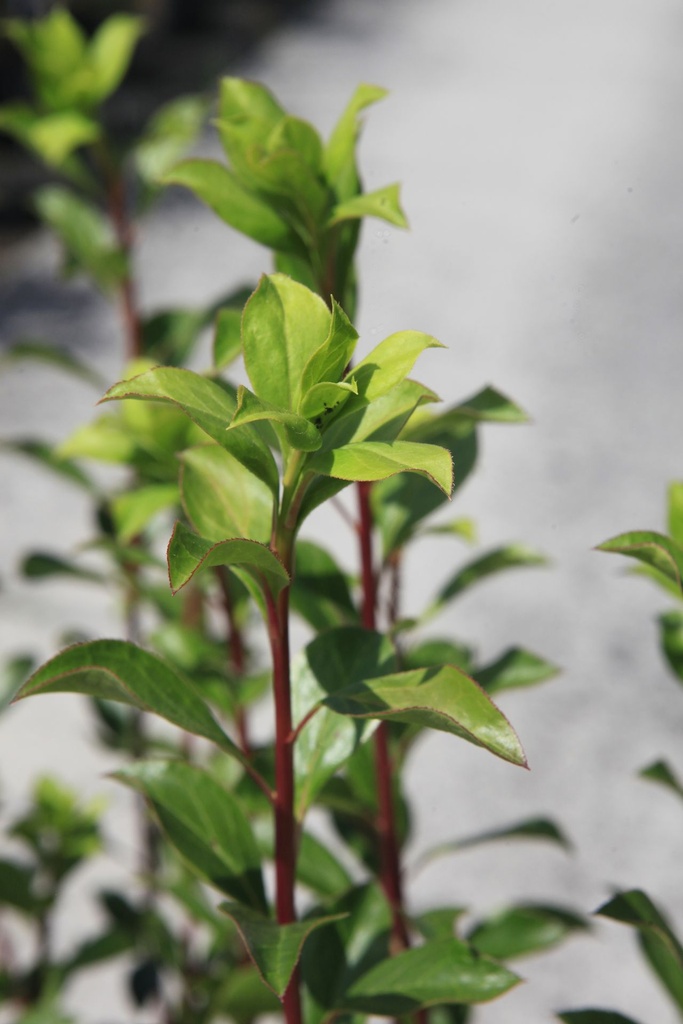
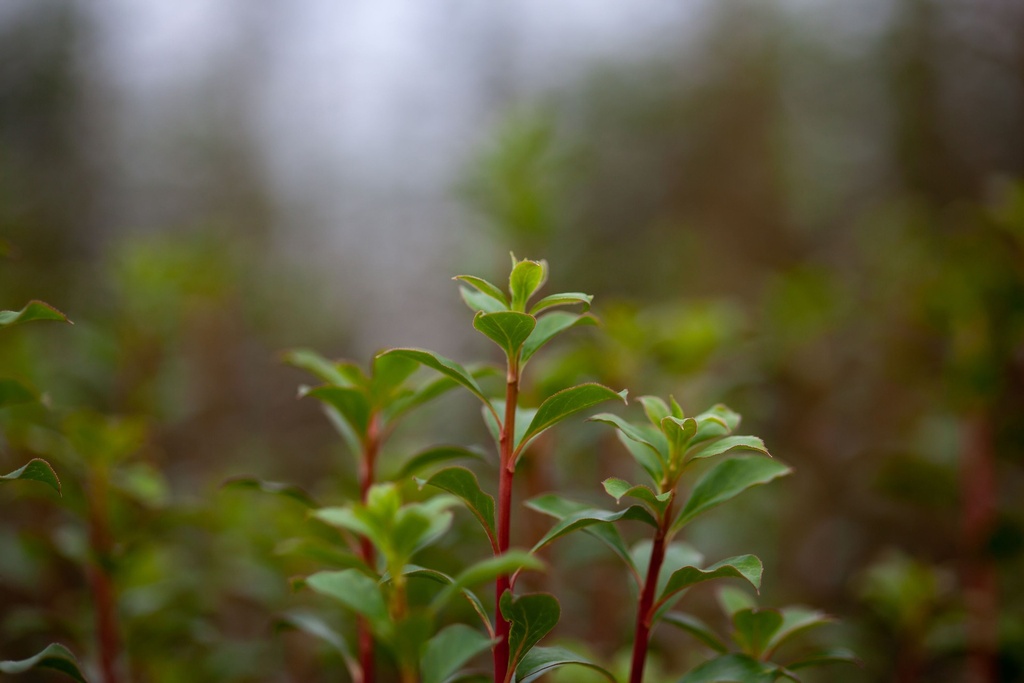
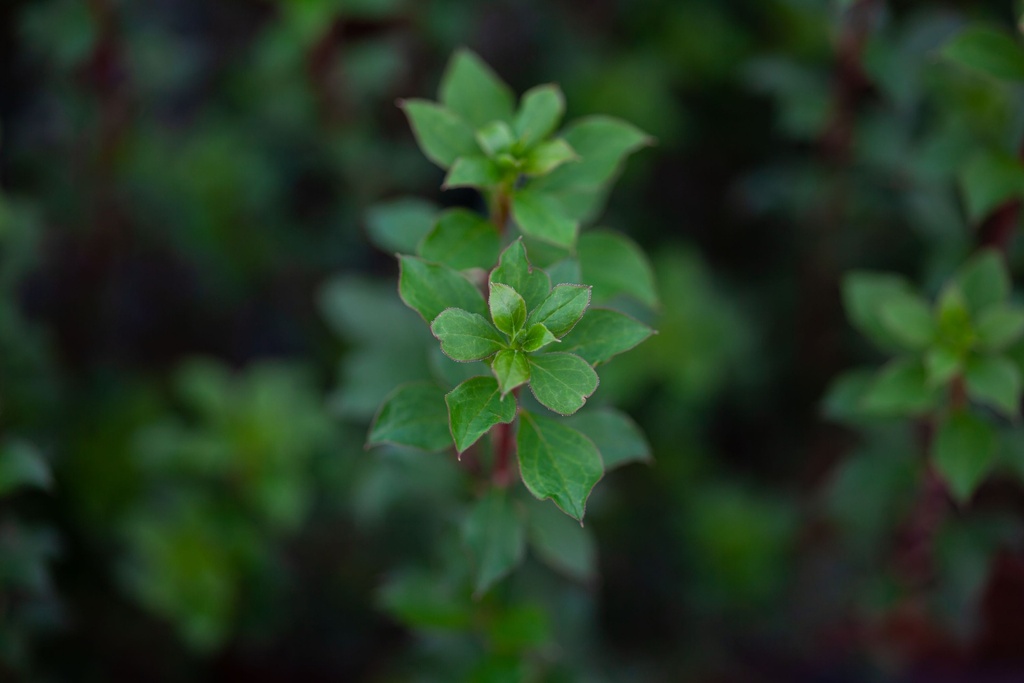
Enkianthus campanulatus is the most widely grown species, native to Japan. It forms an upright, layered shrub that reaches about 1.5 to 2 m fairly quickly and, very slowly, considerably more with age. In May and June it carries dense, pendulous clusters of small cream to pink bells veined with red, and in autumn the leaves turn fiery red and orange.
Location and soil
Plant in partial shade or light shade, sheltered from cold, drying winds. It needs an acid, humus-rich, light soil that stays moist; ericaceous soil is ideal. It does not tolerate lime or dry ground.
Pruning and care
Very hardy in Belgium and easy to grow in the right soil. Keep the soil moist in summer, particularly during establishment, and mulch with leaf mould or bark. No regular pruning is required; if needed, the shrub can be lightly shaped to keep it compact.
Use in the garden
Ideal in shady borders with rhododendrons, azaleas and Pieris, at woodland edges or as a solitary shrub where its autumn colour stands out. Its modest size and slow growth make it suitable for small gardens and for containers on a shaded terrace.
Plant characteristics
Flowering
| Flowering period | april, may |
| Colour (flower) | white, yellow, red, pink |
Foliage
| Evergreen | no |
| Colour (foliage) | green |
| Autumn colour | yellow, orange, red |
Growth habit
| Height | 150 cm |
Location
| Winter hardiness | -25 °C |
| Soil type | acid |
| Location | half shade |
| Wind resistant | normal |
| Soil moisture | moist, normal |
Use
| Type (use) | shrub, fruit/berries, solitary, in group |
| Fruits/berries | red |
Related products
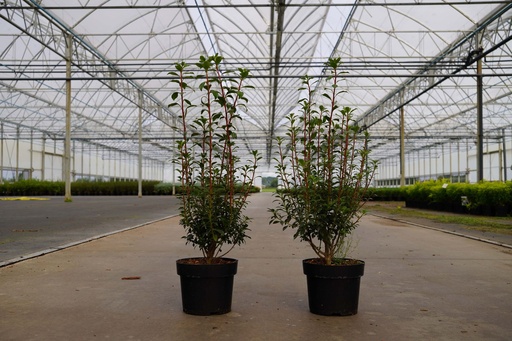
Enkianthus campanulatus
cont. 3L 30-40 cm +p

Enkianthus campanulatus
cont. 7,5L 60-80 cm +p