



About this plant
Spindle tree Euonymus
Spindles (Euonymus) are shrubs, small trees and creeping or climbing plants, mostly from Asia, with one native European species. The group combines evergreen species with glossy, often variegated foliage and deciduous species grown for their fiery autumn colour. The small flowers are inconspicuous, but the four-lobed pink to red capsules that split open to reveal brightly coloured seeds are a real feature in autumn.
European spindle Euonymus europaeus
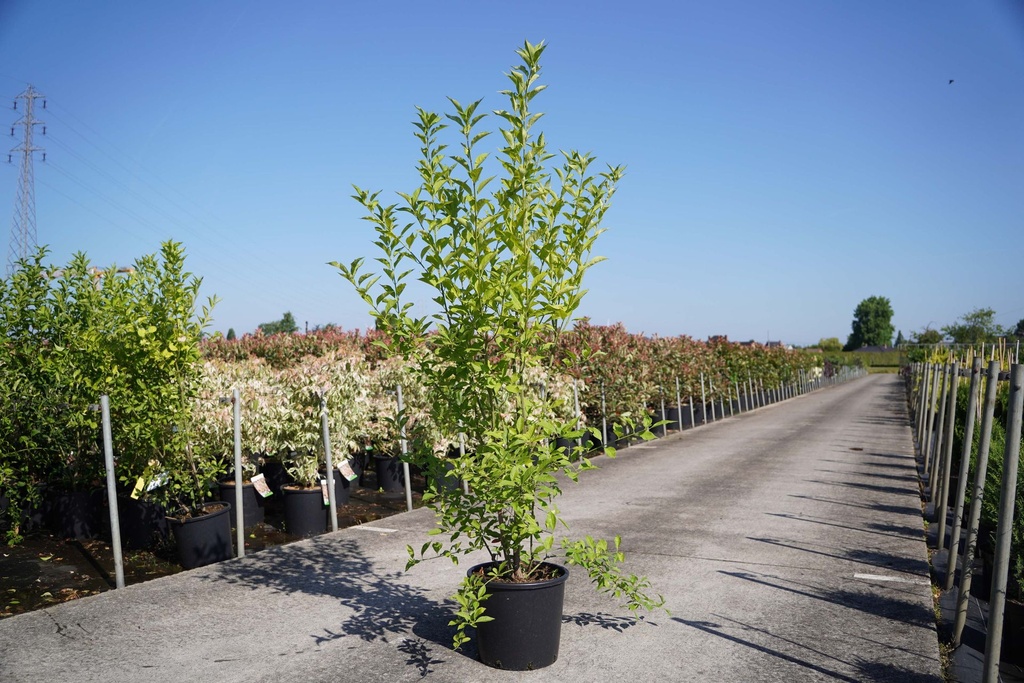
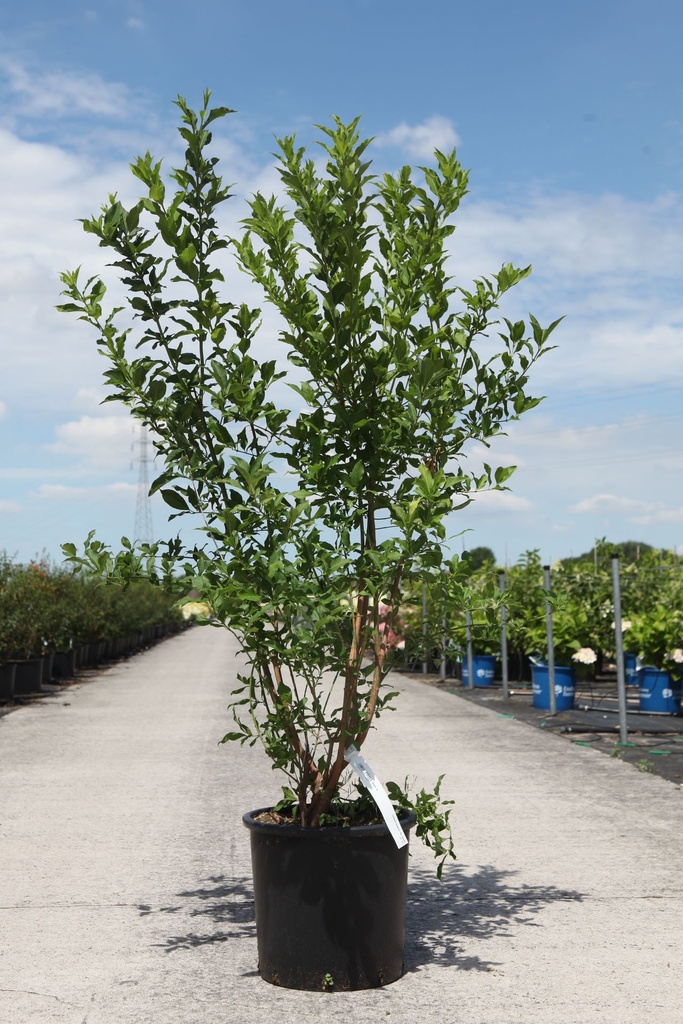
The spindle is the native European species of the genus, a bushy shrub or small tree with distinctly four-angled green twigs. In autumn its leaves turn red and purple, and the bright pink, four-lobed capsules open to reveal orange seeds that stay on the branches well into winter.
Location and soil
Grows in sun or partial shade on almost any well-drained soil, including slightly chalky ground. It tolerates both dry spots and short periods of flooding, as well as wind and coastal conditions. Extremely hardy; young plants need watering in prolonged drought.
Pruning and care
Easy to keep in shape: prune in March or April to control its size or to give it a more formal outline. The shrub may be visited by spindle ermine moth caterpillars in spring, which spin webs but rarely do lasting harm. All parts, and especially the attractive fruits, are toxic.
Use in the garden
Ideal for native and free-growing hedges, woodland edges and wildlife gardens, where the fruits feed birds in winter. Also attractive as a multi-stemmed solitary shrub or small tree in a smaller garden, combined with autumn perennials.
Plant characteristics
Flowering
| Flowering period | july, august, september |
| Colour (flower) | yellow, green |
Foliage
| Evergreen | no |
| Colour (foliage) | green |
| Autumn colour | red |
Growth habit
| Height | 200 cm |
Location
| Winter hardiness | -30 °C, -25 °C |
| Soil type | kalkrijk |
| Location | half shade, shade |
| Wind resistant | yes |
| Soil moisture | moist, normal |
Use
| Type (use) | shrub, hedge plant, fruit/berries, solitary, in group |
| Fruits/berries | pink, orange |
Care
| Pruning | march, april |
Related products

Euonymus europaeus 'Red Cascade'
cont. 3,6L 40-50 cm +p

Euonymus europaeus 'Red Cascade'
cont. 15L 80-100 cm +p