

|
J
|
F
|
M
|
A
|
M
|
J
|
J
|
A
|
S
|
O
|
N
|
D
|
|
J
|
F
|
M
|
A
|
M
|
J
|
J
|
A
|
S
|
O
|
N
|
D
|
About this plant
What makes this plant special
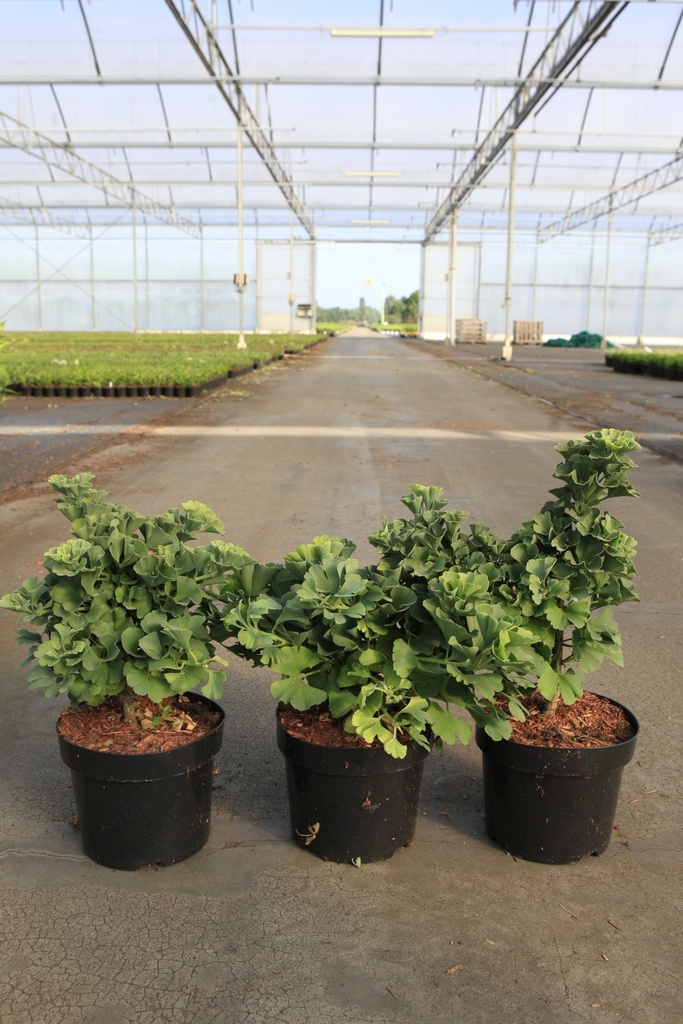
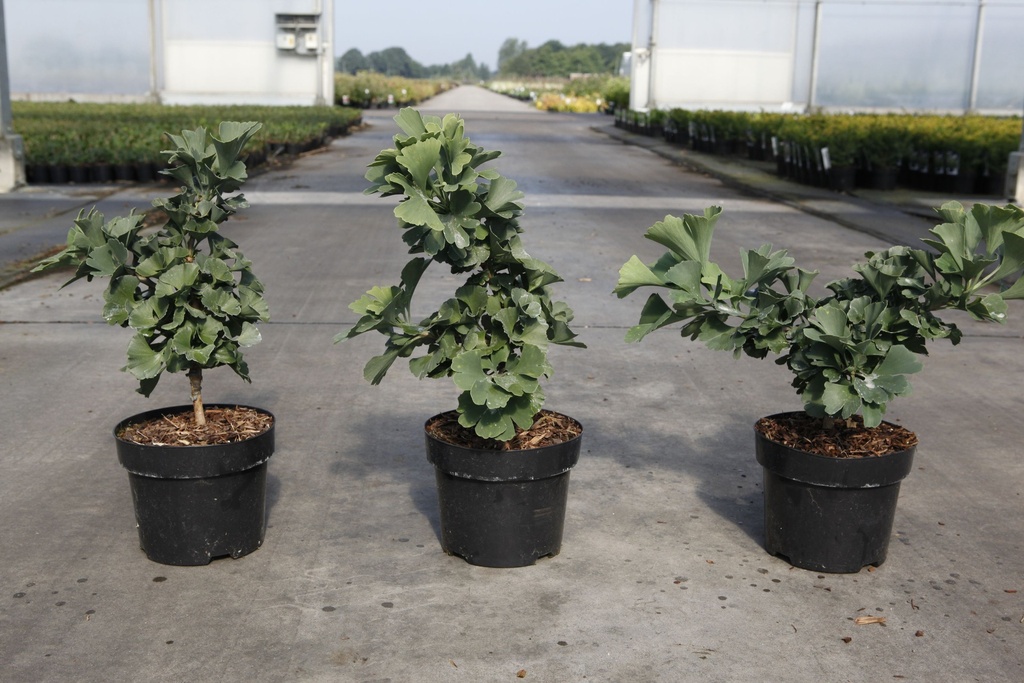
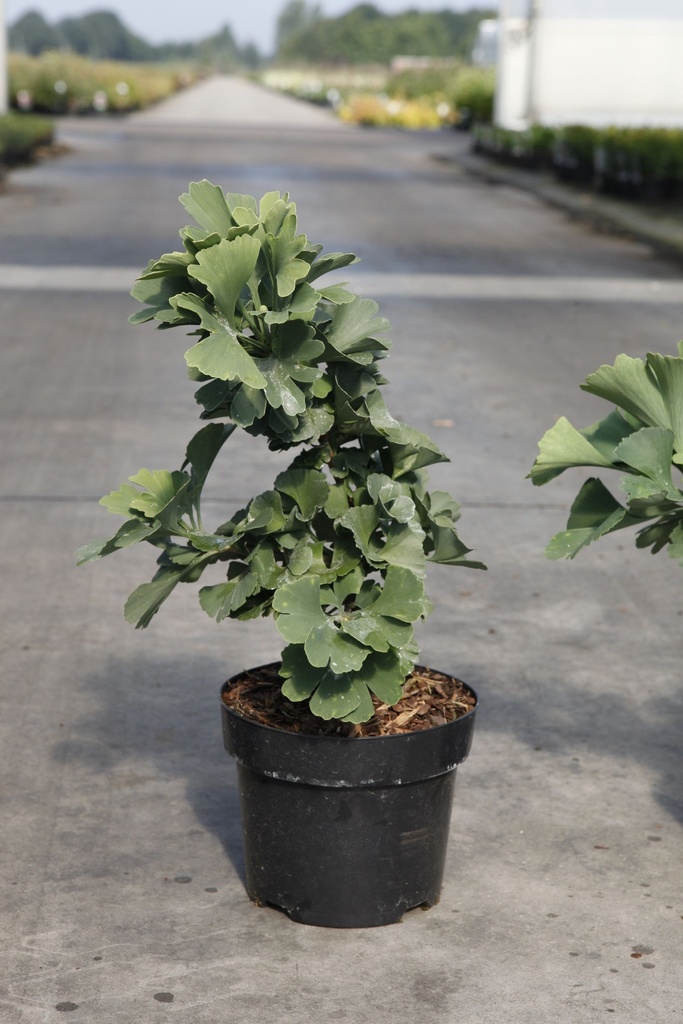
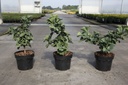
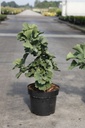
'Troll' is a dwarf form from Germany with very short internodes and small, wavy-edged leaves only 4 to 6 cm wide. Growing just 50 to 70 cm in ten years and about 1.1 m in the long run, it keeps an interesting branch structure in winter and copes well with city pollution and hard frost.
Japanese Walnuttree Ginkgo
The maidenhair tree (Ginkgo) is the only surviving genus of an ancient plant group that already grew in the age of the dinosaurs. Native to China, it is a deciduous tree with fan-shaped leaves, usually notched at the tip, that turn a clear golden yellow in autumn. It is valued for its unusual foliage, great age and robustness.
Japanese Walnuttree Ginkgo biloba
Ginkgo biloba is the only living species of its genus and is often called a living fossil. Young trees are narrowly pyramidal and later develop a broad, spreading crown, reaching around 20 to 30 m. The grey-brown bark becomes deeply furrowed with age. Trees are male or female; females bear fleshy seeds only after many years.
Location and soil
Plant in full sun or light shade in fresh, deep, well-drained soil; it tolerates both acid and chalky soils and paved urban sites. The species is very hardy throughout Belgium and resists air pollution, which makes it well suited to city planting.
Pruning and care
Ginkgo biloba keeps a good shape without pruning. If needed, remove dead, crossing or damaged branches in February, before the buds break. Water young trees in dry summers during the first years after planting; once rooted, it needs little care.
Use in the garden
The species and its cultivars cover a wide range: tall avenue and park trees, narrow columnar forms for streets and small gardens, and dwarf forms for pots and rock gardens. Male selections are preferred near paths and terraces because they produce no smelly fruit.
Plant characteristics
Botanical
| Family | Ginkgoaceae |
| Genus | Ginkgo |
| Species | biloba |
| Cultivar | 'Troll' |
Foliage
| Evergreen | no |
| Colour (foliage) | green, yellow |
Growth habit
| Height | 100 cm |
Location
| Winter hardiness | -20 °C |
| Location | sun, half shade |
| Soil moisture | normal |
Care
| Pruning | february |