

|
J
|
F
|
M
|
A
|
M
|
J
|
J
|
A
|
S
|
O
|
N
|
D
|
|
J
|
F
|
M
|
A
|
M
|
J
|
J
|
A
|
S
|
O
|
N
|
D
|
|
J
|
F
|
M
|
A
|
M
|
J
|
J
|
A
|
S
|
O
|
N
|
D
|
About this plant
What makes this plant special
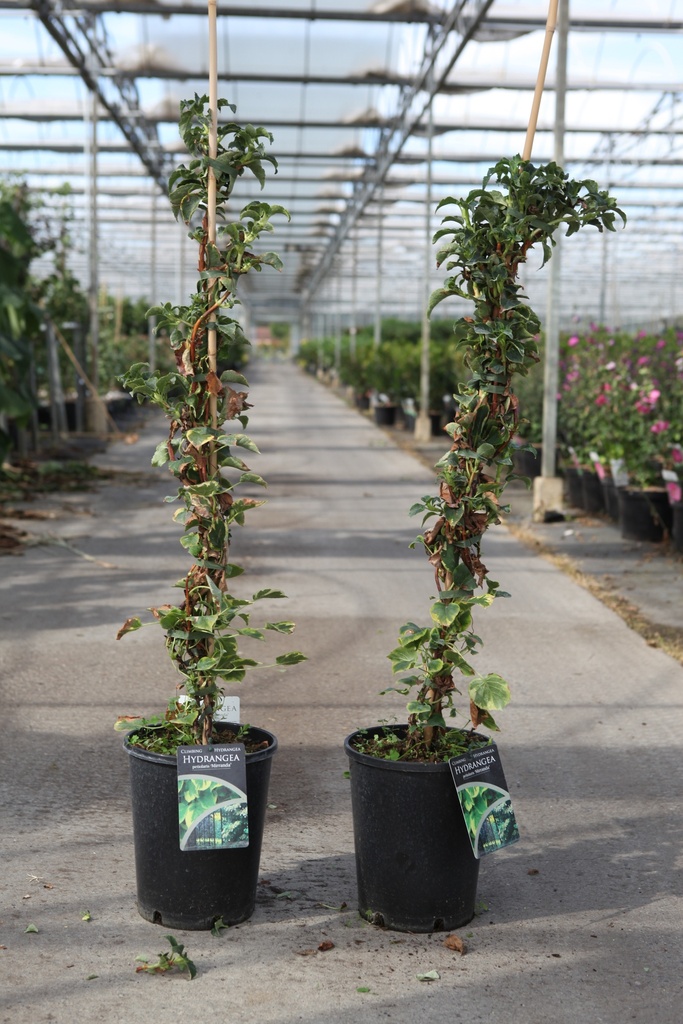
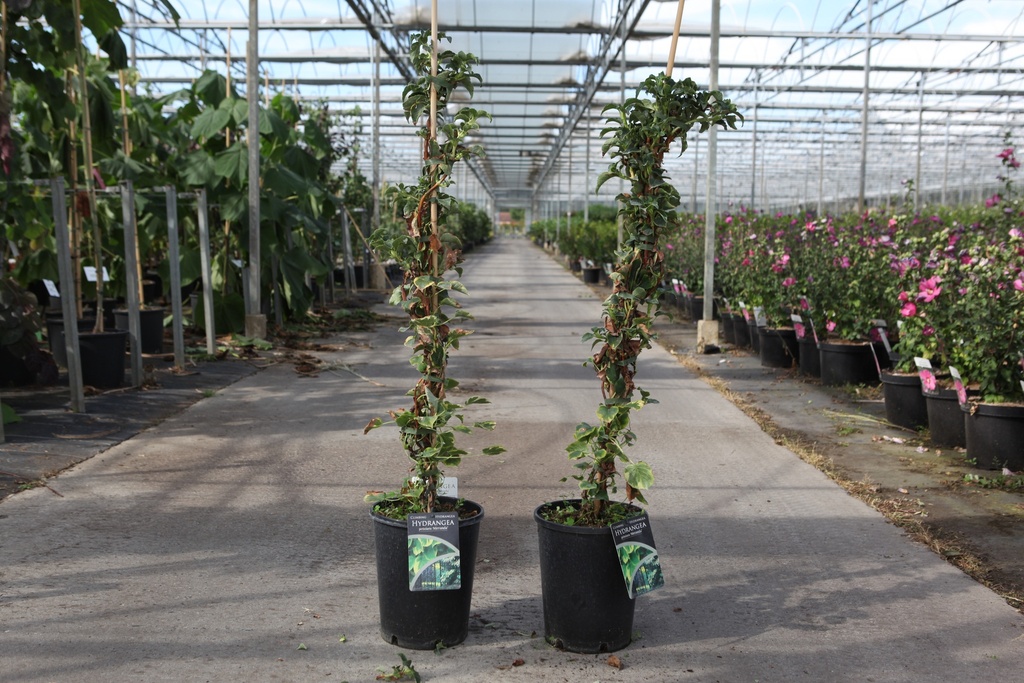
'Miranda' brings colourful foliage to the climbing hydrangea: its leaves mix shades of dark and pale green with touches of yellow, brightening a wall long after the white lacecaps of early summer have faded. It is slow to get going but can eventually cover 6 m of wall, or form a dense mound about 1.5 m high without support.
Hydrangea
Hydrangeas are shrubs and climbers from East Asia and the Americas, grown for their large flower heads in which showy sterile florets ring or hide the small fertile flowers. Many grow wild along woodland edges, in filtered light and in acid, humus-rich soil that holds moisture yet drains freely; a pH between about 4.5 and 7 suits them best. They flower for weeks in summer.
Japanese climbing-hydrangea Hydrangea anomala petiolaris
The climbing hydrangea comes from north-east Asia. It is a deciduous, self-clinging climber that holds on with aerial roots and, unusually, flowers well on a north-facing wall. In June and July it carries flat, lacy white flower heads with a light scent, and its fresh green leaves turn yellow in autumn.
Location and soil
Best in partial shade against an east-, west- or north-facing wall; it flowers freely even on a north wall. Avoid a south-facing wall, where rapid warming on spring days makes the flower buds more prone to frost damage. It wants deep, fertile, humus-rich soil that stays moist and is not too chalky. Very hardy; no winter protection is needed.
Pruning and care
Growth is slow until the stems reach the wall and the aerial roots take hold; water regularly until established and mulch the base in summer. It flowers on the previous year's wood, so never prune in autumn. Remove faded heads in April and, if it needs restricting, shorten shoots before July so that new flower buds can still form; keep it clear of gutters and roofs.
Use in the garden
Ideal for covering a shady wall, fence or tree trunk, where it can reach around 4 m or more. Without support it stays low and spreads as a dense groundcover on banks. The flowers are rich in nectar and attract pollinators.
Plant characteristics
Botanical
| Family | Hydrangeaceae |
| Genus | Hydrangea |
| Species | anomala petiolaris |
| Cultivar | 'Miranda' |
Flowering
| Flowering period | june to july |
| Colour (flower) | white |
Foliage
| Evergreen | no |
| Colour (foliage) | green, yellow, variegated |
Growth habit
| Height | 600 cm |
Location
| Winter hardiness | -30 °C |
Care
| Pruning | april to june |