
|
J
|
F
|
M
|
A
|
M
|
J
|
J
|
A
|
S
|
O
|
N
|
D
|
|
J
|
F
|
M
|
A
|
M
|
J
|
J
|
A
|
S
|
O
|
N
|
D
|
|
J
|
F
|
M
|
A
|
M
|
J
|
J
|
A
|
S
|
O
|
N
|
D
|
About this plant
What makes this plant special
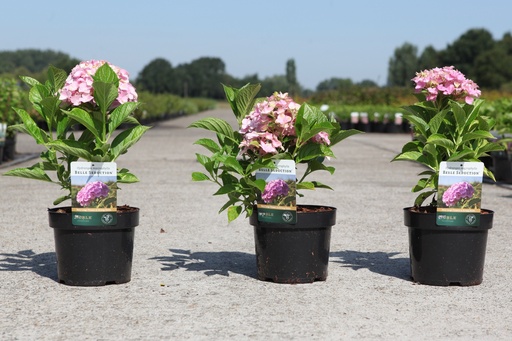
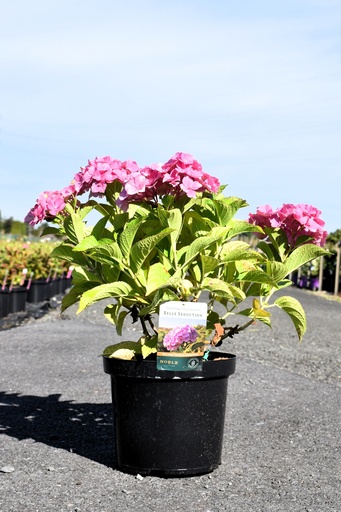
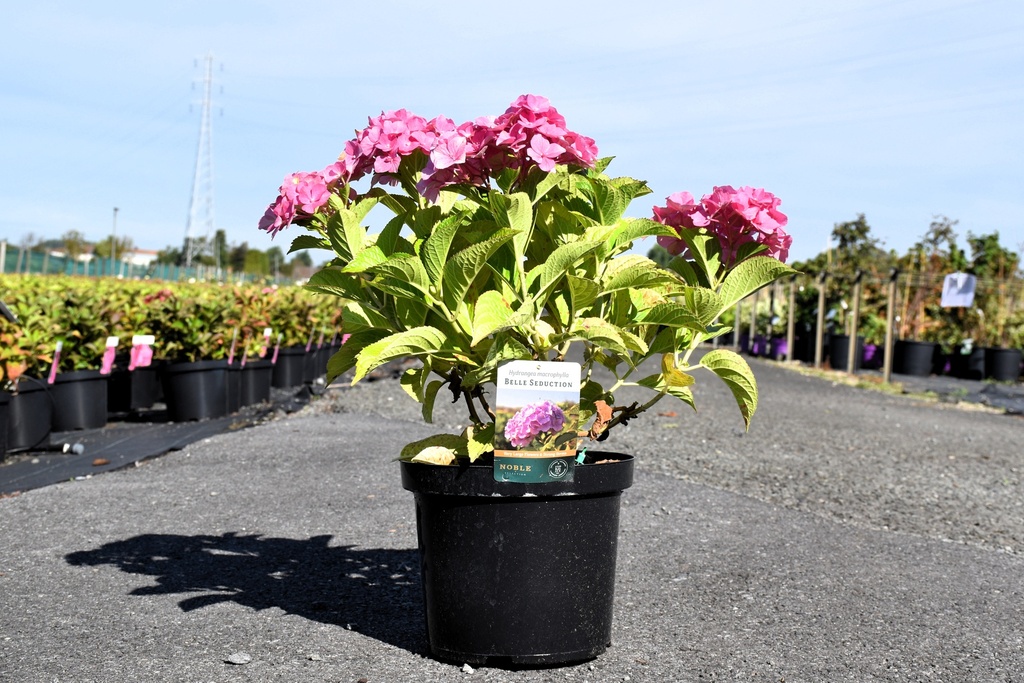
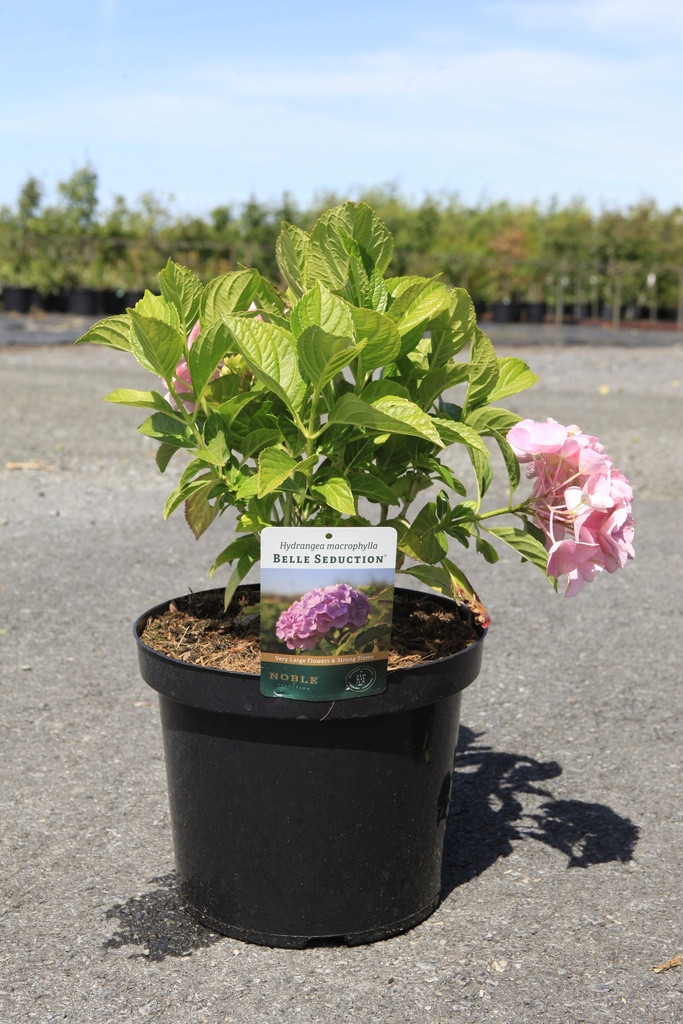
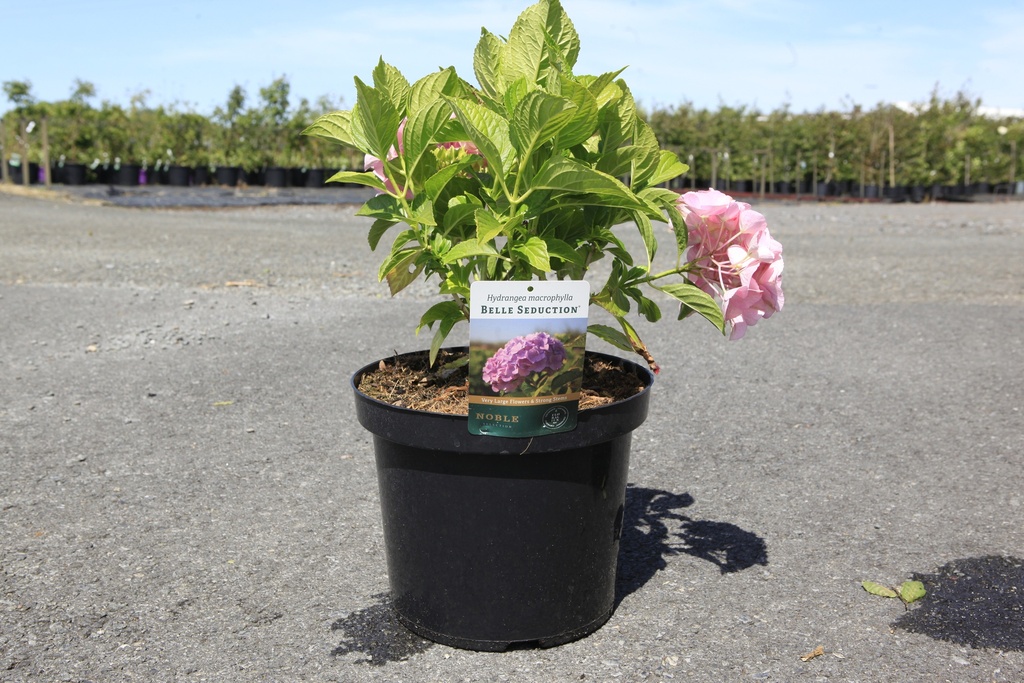
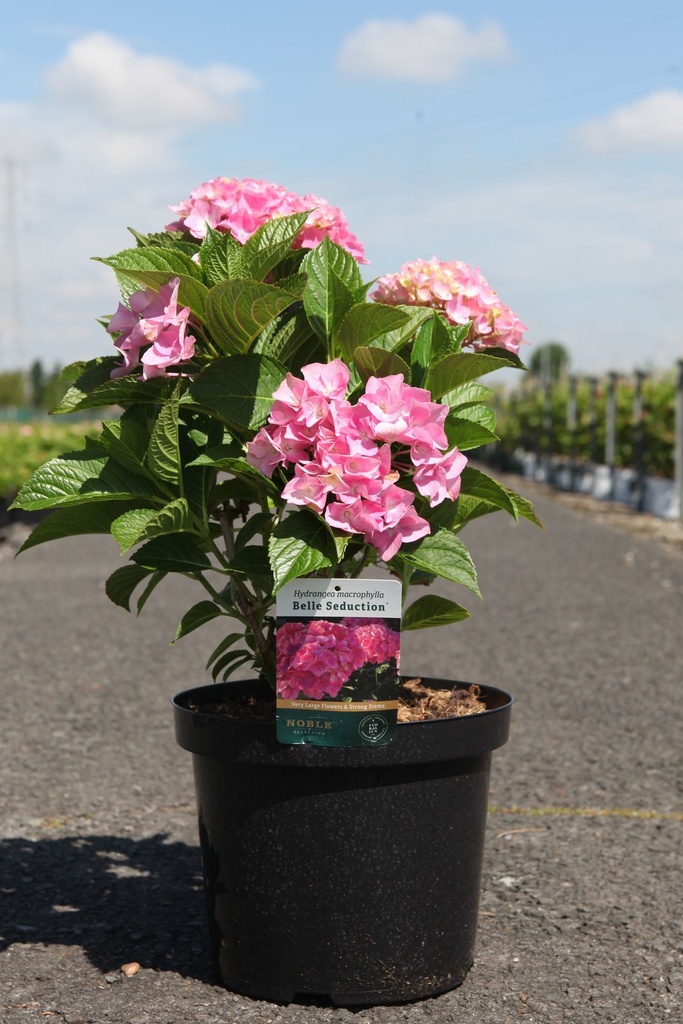
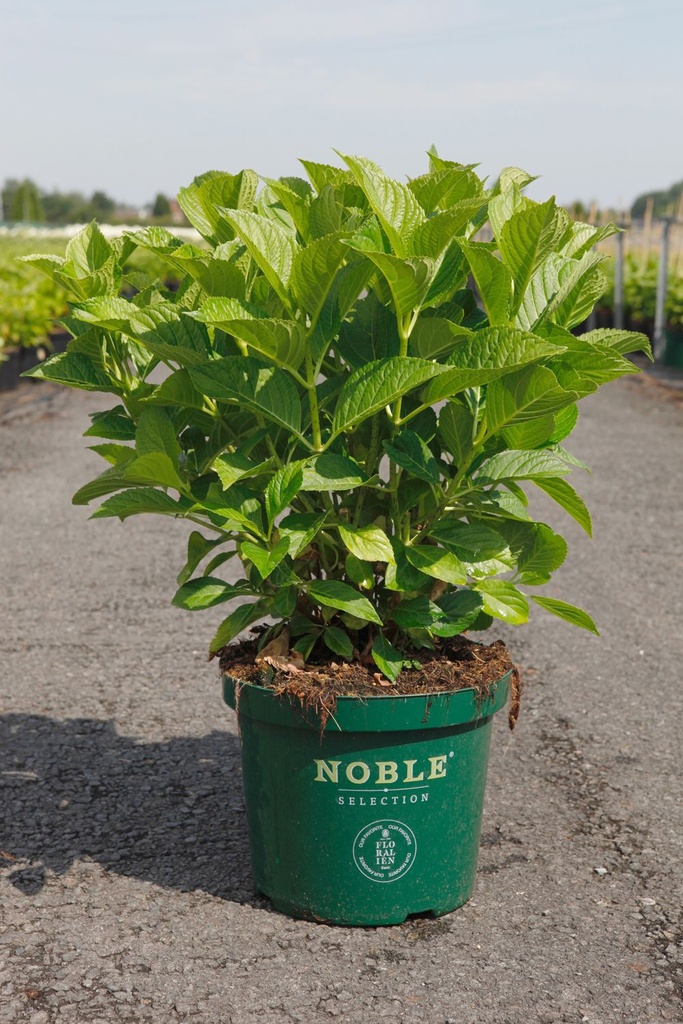
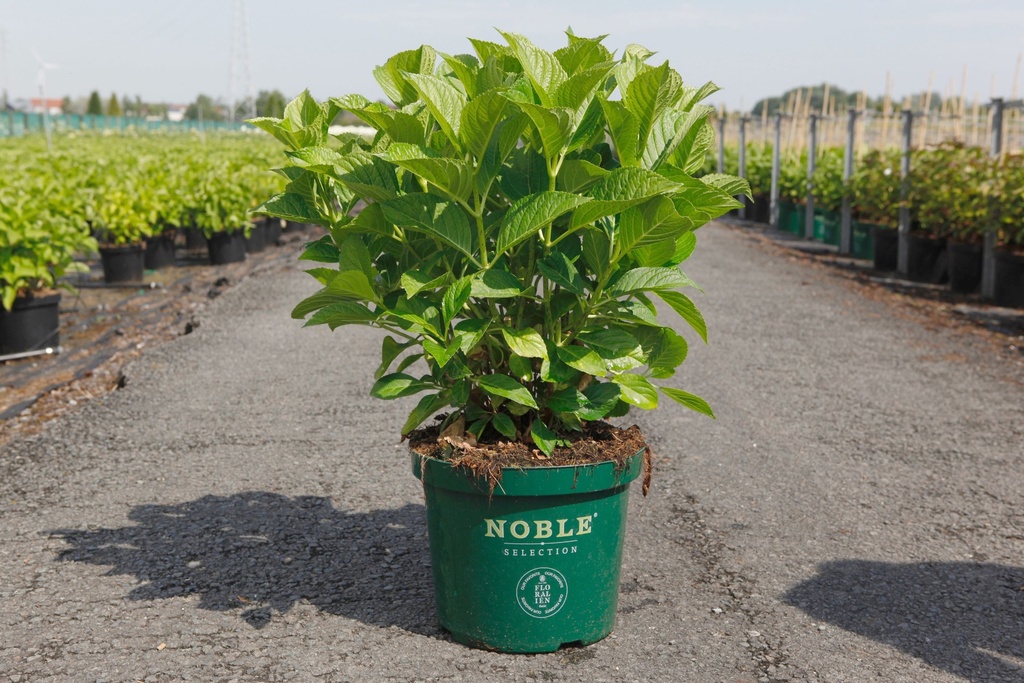
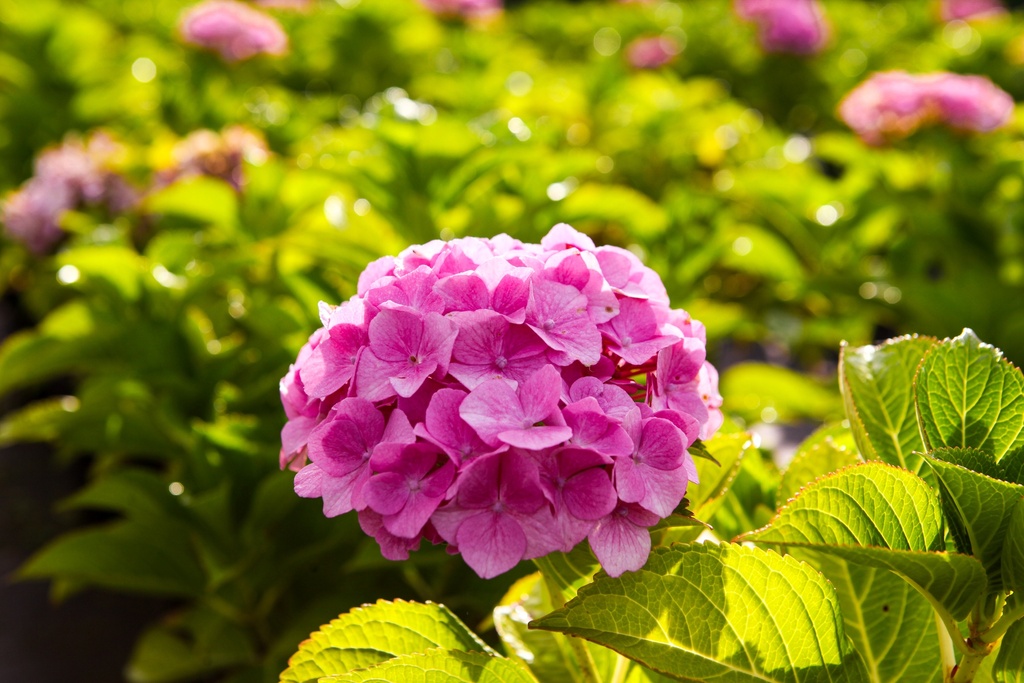
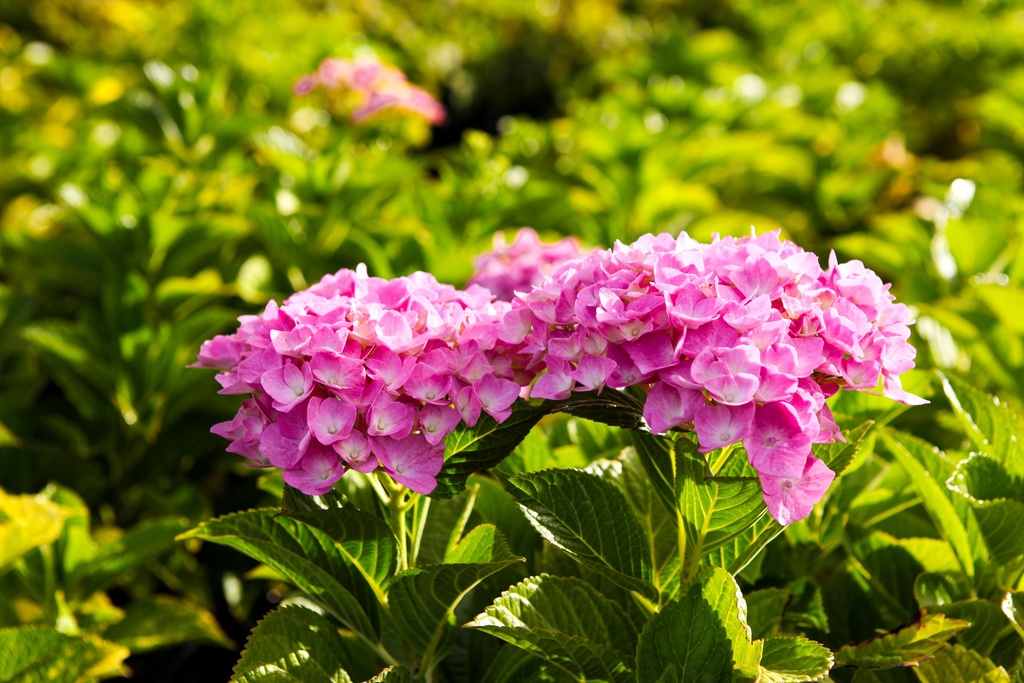
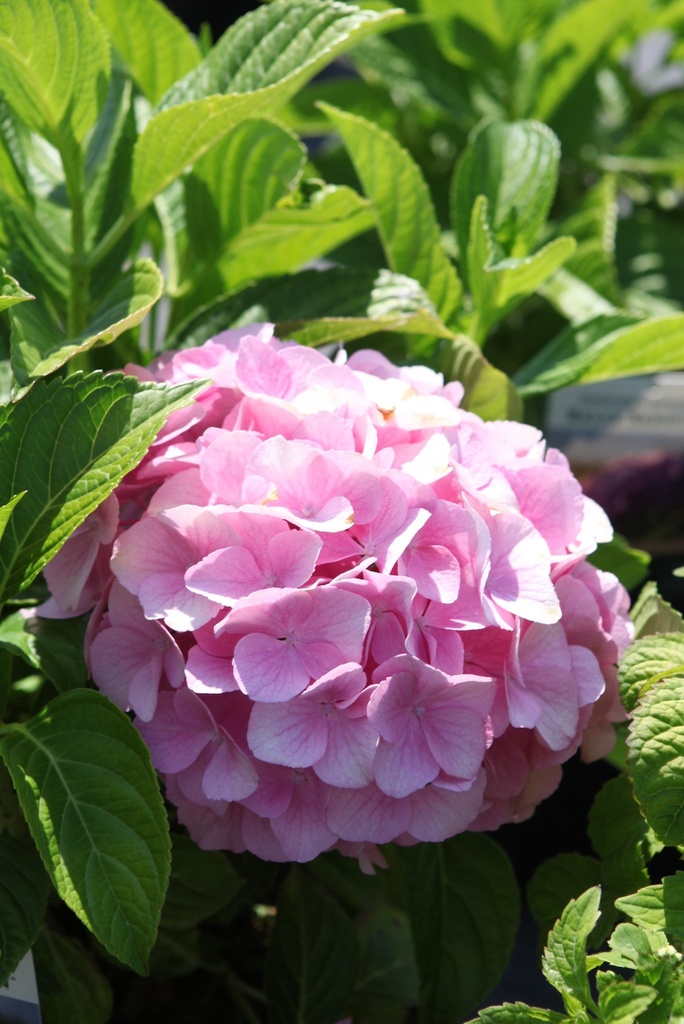
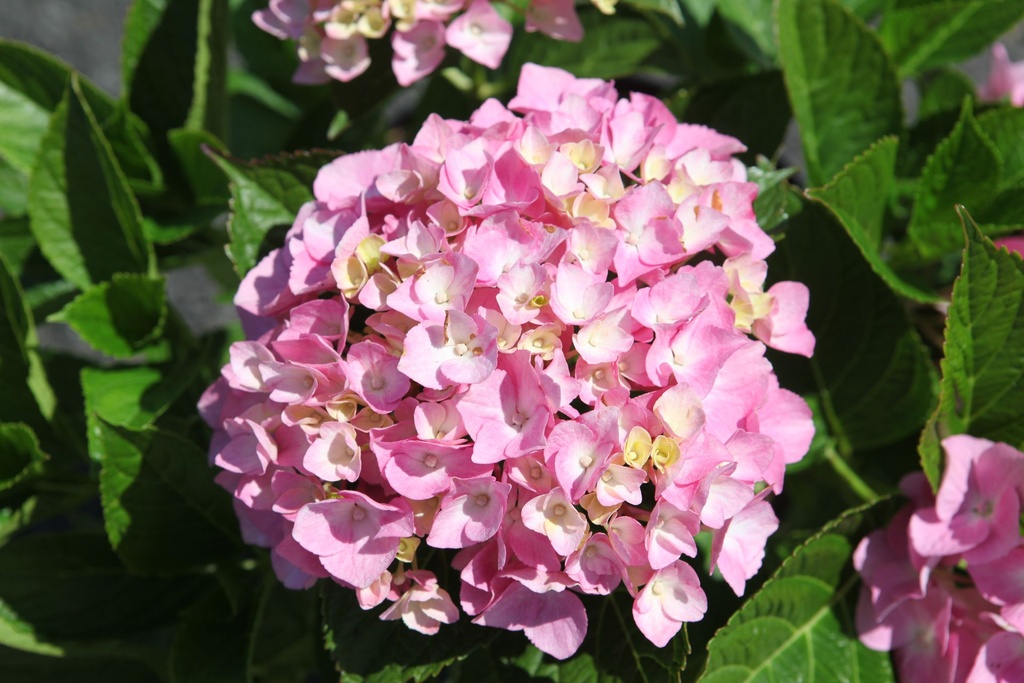
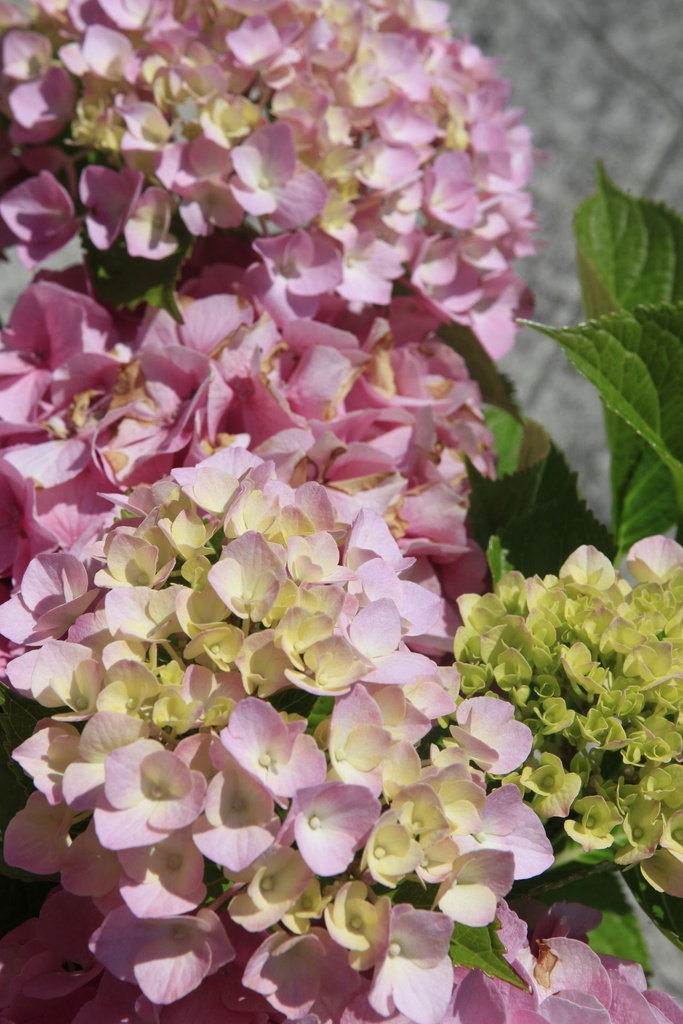
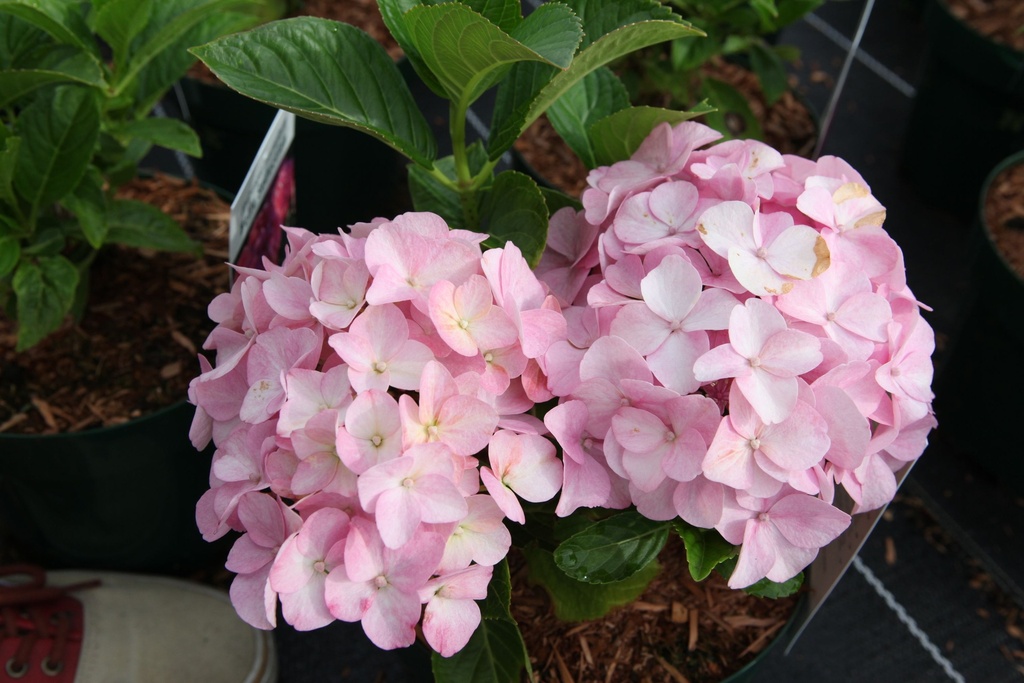
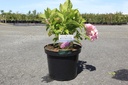
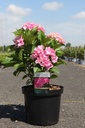
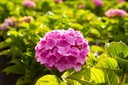
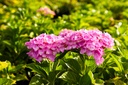
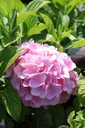
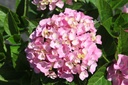
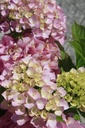
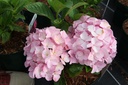
BELLE SEDUCTION was first bred for the cut-flower trade, which shows in its very dense, evenly rounded heads up to 25 cm across, carried on thick, stiff stems that stay upright, even after rain. The soft to warm pink flowers last from July to October and fade to green and purple tones. It grows 1.2 to 1.5 m tall.
Hydrangea
Hydrangeas are shrubs and climbers from East Asia and the Americas, grown for their large flower heads in which showy sterile florets ring or hide the small fertile flowers. Many grow wild along woodland edges, in filtered light and in acid, humus-rich soil that holds moisture yet drains freely; a pH between about 4.5 and 7 suits them best. They flower for weeks in summer.
Lacecap Hydrangea macrophylla
The bigleaf hydrangea grows wild along the low-lying east coast of Japan and is the classic garden hydrangea, with broad leaves and round mophead or flat lacecap heads. Most varieties flower in July and August, a few from June or into late autumn, and the slowly fading heads stay decorative for months. Pink varieties turn blue only in acid soil containing enough aluminium; white and red ones hardly change.
Location and soil
Happiest in partial shade with a few hours of sun, but out of the midday sun, or in dappled light beneath deep-rooted trees; in heavy shade it flops and flowers poorly. It needs acid to neutral soil that holds moisture well, as the large leaves use a lot of water. Not every variety is fully hardy and the buds are sensitive to late frost, so shelter it from east and north winds.
Pruning and care
Flowers mainly on the previous year's wood, and next year's buds form in August just below the old heads, so never prune in autumn. In April remove the faded heads and, once the shrub is in leaf, any dead wood; on plants older than five years also cut a few of the oldest stems to the ground. Feed sparingly in March and August, and cover with fleece in hard or late frosts.
Use in the garden
A mainstay for borders, shady beds, informal hedges and foundation planting, and compact varieties do well in pots on a terrace or balcony. The flower heads are also good for cutting and drying.
Plant characteristics
Botanical
| Family | Hydrangeaceae |
| Genus | Hydrangea |
| Species | macrophylla |
| Cultivar | 'Bodalan' |
| Trade name | Belle Seduction (PBR) |
Flowering
| Flowering period | july to september |
| Colour (flower) | pink |
Foliage
| Evergreen | no |
| Colour (foliage) | green |
Growth habit
| Height | 150 cm |
Location
| Winter hardiness | -20 °C |
| Location | sun, half shade |
Use
| Type (use) | shrub, solitary, in group, terrace plant |
Care
| Pruning | april |
Plant breeders' rights
Hydrangea macrophylla 'Bodalan' BELLE SEDUCTION (PBR) is subject to European Plant Breeders Rights under nr. 20161904. Asexual propagation and/or use of the trademark without license are prohibited.