
|
J
|
F
|
M
|
A
|
M
|
J
|
J
|
A
|
S
|
O
|
N
|
D
|
|
J
|
F
|
M
|
A
|
M
|
J
|
J
|
A
|
S
|
O
|
N
|
D
|
|
J
|
F
|
M
|
A
|
M
|
J
|
J
|
A
|
S
|
O
|
N
|
D
|
About this plant
What makes this plant special
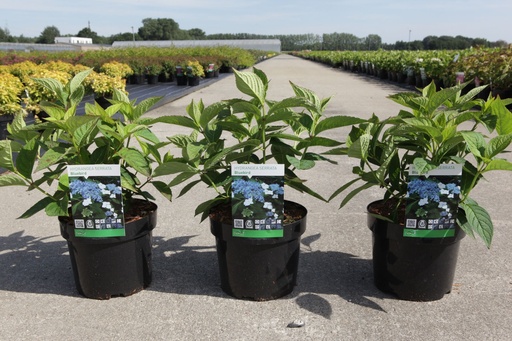
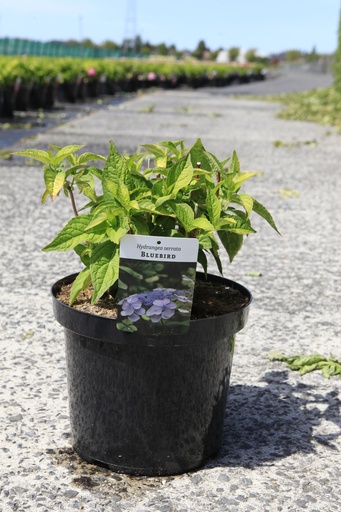
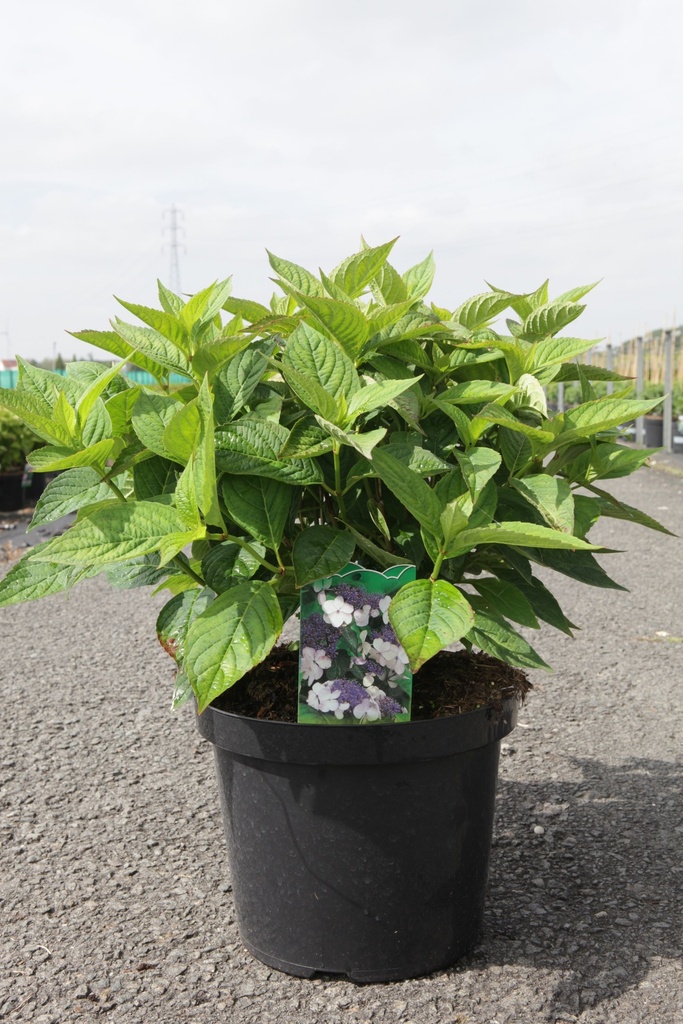
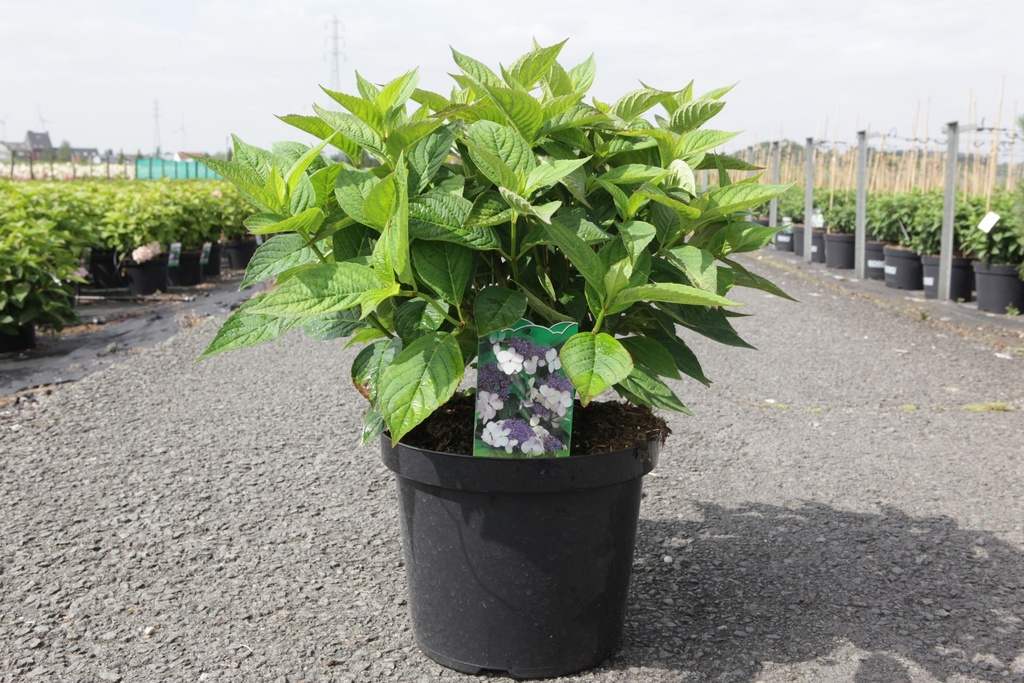
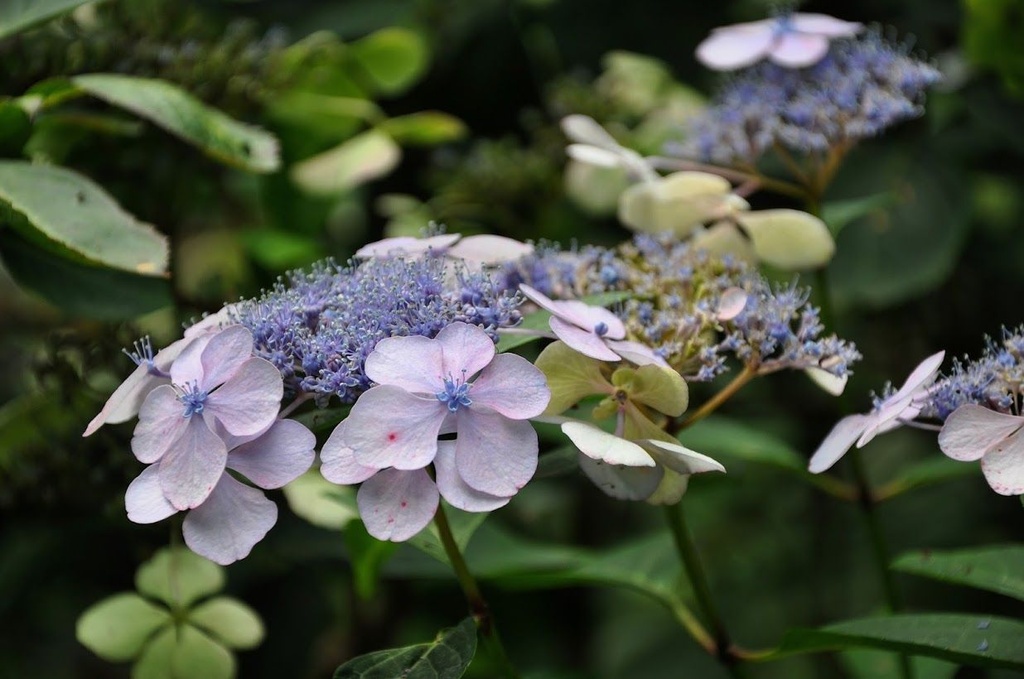
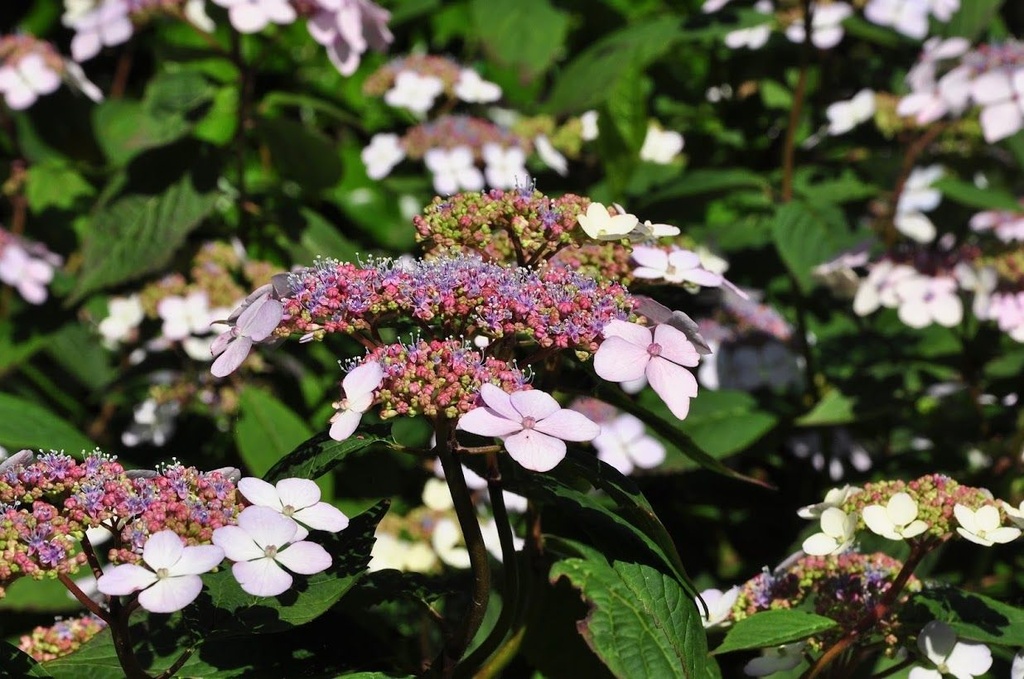
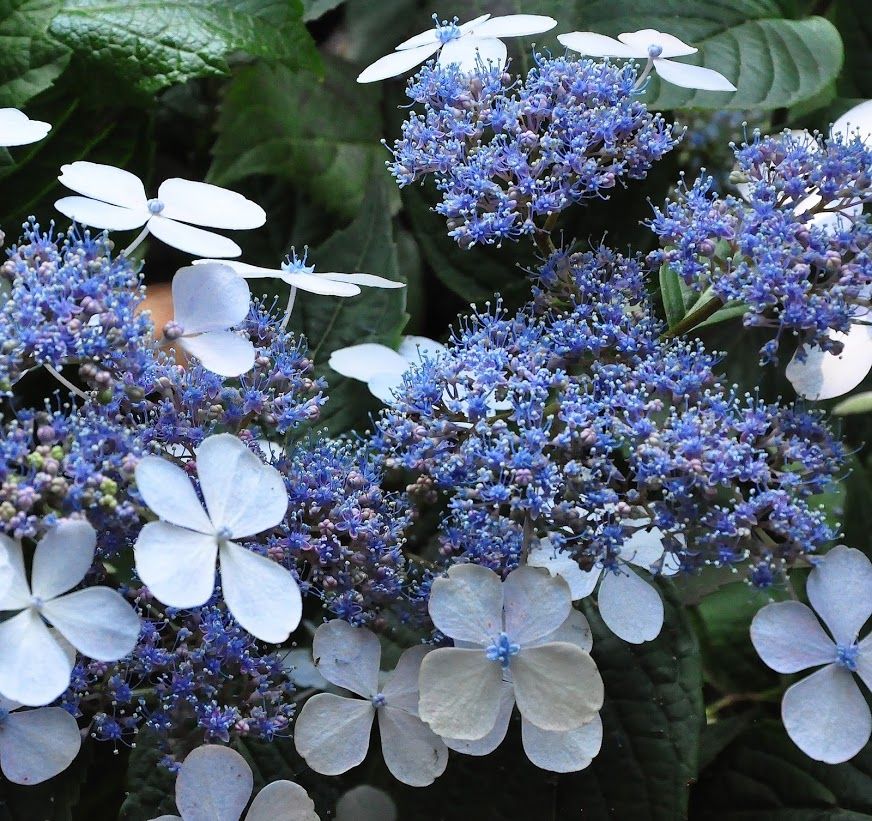
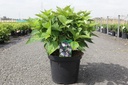
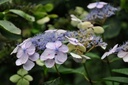
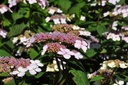
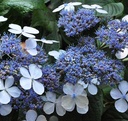
'Bluebird' is a Japanese selection from before 1940 that won the RHS Award of Garden Merit in 1993 and is known as hardy and free of disease. Its flat heads have almost diamond-shaped sterile florets with untoothed edges around a core of slightly darker fertile flowers; soil decides the colour: soft blue if acid, pink if near neutral.
Hydrangea
Hydrangeas are deciduous or evergreen shrubs and self-clinging climbers from East Asia and North America. Each flower head combines small fertile florets with larger, showy sterile ones; depending on the species they form a rounded head, a flat lacecap or a pointed plume. They flower over a long stretch from midsummer into autumn, the heads shifting colour as they age, and many species colour well in autumn too. Sizes run from small shrubs to almost tree-like specimens.
Japanese Lacecap Hydrangea Hydrangea serrata
The mountain hydrangea (Hydrangea serrata) comes from the mountain woods of Japan and Korea. It is a compact, slow-growing deciduous shrub, usually about 1 to 1.5 m, with narrower, finely toothed and often darker leaves than the common hydrangea. From June to September it carries mostly flat lacecap heads, sometimes rounded, in blue, mauve, pink or white, and the foliage often colours in autumn.
Location and soil
Plant in partial shade with some morning or evening sun but no full midday sun; four to five hours of sun a day bring out the red autumn colour, while deep shade gives few flowers. It wants acid to neutral, humus-rich soil that stays moist; in acid soil many forms flower blue. Native to mountains at 500 to over 2,000 m, it is fully hardy in Belgium.
Pruning and care
Flowers on the previous year's wood, and next year's buds form in August just below the old heads, so never prune in autumn or cut back hard. In April remove the faded heads and, once the shrub is in leaf, cut out dead wood and a few of the oldest stems at the base. Water in dry spells, ideally with rainwater, and mulch in spring.
Use in the garden
Thanks to its compact size it suits small gardens, shady borders, woodland edges and containers on a shaded terrace. It combines well with hostas, ferns, epimediums and Japanese anemones, and can also be used for a low, informal flowering hedge.
Plant characteristics
Botanical
| Family | Hydrangeaceae |
| Genus | Hydrangea |
| Species | serrata |
| Cultivar | 'Bluebird' |
Flowering
| Flowering period | july to august |
| Colour (flower) | blue |
Foliage
| Evergreen | no |
| Colour (foliage) | green |
| Autumn colour | red |
Growth habit
| Height | 100 cm |
Location
| Winter hardiness | zone 6a (down to -23,3 °C) |
| Summer heat | up to heat zone 9 |
| Location | sun, half shade |
| Soil moisture | moist, normal |
Use
| Type (use) | shrub, solitary, in group |
Care
| Pruning | april |