

|
J
|
F
|
M
|
A
|
M
|
J
|
J
|
A
|
S
|
O
|
N
|
D
|
|
J
|
F
|
M
|
A
|
M
|
J
|
J
|
A
|
S
|
O
|
N
|
D
|
|
J
|
F
|
M
|
A
|
M
|
J
|
J
|
A
|
S
|
O
|
N
|
D
|
About this plant
What makes this plant special
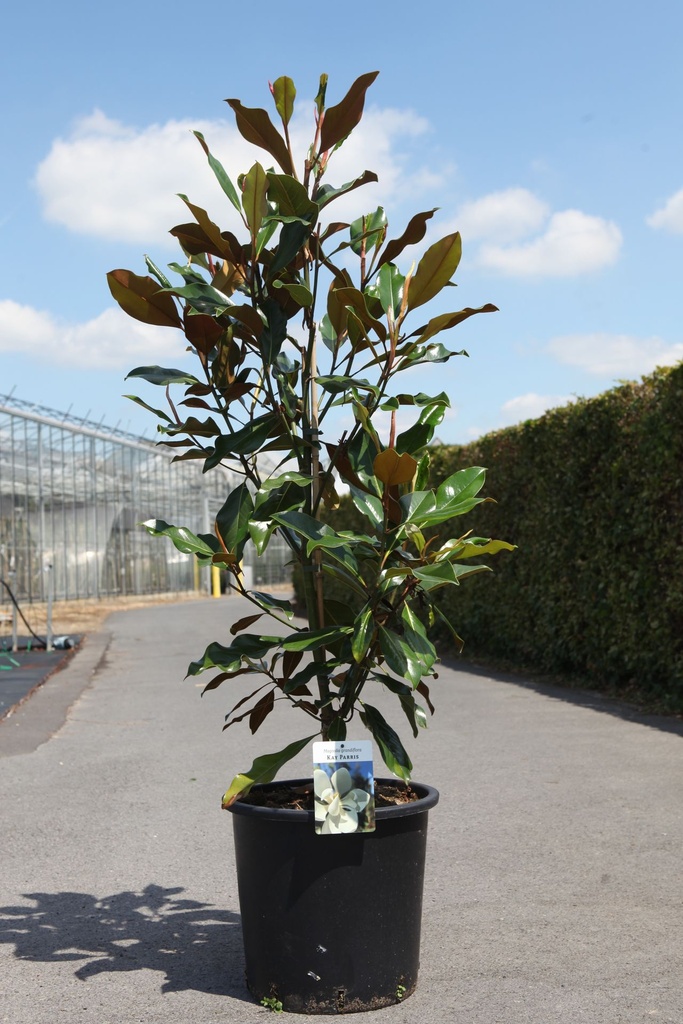
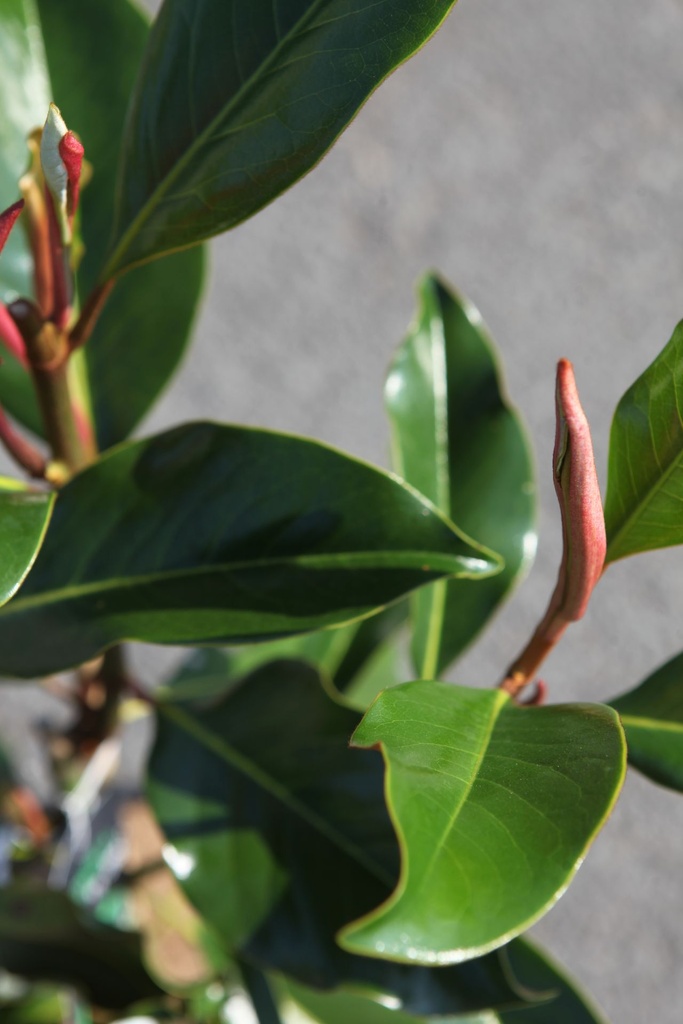
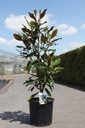
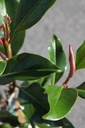
'Kay Parris' was raised in South Carolina in 1991 by Kevin Parris and combines a compact, densely branched habit, about 3 m after ten years, with better hardiness than 'Little Gem'. Its wavy-edged leaves carry a very dark brown felt beneath, and the scented flowers keep coming from June into September.
Magnolia
Magnolias (Magnolia) are trees and shrubs from eastern Asia and the Americas, some 330 species in all. Gardens grow mainly the deciduous East Asian species and their hybrids, which open large white, pink or purple flowers on bare branches in spring, shaped like stars, bowls or goblets and often scented. Other species flower in summer, and a few are evergreen with dark, glossy leaves.
Southern magnolia Magnolia grandiflora
The southern magnolia (Magnolia grandiflora) is an evergreen tree from the moist woodlands of the south-eastern United States. It forms a broad, pyramidal crown of thick, glossy dark green leaves, often felted rusty-brown beneath, and from June to September bears very large, creamy-white flowers with a strong lemony scent.
Location and soil
Give it a sunny or half-shaded position and a deep, fertile soil that drains freely, ideally acid to neutral. A little lime is accepted, but on strongly calcareous ground the foliage turns pale and yellowish. Once established it copes with moderate frost; in colder districts, shelter from cold winds or the warmth of a sunny wall makes a real difference.
Pruning and care
It needs no pruning. The fleshy roots are easily damaged, so lift the root ball gently and set the plant no deeper than it grew in the pot. Water young trees regularly until they are well settled, usually two or three years, and spread an organic mulch that stays clear of the trunk. Expect to wait several years for the first flowers.
Use in the garden
Its size makes it a tree for spacious gardens and parks, where it stands out as a specimen, and its dense evergreen foliage screens a view all year. Against a large sunny wall it can be fan-trained, gaining shelter and warmth that improve flowering. It is also used as an avenue tree and in large tree planters.
Plant characteristics
Botanical
| Family | Magnoliaceae |
| Genus | Magnolia |
| Species | grandiflora |
| Cultivar | 'Kay Parris' |
Flowering
| Flowering period | june to september |
| Colour (flower) | white |
Foliage
| Evergreen | yes |
| Colour (foliage) | green |
Growth habit
| Height | 800 cm, 1000 cm |
Location
| Winter hardiness | zone 7a (down to -17,8 °C) |
| Summer heat | up to heat zone 10 |
Care
| Pruning | july to august |