



|
J
|
F
|
M
|
A
|
M
|
J
|
J
|
A
|
S
|
O
|
N
|
D
|
|
J
|
F
|
M
|
A
|
M
|
J
|
J
|
A
|
S
|
O
|
N
|
D
|
About this plant
What makes this plant special
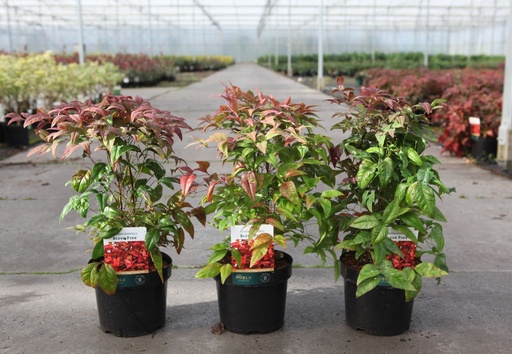
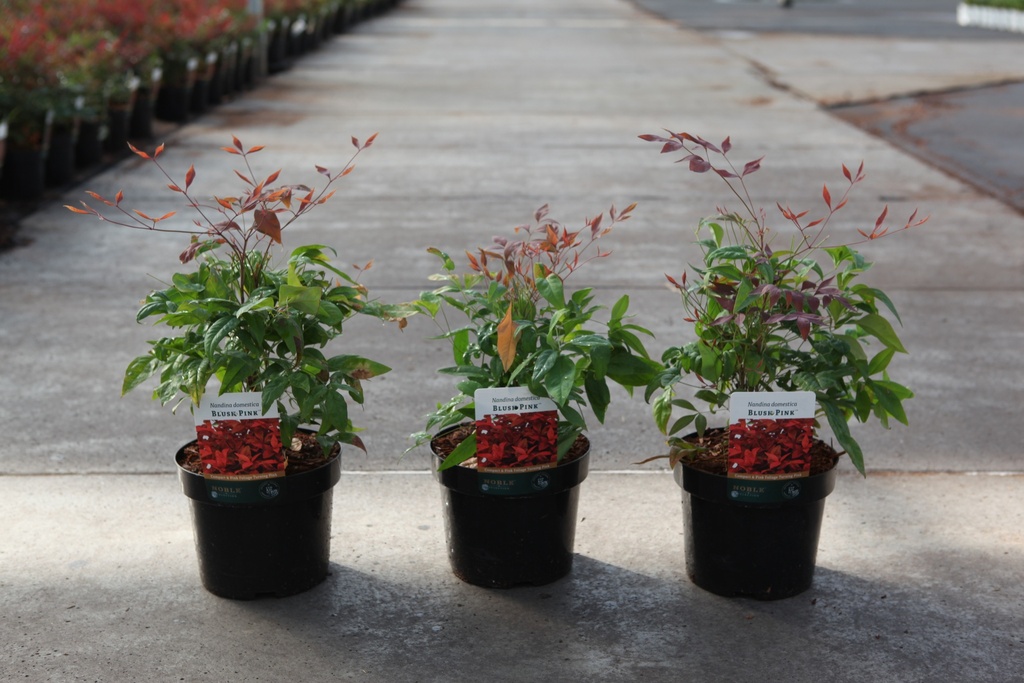
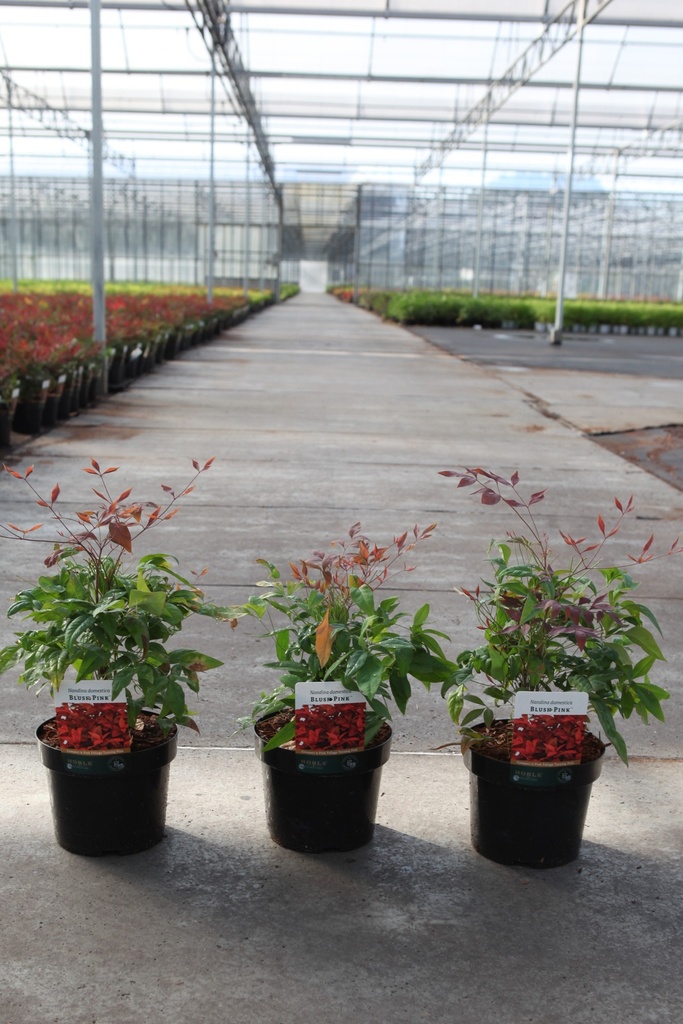
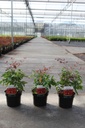
BLUSH PINK ('Aka') arose in Texas as a selection of the dwarf 'Fire Power' and shows deeper red tones than its parent. The new shoots open pink, the foliage turns a mix of green and red in summer and glows red and orange through autumn and winter. It forms a dense, rounded mound of about 75 cm.
Heavenly Bamboo Nandina
Heavenly bamboo (Nandina) is a genus with a single species, an evergreen shrub from the woodlands of China, Japan and India. Despite its name and its upright, cane-like stems, it is not a bamboo at all but a relative of barberry. Grown for centuries around temples in Asia, it is valued for foliage that changes colour with the seasons.
Nandina domestica
Heavenly bamboo has finely divided, pinnate leaves that change colour through the year: red to pink as they unfold, green in summer, then orange, red or purple in autumn, the colours deepening in cold weather. In summer, loose panicles of tiny creamy-white flowers appear, followed on fruiting plants by clusters of glossy red berries that last into the following spring.
Location and soil
Plant in partial shade or sun, avoiding scorching positions, in a light, moist, well-drained soil; it prefers acid to neutral conditions but tolerates a little lime. Shelter from cold, drying winds keeps the foliage intact: the leaves hold down to about −15 °C, while harder frost can damage the young shoots, which then regrow in spring.
Pruning and care
Water during the first two summers and mulch the base, particularly for plants in pots. Pruning is optional: in March or April, once the berries have fallen, remove old, weak or frozen stems at ground level to keep the clump dense and encourage new shoots. Few pests trouble it; aphids can occasionally spread a virus that distorts the leaves.
Use in the garden
Plant it in groups of three to five in a shrub border, as an accent, in a low hedge or in a large container on a terrace out of harsh sun. Planting several specimens improves fruiting, as not every plant is self-fertile. It combines well with camellias, rhododendrons and hydrangeas, and birds feed on the berries in winter.
Plant characteristics
Botanical
| Family | Berberidaceae |
| Genus | Nandina |
| Species | domestica |
| Cultivar | 'Aka' |
| Trade name | Blush Pink (PBR) |
Foliage
| Evergreen | yes |
| Colour (foliage) | red, pink |
| Autumn colour | red |
Growth habit
| Height | 100 cm |
Location
| Winter hardiness | -20 °C |
| Soil type | neutral |
| Location | sun |
| Soil moisture | normal |
Use
| Type (use) | shrub, solitary, ground cover, in group |
Care
| Pruning | march to april |
Plant breeders' rights
Nandina domestica 'Aka' BLUSH PINK (PBR) is subject to European Plant Breeders Rights under nr. 20101707. Asexual propagation and/or use of the trademark without license are prohibited.