

|
J
|
F
|
M
|
A
|
M
|
J
|
J
|
A
|
S
|
O
|
N
|
D
|
|
J
|
F
|
M
|
A
|
M
|
J
|
J
|
A
|
S
|
O
|
N
|
D
|
About this plant
What makes this plant special
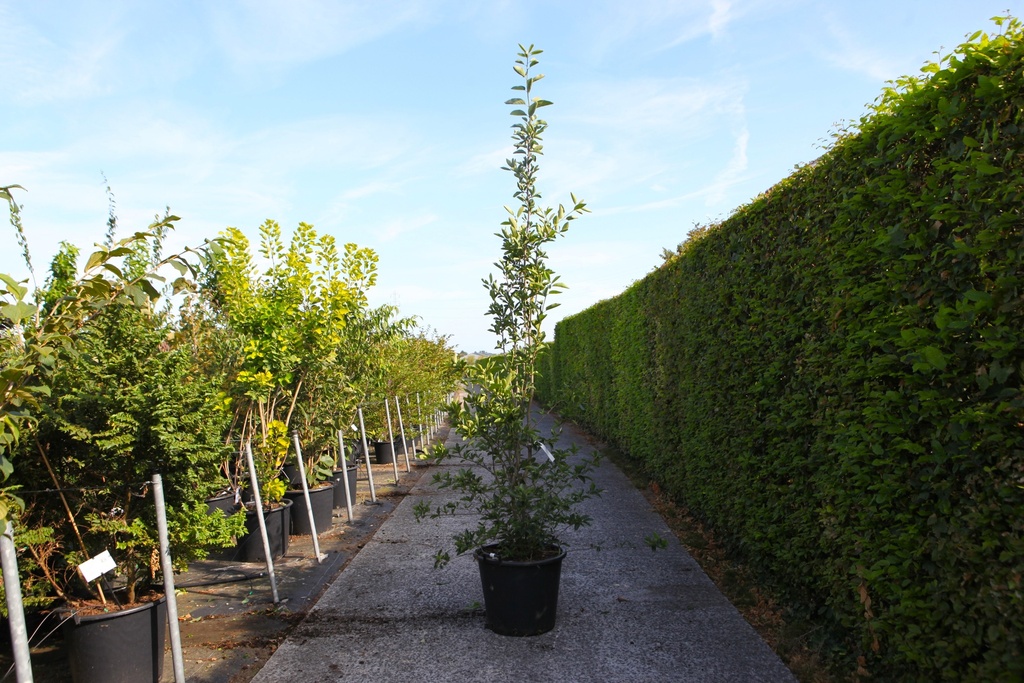
'Tupelo Tower' is a Klyn Nurseries selection from Ohio with a narrow, almost columnar habit on a single straight stem. In time it reaches about 12 m in height but spreads only 4.5 to 6 m. The glossy, dark green leaves turn yellow and orange early in the autumn.
Gum, Tulepo Nyssa
Tupelos (Nyssa) are deciduous trees named after a water nymph, as most of them grow in damp woods and swamps; the best-known species come from eastern North America. They grow slowly, can live for centuries and rank among the finest trees for autumn colour, their glossy leaves turning yellow, orange, red and purple. The small flowers are rich in nectar and the dark fruits feed birds.
Black tupelo Nyssa sylvatica
The black tupelo is the tupelo most widely grown in Europe. It develops a broad, conical crown with almost horizontal branches on a straight trunk and, in our climate, rarely exceeds 20 m. Its glossy leaves on short reddish stalks turn yellow, orange, scarlet and purple from September to November, and older trees develop thick, deeply furrowed bark reminiscent of alligator skin.
Location and soil
Plant in sun or light shade in a fertile, acid to neutral soil that stays moist all year; it accepts wet, poorly drained ground and copes with wind, but not with lime, drought or paving. It is very hardy and withstands severe winters. An acid soil deepens the autumn colour.
Pruning and care
Choose the site carefully and plant a young tree, preferably in autumn, as the deep taproot makes moving it later almost impossible. Water deeply during the first three summers and mulch the base. Pruning is limited to taking out dead or unwanted branches in March. In suitable conditions it is rarely troubled by pests or diseases.
Use in the garden
A splendid specimen or shade tree for a large lawn or park, near a pond or in a moist woodland garden, and also suitable as an avenue tree in green, open settings. The nectar-rich flowers attract bees, and on female trees the dark purple berries are eaten by birds. For smaller gardens, choose one of the more compact forms.
Plant characteristics
Botanical
| Family | Nyssaceae |
| Genus | Nyssa |
| Species | sylvatica |
| Cultivar | 'Tupelo Tower' |
Foliage
| Evergreen | no |
| Colour (foliage) | green |
Growth habit
| Height | >1000 cm, 1000 cm |
Location
| Winter hardiness | zone 5a (down to -28,9 °C) |
| Summer heat | up to heat zone 9 |
Care
| Pruning | march |