

|
G
|
F
|
M
|
A
|
M
|
G
|
L
|
A
|
S
|
O
|
N
|
D
|
Informazioni su questa pianta
Cosa rende speciale questa pianta
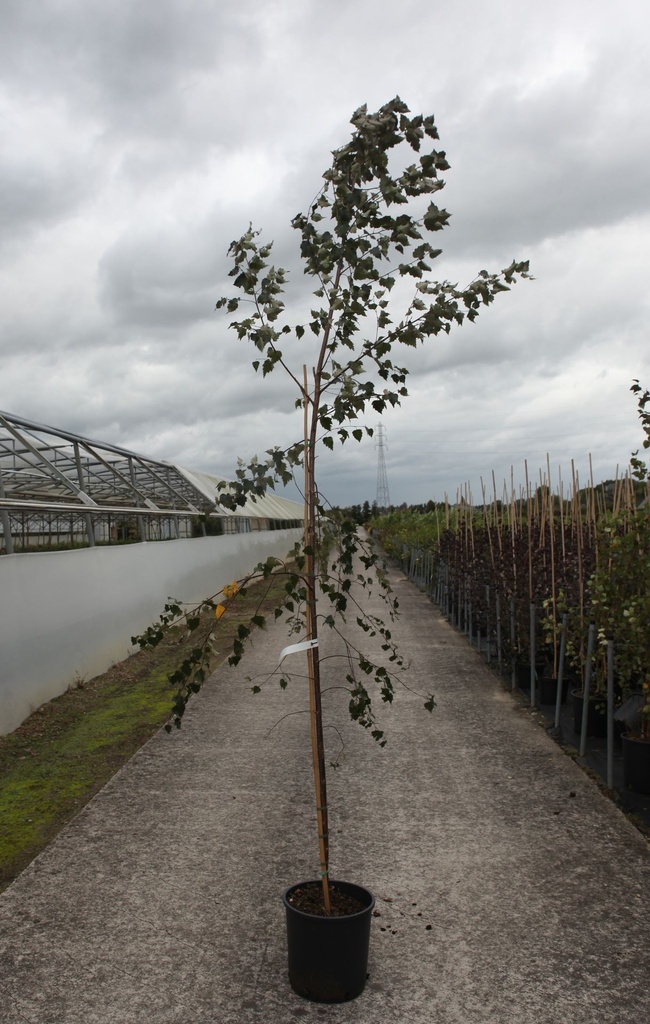
'Purpurea' is grown for its bright purple young leaves, which gradually turn brownish green towards late summer. Unlike most silver birches it keeps a dark bark: red-brown on young trees, later dark grey to almost black. It forms a moderately sized tree of about 10 m with a narrow, open crown and colours best on fertile soil.
Betula
Birches (Betula) are deciduous trees and shrubs from the cool and temperate parts of the Northern Hemisphere, from the Arctic to the mountains of Asia and North America. They are pioneer trees with a light, airy crown and fine twigs that carry catkins from autumn until spring. Gardeners value them above all for their peeling bark in white, cream, pink, copper or brown, and for their yellow autumn colour.
Betula pendula
The silver birch (Betula pendula) is native to most of Europe and temperate Asia and is one of our familiar wild trees. It grows quickly into a slender tree, typically around 20 m tall, with upward-angled branches and thin, hanging twigs dotted with small warts. The bark is brown on young trees, turns white and peels with age, and becomes dark and deeply fissured at the base of old trunks. Autumn colour is yellow.
Esposizione e terreno
A light-loving tree for full sun or light shade. It prefers a fresh, low-lime, slightly acid soil, but also grows in clay, loam, sand, peat and poor ground, and tolerates brief dry spells. It dislikes salty sea wind, soil compaction, raised ground levels and fluctuating water tables. It is very hardy.
Potatura e cura
Easy to grow and largely maintenance-free: water young trees during dry periods in the first years and mulch the base. Pruning is not necessary; at most, remove broken or dead branches with a clean cut.
Utilizzo in giardino
A classic tree for large gardens, parks, natural plantings and avenues, as a solitary or in groups, and popular as a multi-stemmed clump. Its airy crown casts only light shade. Pollinators visit the flowers, but the pollen can cause hay fever.
Caratteristiche della pianta
Dati botanici
| Famiglia | Betulaceae |
| Genere | Betula |
| Specie | pendula |
| Cultivar | 'Purpurea' |
Fogliame
| Sempreverde | no |
| Colore (fogliame) | violet, bruin |
Portamento
| Altezza | 1000 cm |
Posizione
| Rusticità | zona 2a (fino a -45,6 °C) |
| Caldo estivo | fino alla zona di calore 7 |