|
G
|
F
|
M
|
A
|
M
|
G
|
L
|
A
|
S
|
O
|
N
|
D
|
|
G
|
F
|
M
|
A
|
M
|
G
|
L
|
A
|
S
|
O
|
N
|
D
|
|
G
|
F
|
M
|
A
|
M
|
G
|
L
|
A
|
S
|
O
|
N
|
D
|
Informazioni su questa pianta
Cosa rende speciale questa pianta
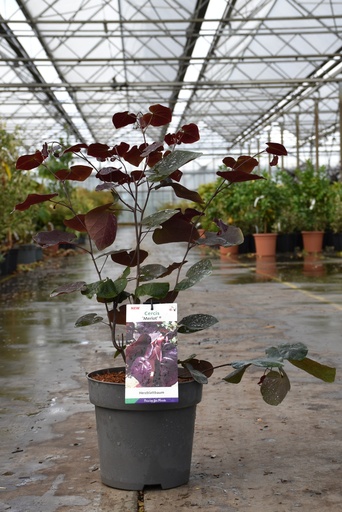
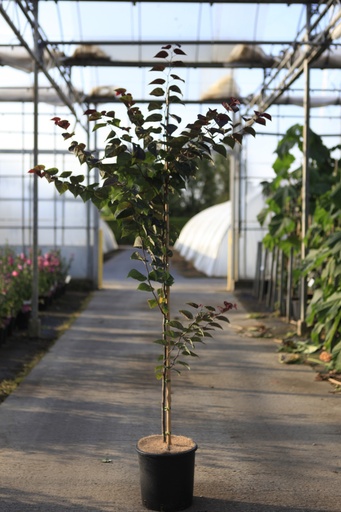
'Merlot' is a cross between 'Forest Pansy' and a Texas redbud, and it copes well with dry spells once established. Its glossy foliage unfolds red-violet, deepens to rich purple and stays purple for months before turning dark green in autumn.
Cercis
Judas trees and redbuds (Cercis) are around ten species of small deciduous trees and large shrubs from southern Europe, Asia and North America. Early in spring, before the leaves, clusters of pea-like flowers in pink, purple or white appear along the branches and even on the trunk. The simple, heart-shaped leaves and flat pods that hang on in winter complete the picture.
Cercis canadensis
The eastern redbud (Cercis canadensis) comes from the eastern and central United States and is the hardiest species of the genus. It forms a small, spreading tree of around 9 m, often multi-stemmed, with a short trunk and twisting branches. Pink-violet flowers cover the bare wood in March and April; the pointed, heart-shaped leaves open bronze and colour golden yellow to purple-red in autumn.
Esposizione e terreno
Grows best in a sheltered, sunny and fertile spot; in hot regions it also accepts partial shade. The soil should be deep and keep some moisture in summer, as this species is less drought-tolerant than the Judas tree; neutral to slightly acid soil is preferred. It is very hardy, though young shoots can suffer from severe frost in early spring.
Potatura e cura
No regular pruning is required. To grow it on a single trunk, remove the low side branches in March or April and keep doing so in the following years; older trees can be lightly cut back after flowering. Water regularly during dry spells in the first seasons. Disease resistance is very good.
Utilizzo in giardino
An ornamental small tree for a specimen position, a large informal hedge or a shrub group, where its early flowers and rich autumn colour stand out. Selections with purple, golden, variegated or weeping foliage extend its appeal throughout the season and suit smaller gardens and large pots.
Caratteristiche della pianta
Dati botanici
| Famiglia | Fabaceae |
| Genere | Cercis |
| Specie | canadensis |
| Cultivar | 'Merlot' |
Fioritura
| Periodo di fioritura | april – may |
| Colore (fiore) | pink |
Fogliame
| Sempreverde | no |
| Colore (fogliame) | violet |
Portamento
| Altezza | 400 cm, 200 cm |
Posizione
| Rusticità | zona 4a (fino a -34,4 °C) |
| Caldo estivo | fino alla zona di calore 9 |
| Tipo di terreno | neutral |
| Umidità del terreno | normal |
Cura
| Potatura | march – april |