

|
G
|
F
|
M
|
A
|
M
|
G
|
L
|
A
|
S
|
O
|
N
|
D
|
|
G
|
F
|
M
|
A
|
M
|
G
|
L
|
A
|
S
|
O
|
N
|
D
|
|
G
|
F
|
M
|
A
|
M
|
G
|
L
|
A
|
S
|
O
|
N
|
D
|
Informazioni su questa pianta
Osmanthus
Gli osmanti sono arbusti sempreverdi della famiglia delle Oleacee, per lo più originari delle foreste montane dell'Asia orientale e stretti parenti del lillà. Crescono da lentamente a moderatamente fino a formare cespugli densi e arrotondati, con foglie coriacee e lucide che possono avere margine intero, finemente dentato o armato di spine come quelle dell'agrifoglio. I piccoli fiori bianchi, tubolari, si nascondono in mazzetti tra le foglie e si tradiscono con un profumo intenso e dolce; a seconda della specie si aprono in primavera o dalla fine dell'estate all'autunno, e le api li visitano volentieri. La rusticità varia da specie a specie; una posizione riparata giova a tutte.
Osmanthus delavayi
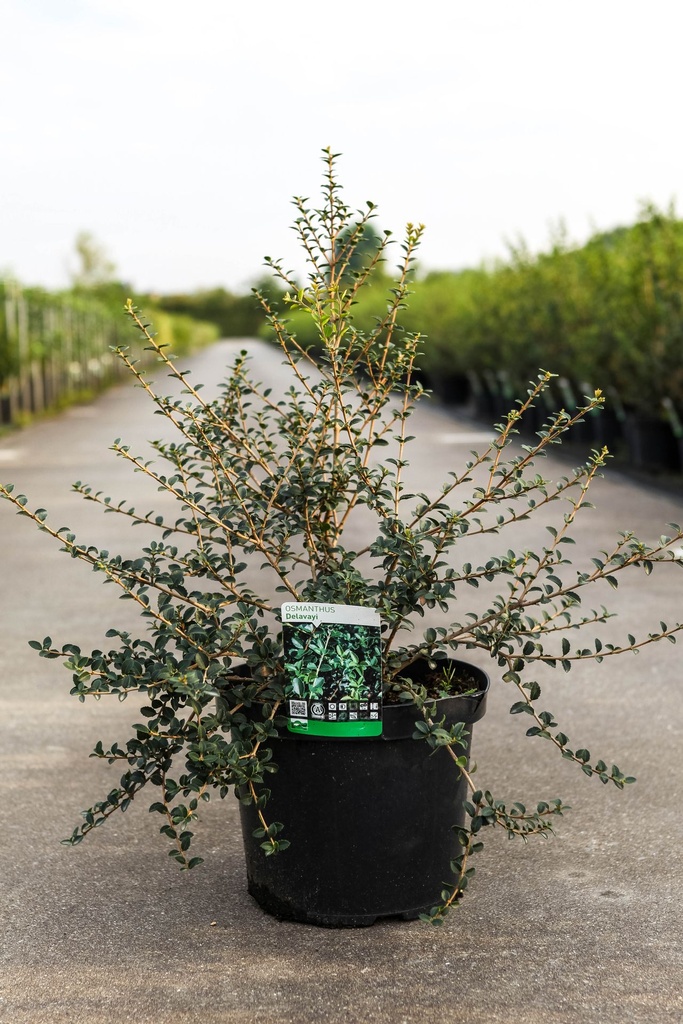
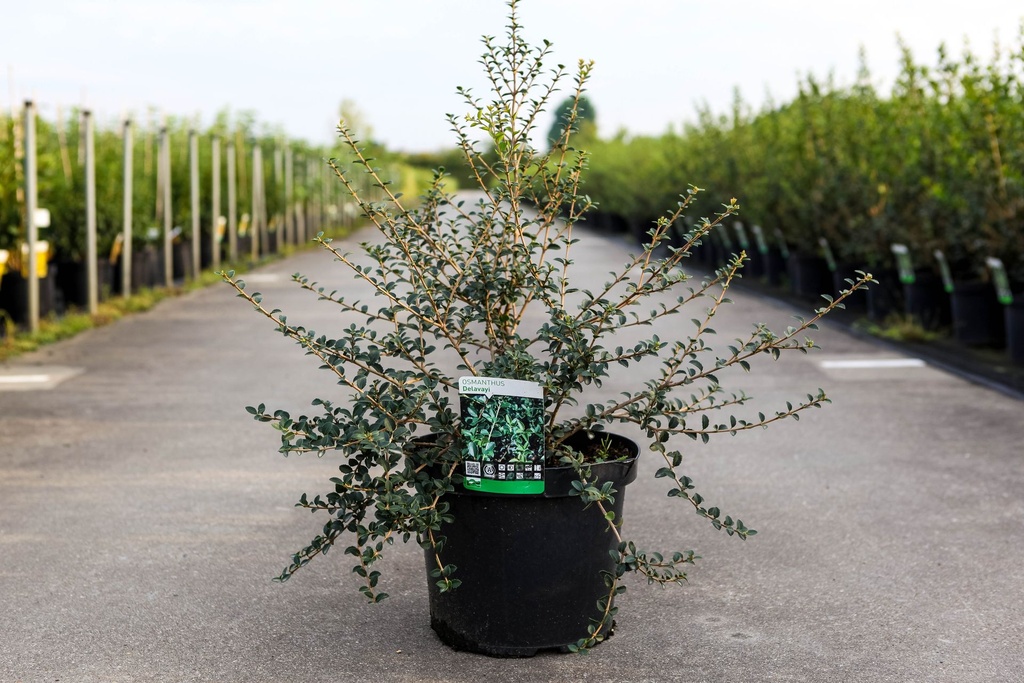
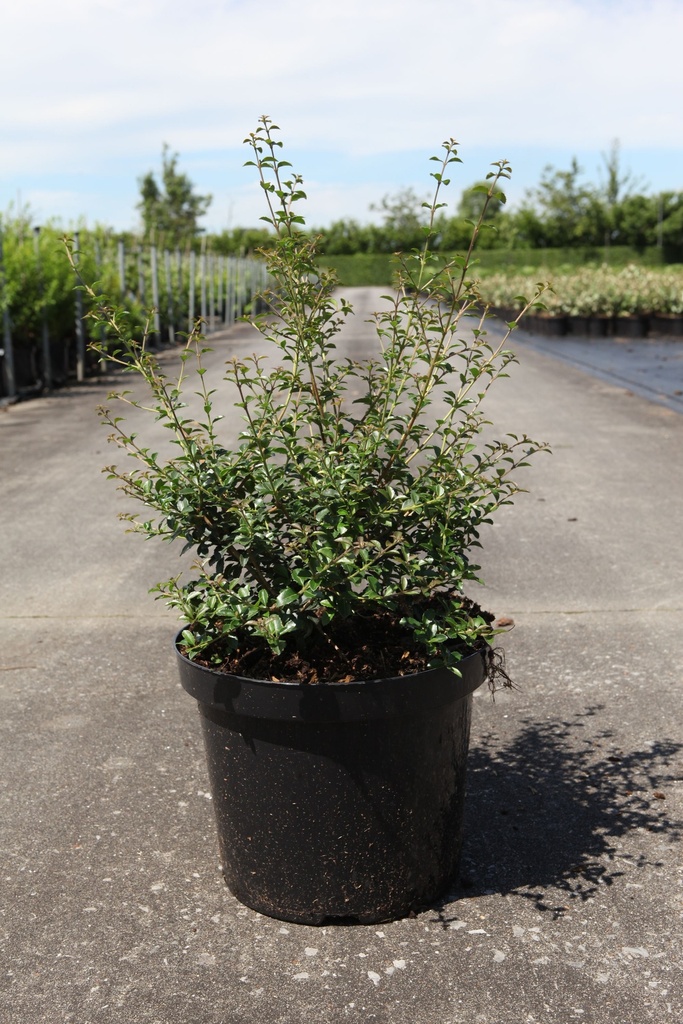
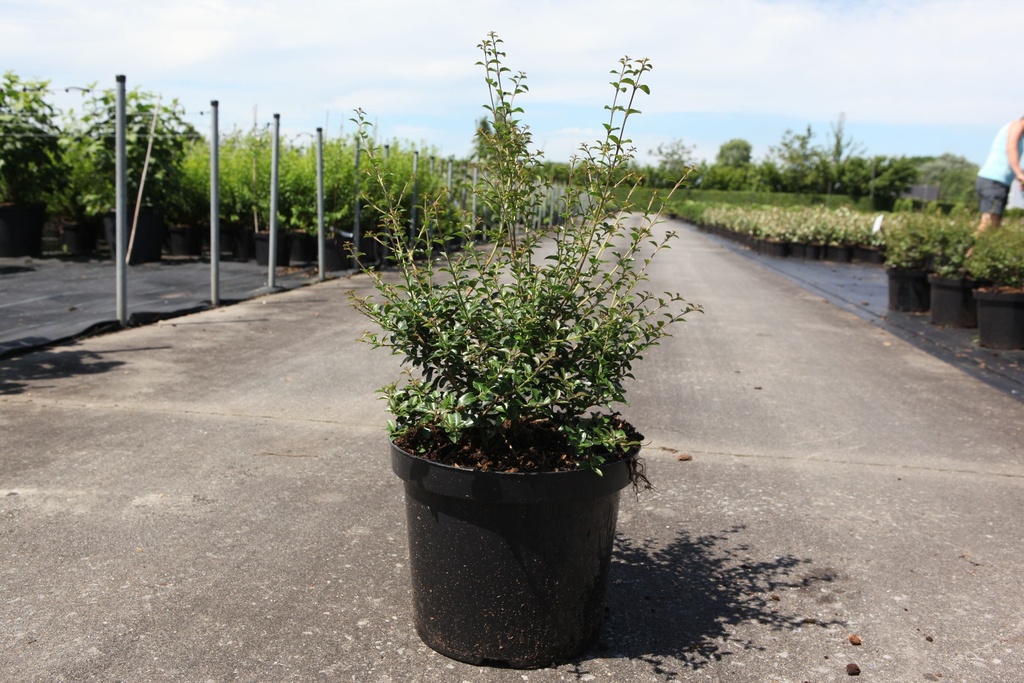
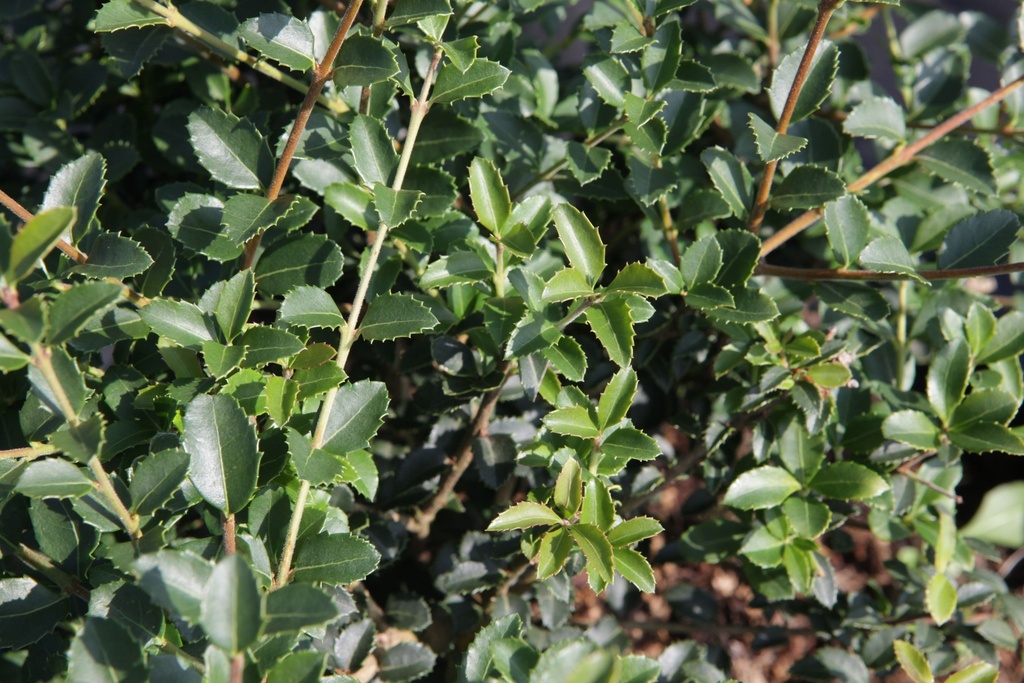
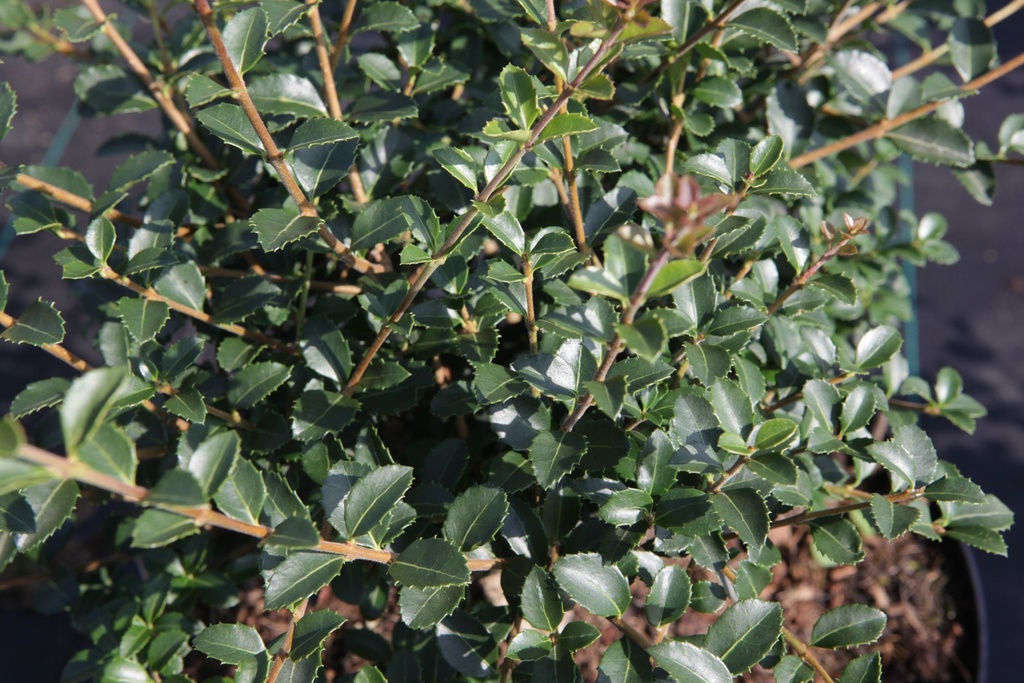
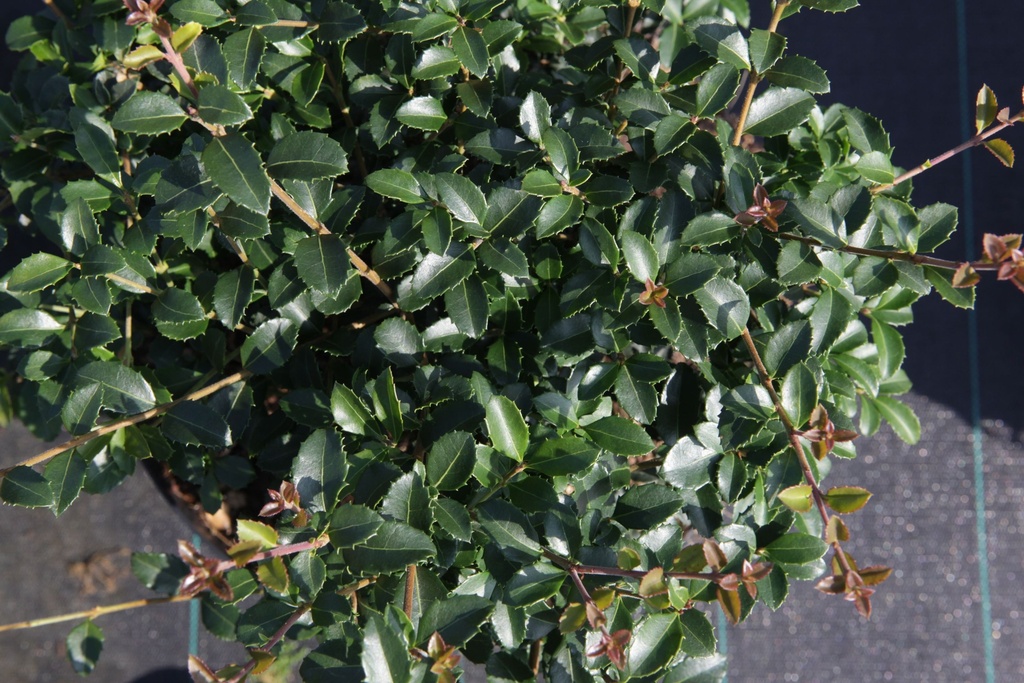
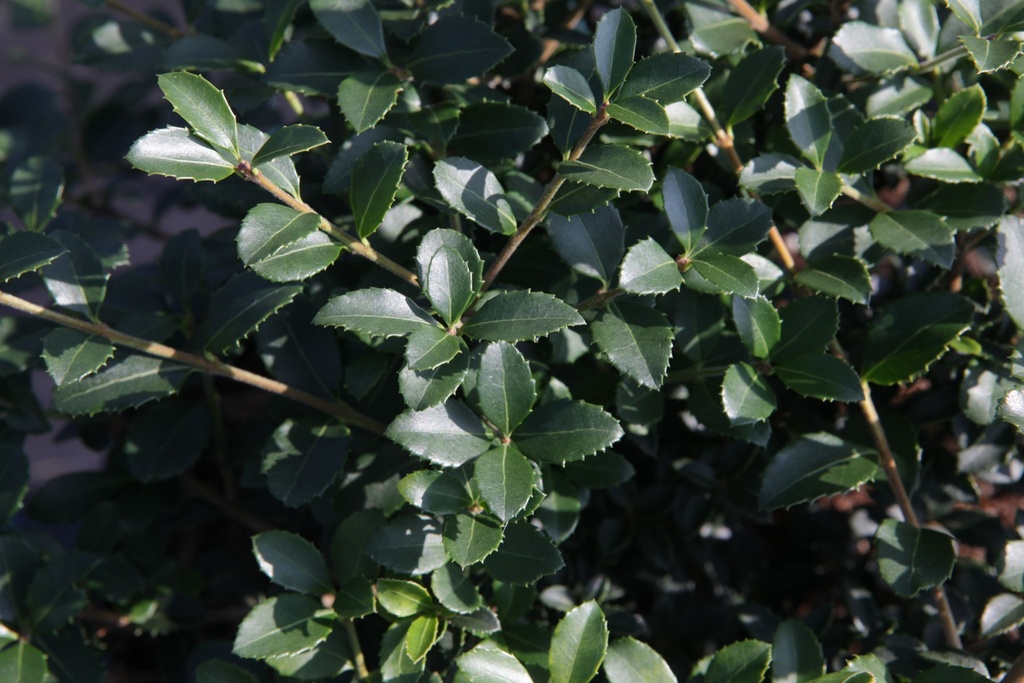
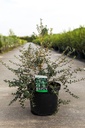
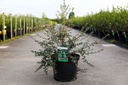
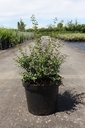
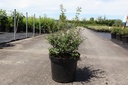
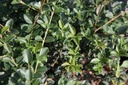
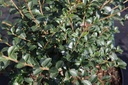
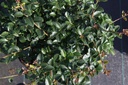
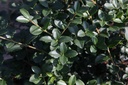
Osmanthus delavayi is a species from China that forms a dense, rounded bush of about 3 to 4 m. Its small, oval leaves are leathery, glossy dark green and finely toothed. In April and May the branches are covered with clusters of white tubular flowers with a strong jasmine scent, later followed by blue-black berries.
Esposizione e terreno
Plant in sun or partial shade in a moist, fertile, well-drained soil; chalky ground is also tolerated. It is only moderately hardy, so choose a sheltered spot out of strong winds and away from severe frost, and mulch the root zone in autumn.
Potatura e cura
Once flowering is over, in June or July, a light trim keeps the outline even and encourages fresh shoots. Do not let the soil dry out in summer, as the shrub has only moderate drought tolerance. Hard pruning is possible but costs about two years of flowering.
Utilizzo in giardino
Makes a good evergreen screen or informal hedge, on its own or mixed with other evergreen shrubs. It is also attractive in white-themed borders, as a solitary shrub and in a large container on the terrace.
Caratteristiche della pianta
Dati botanici
| Famiglia | Oleaceae |
| Genere | Osmanthus |
| Specie | delavayi |
Fioritura
| Periodo di fioritura | february – april |
| Colore (fiore) | white |
| Fiori | fragrant |
Fogliame
| Sempreverde | yes |
| Colore (fogliame) | green |
Portamento
| Altezza | 100 cm |
Posizione
| Rusticità | zona 8a (fino a -12,2 °C) |
| Caldo estivo | fino alla zona di calore 9 |
| Esposizione | sun, half shade |
| Umidità del terreno | dry, normal |
Utilizzo
| Tipo (uso) | shrub, solitary, in group |
Cura
| Potatura | june – july |