

|
J
|
F
|
M
|
A
|
M
|
J
|
J
|
A
|
S
|
O
|
N
|
D
|
|
J
|
F
|
M
|
A
|
M
|
J
|
J
|
A
|
S
|
O
|
N
|
D
|
Om denne planten
Dette gjør planten spesiell
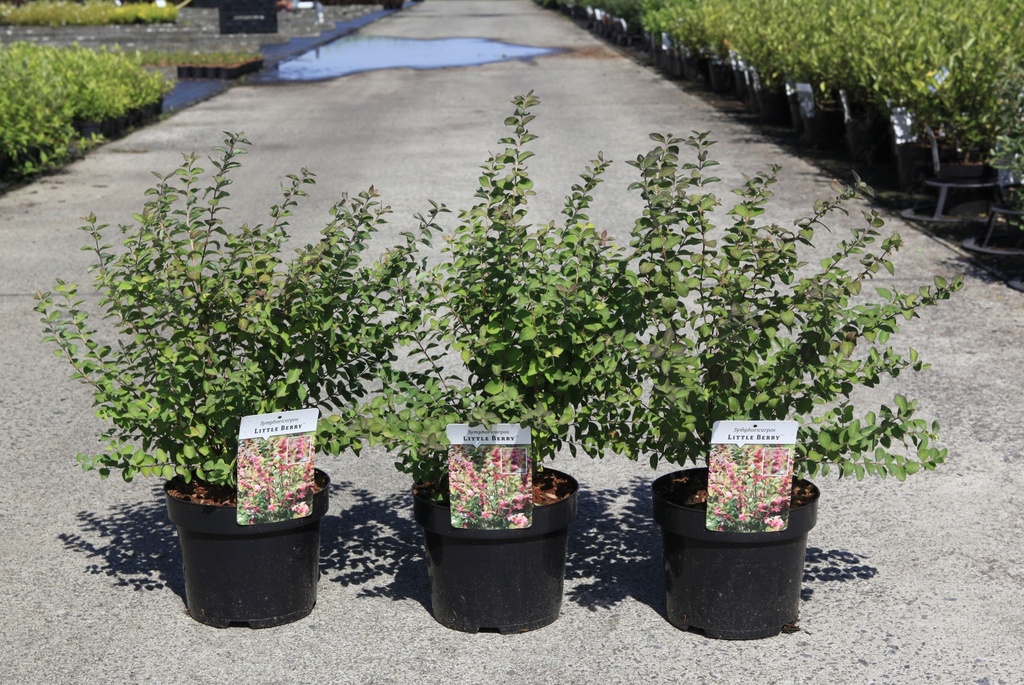
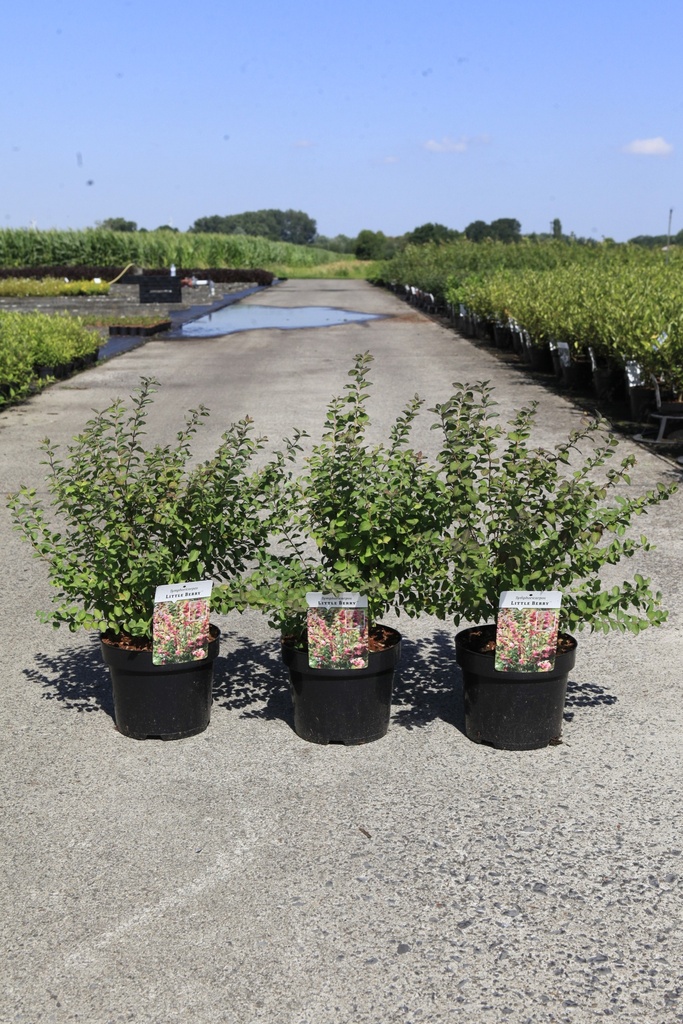
Bred by Guido Rouwette from two hybrid snowberries, Little Berry stays at about 50–70 cm and keeps its rich pink fruit on the bare stems through winter, often until spring. Its nectar-rich flowers feed bees, and it shrugs off frost to about -35 °C, drought, polluted air and salty coastal wind.
Symphoricarpos
Snowberries (Symphoricarpos) are deciduous shrubs from North and Central America, with a single species from China. They form dense, thicket-like bushes on thin, arching stems and spread by suckers. The small, bell-shaped summer flowers are modest but popular with bees, and are followed by clusters of round white, pink or purplish-red berries that often stay on well into winter.
Plassering og jord
Snowberries are very adaptable and grow in sun, partial shade and even fairly dry shade under trees, although they flower and fruit best with good light. Any ordinary garden soil will do, including clay and chalk, as long as it does not stay waterlogged in winter; very acid soil is less suitable. They are very hardy and tolerate wind and urban pollution.
Beskjæring og stell
Prune at the end of winter, in March: remove dead wood, thin out the centre and shorten shoots to keep the bush compact; pruning in summer or early autumn costs you the berries. Old, weakened plants can be cut back hard. Remove unwanted suckers to keep them within bounds, and give a layer of compost or mulch in autumn.
Bruk i hagen
Ideal for informal and wildlife hedges, screens, shrub borders and difficult spots such as dry shade or slopes, where low, spreading forms act as ground cover. The flowers feed bees and the berries feed birds, while branches with berries are lovely in autumn bouquets. The berries are toxic to people and can cause nausea if eaten.
Planteegenskaper
Botanisk
| Familie | Caprifoliaceae |
| Slekt | Symphoricarpos |
| Sort | 'GRSYCHLB' |
| Handelsnavn | Little Berry (PBR) |
Løv
| Eviggrønn | no |
| Farge (løv) | green |
Vekstform
| Høyde | 50 cm, 100 cm |
Voksested
| Vinterherdighet | sone 5a (ned til -28,9 °C) |
| Sommervarme | til varmesone 7 |
Stell
| Beskjæring | march |
Planteforedlerrett
Symphoricarpos 'GRSYCHLB' LITTLE BERRY (PBR) is subject to European Plant Breeders Rights under nr. 20250454. Asexual propagation and/or use of the trademark without license are prohibited.