





|
J
|
F
|
M
|
A
|
M
|
J
|
J
|
A
|
S
|
O
|
N
|
D
|
|
J
|
F
|
M
|
A
|
M
|
J
|
J
|
A
|
S
|
O
|
N
|
D
|
About this plant
What makes this plant special
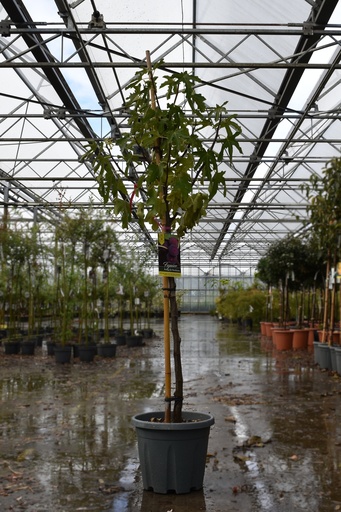
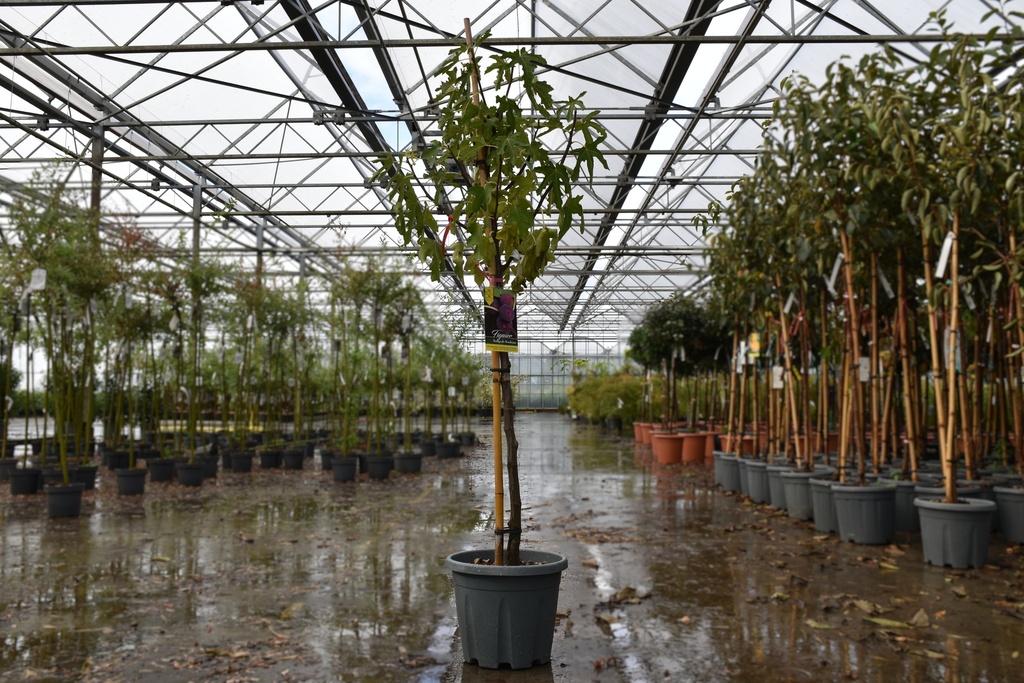
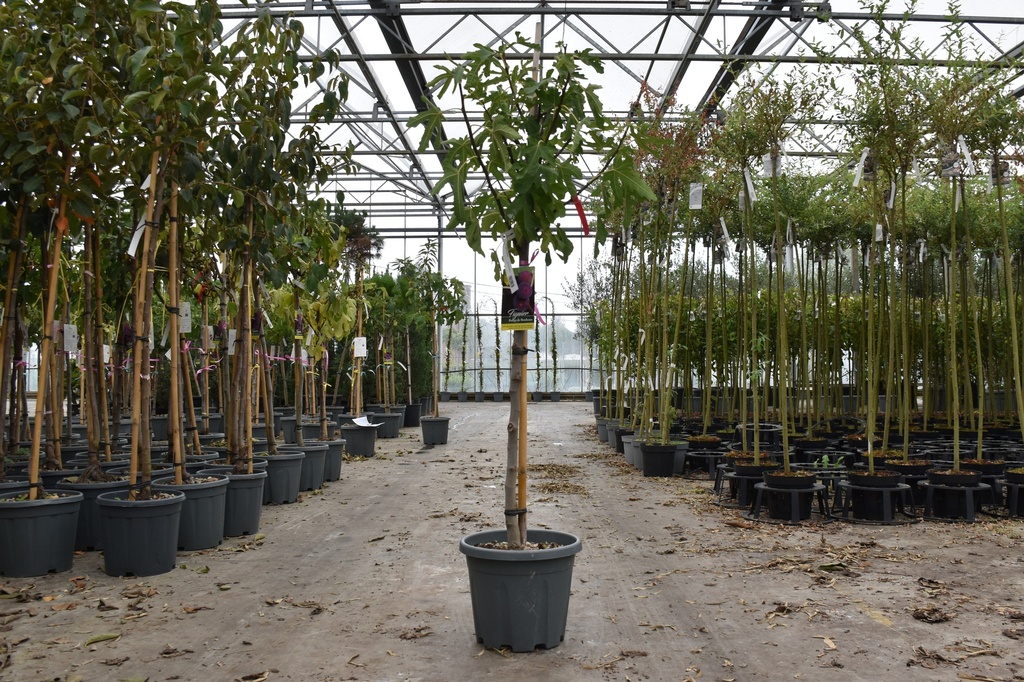
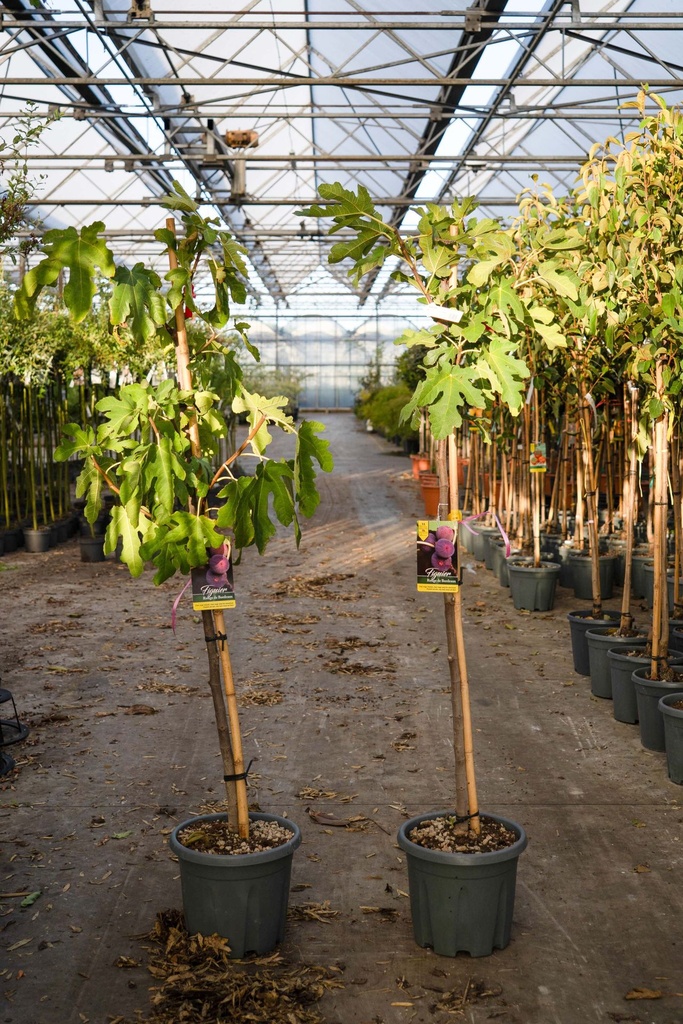
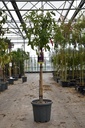
'Rouge de Bordeaux', also called 'Pastilière', stays small at around 2.5 m and ripens early, from the start of August, in a single crop. Its figs have a deep blue, almost black skin and sweet, aromatic flesh, and the plant stands up well to frost, so it fits a terrace pot or a small garden.
Fig Ficus
Figs (Ficus) form a huge genus in the mulberry family, with hundreds of trees, shrubs and climbers from warm regions of the world. All of them hide their tiny flowers inside a fleshy, closed receptacle that later becomes the fig. In our climate only the common fig is grown outdoors, loved for its sculptural leaves and sweet fruit.
Ficus carica
The common fig comes from Turkey and the eastern Mediterranean and grows into a deciduous shrub or small tree with large, deeply lobed leaves. Depending on the variety it gives one crop from August to October or two: early figs in July on last year's wood and a second crop in autumn. Self-fertile varieties set fruit without a pollinator.
Location and soil
Plant in full sun in the warmest corner of the garden, out of the wind, preferably against a south- or south-west-facing wall. Deep, well-drained, calcareous soil gives the best results, though poor and stony ground is tolerated. Established plants withstand moderate frost; in colder areas choose varieties that crop once, as late frosts can ruin early figs.
Pruning and care
Prune lightly in March and April as the sap rises: pinch the young shoots of young plants and shorten the previous year's growth above an outward-facing bud. From September to November, cut back shoots that have fruited and seal larger wounds against canker. Water during the first two summers, mulch each spring and wrap young plants in fleece during hard frost.
Use in the garden
A fruit tree with real ornamental value: grow it as a free-standing shrub, a small tree or a wall-trained fan in the kitchen garden or on a sunny terrace. Compact varieties suit large pots that can be moved to shelter in winter. The fruit is eaten fresh, dried or made into jam. The sap can irritate the skin in sunlight.
Plant characteristics
Botanical
| Family | Moraceae |
| Genus | Ficus |
| Species | carica |
| Cultivar | 'Rouge de Bordeaux' |
Foliage
| Evergreen | no |
| Colour (foliage) | green |
Growth habit
| Height | 250 cm |
Location
| Winter hardiness | -15 °C |
Care
| Pruning | march to april, september to november |