







|
J
|
F
|
M
|
A
|
M
|
J
|
J
|
A
|
S
|
O
|
N
|
D
|
|
J
|
F
|
M
|
A
|
M
|
J
|
J
|
A
|
S
|
O
|
N
|
D
|
|
J
|
F
|
M
|
A
|
M
|
J
|
J
|
A
|
S
|
O
|
N
|
D
|
About this plant
What makes this plant special
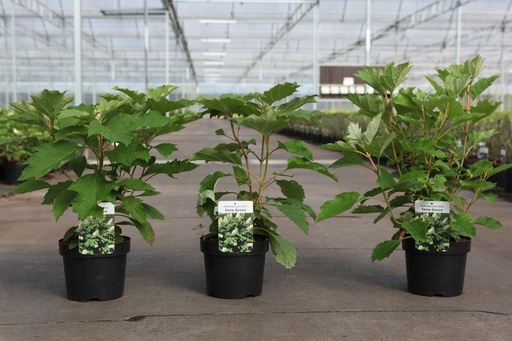
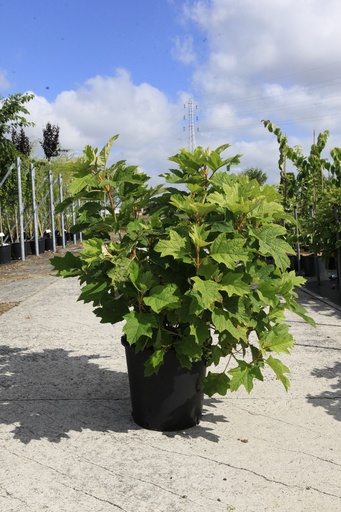
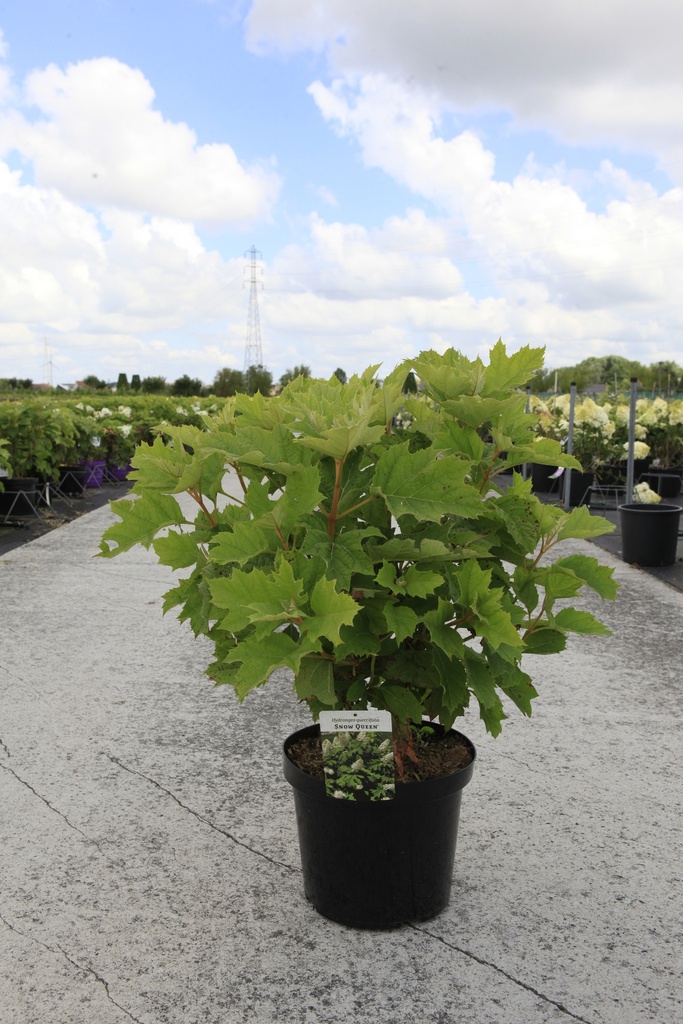
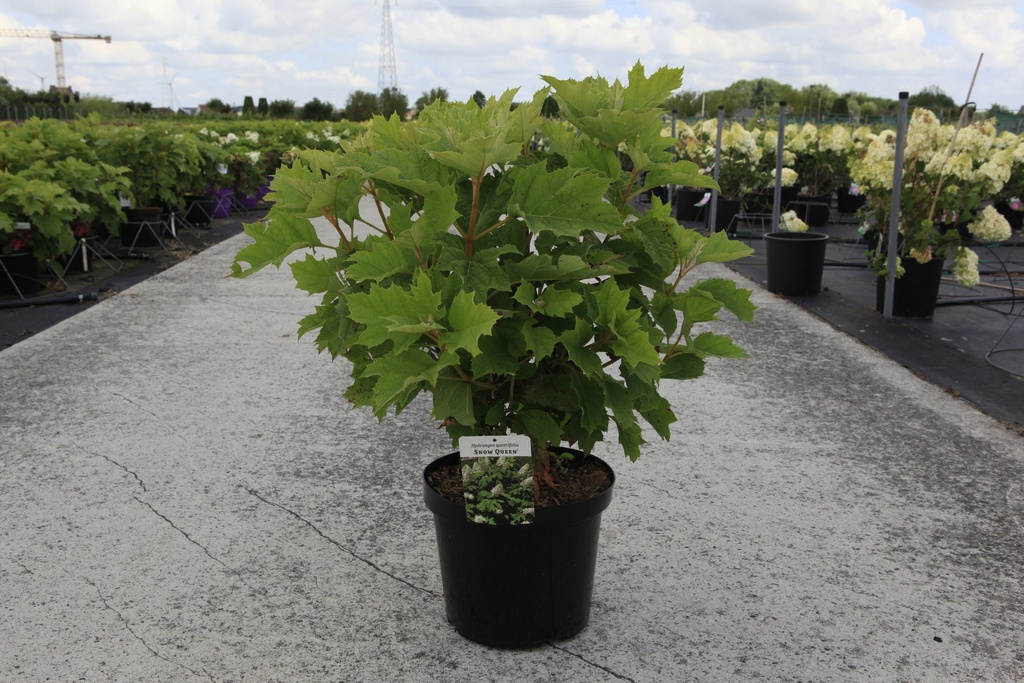
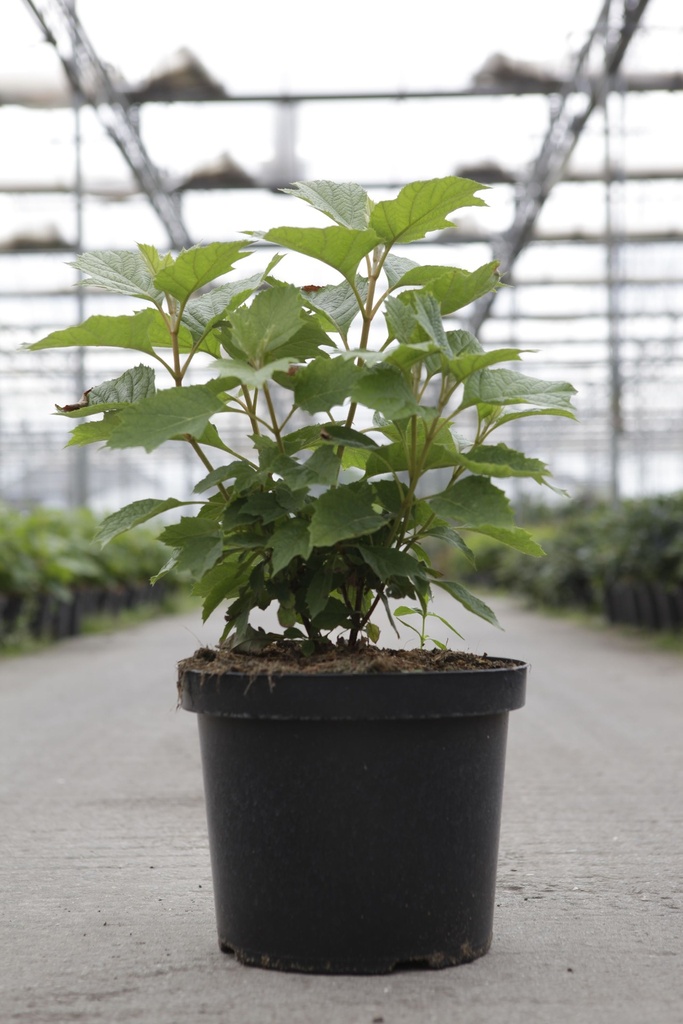
Decades after its selection in America this oakleaf hydrangea is still widely planted: medium-sized, fairly firm and upright, with large cream-white panicles that stay standing rather than flopping and fade to pink from late summer. The autumn colour is an intense mix of reds, and it needs little water once established, in a border, a group or a large pot.
Hydrangea
Hydrangeas are deciduous or evergreen shrubs and self-clinging climbers from East Asia and North America. Each flower head combines small fertile florets with larger, showy sterile ones; depending on the species they form a rounded head, a flat lacecap or a pointed plume. They flower over a long stretch from midsummer into autumn, the heads shifting colour as they age, and many species colour well in autumn too. Sizes run from small shrubs to almost tree-like specimens.
Oak-leaved hydrangea Hydrangea quercifolia
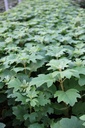
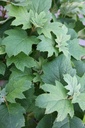
The oak-leaved hydrangea is a woodland shrub from the warm south-east of the United States. Its large, deeply lobed leaves, cut like those of a red oak and felted grey beneath, turn orange, wine red and purple in autumn. Young shoots wear a coat of rusty hairs, older stems shed red-brown bark in flakes, and the plant branches high rather than from the base. In early summer come long, upright, conical plumes of creamy white that blush pink with age.
Location and soil
Unlike most hydrangeas it wants summer warmth: a sheltered spot in sun or light shade, out of cold east and north winds, gives the richest flowering, while deep shade leaves it lanky and dull. Drainage matters most: it does not survive compacted or waterlogged ground and prefers a loose, deep soil, acid to slightly chalky. Fully hardy; after a mild winter it keeps its leaves until late March, and sharp frost makes it drop them.
Pruning and care
The flower buds sit on last year's wood, so pruning is kept to a minimum and never done in spring: the dried plumes are removed, and on an old plant a few of the oldest, grey stems are taken out at the base straight after flowering. The heavy plumes can bow the branches; a discreet support helps. In poorly drained soil the roots may rot.
Use in the garden
A shrub for the woodland edge, the shady side of the house and the mixed border, or as a specimen where the autumn foliage catches the low sun; in groups a bold mass under tall trees. Tolerates sea wind and town air; the plumes cut well.
Plant characteristics
Botanical
| Family | Hydrangeaceae |
| Genus | Hydrangea |
| Species | quercifolia |
| Trade name | Snow Queen® |
Flowering
| Flowering period | june to august |
| Colour (flower) | white |
| Flowers | filled |
Foliage
| Evergreen | no |
| Colour (foliage) | green |
| Autumn colour | red |
Growth habit
| Height | 100 cm, 150 cm |
Location
| Winter hardiness | zone 5a (down to -28,9 °C) |
| Summer heat | up to heat zone 9 |
| Soil type | acid |
| Location | sun, half shade |
| Soil moisture | normal |
Use
| Type (use) | shrub, solitary, in group |
Care
| Pruning | april |