



|
J
|
F
|
M
|
A
|
M
|
J
|
J
|
A
|
S
|
O
|
N
|
D
|
|
J
|
F
|
M
|
A
|
M
|
J
|
J
|
A
|
S
|
O
|
N
|
D
|
|
J
|
F
|
M
|
A
|
M
|
J
|
J
|
A
|
S
|
O
|
N
|
D
|
About this plant
What makes this plant special
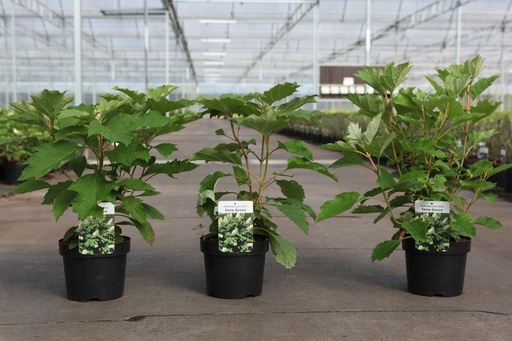
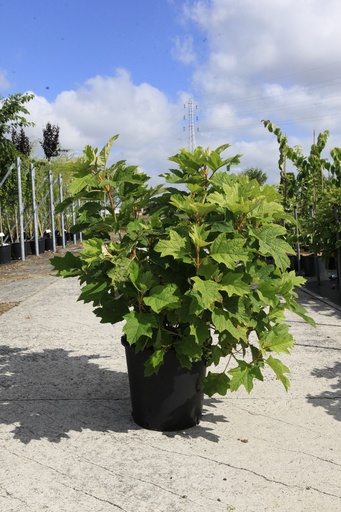
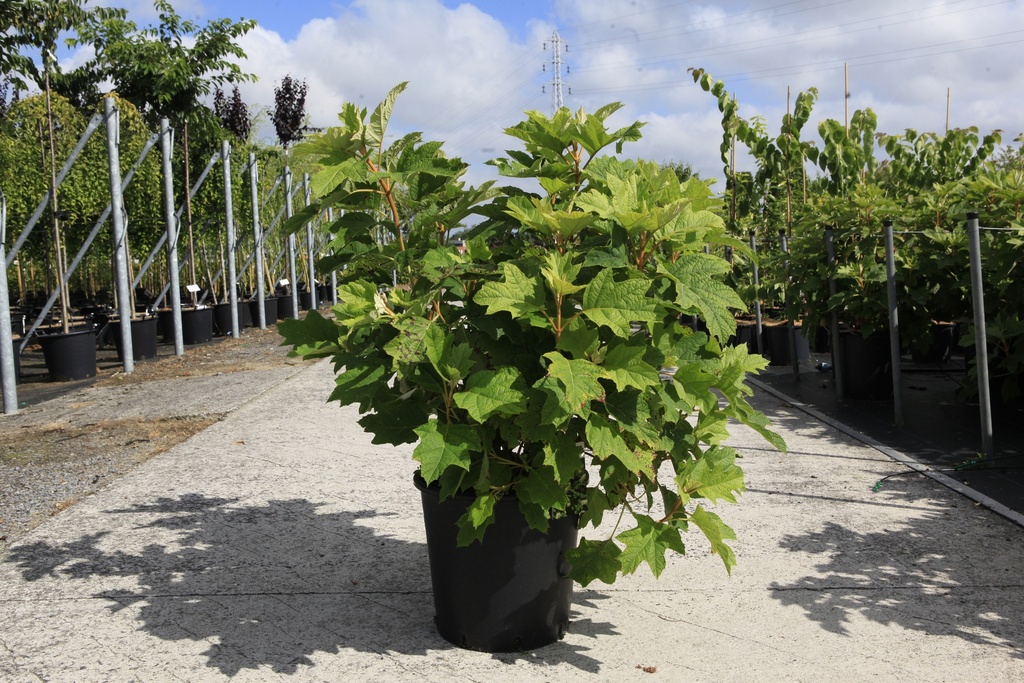
Snow Queen®, selected by Bill Flemer in 1979, is a compact, free-flowering oakleaf hydrangea of about 1.5 m with sturdy stems that stand up well to wind and rain. From July its dense clusters, up to 25 cm long, open greenish-white, turn pure white and later pale purplish pink, while the autumn leaves turn wine-red to brown.
Hydrangea
Hydrangeas are deciduous or evergreen shrubs and self-clinging climbers from East Asia and North America. Each flower head combines small fertile florets with larger, showy sterile ones; depending on the species they form a rounded head, a flat lacecap or a pointed plume. They flower over a long stretch from midsummer into autumn, the heads shifting colour as they age, and many species colour well in autumn too. Sizes run from small shrubs to almost tree-like specimens.
Oak-leaved hydrangea Hydrangea quercifolia
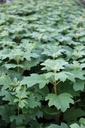
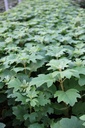
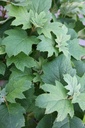
Named after the oak-like shape of its foliage, this hydrangea from the south-eastern United States has deeply lobed, hairy leaves up to 20 cm long, felted beneath and brilliantly coloured in autumn. It forks higher up rather than at the base, has reddish, felty, peeling stems and reaches 2 m or more within 5 to 10 years. Large white flower cones follow from July to September, turning pink as they age.
Location and soil
Prefers filtered sun or partial shade, but also tolerates plenty of sun and drought, as well as shade. Very free-draining soil is essential: it dies in compacted or waterlogged ground. The shrub itself is hardy, but give it a spot somewhat sheltered from cold east and north winds. Its foliage is semi-evergreen, lasting until late March after a mild winter but falling once frost passes about -7 °C.
Pruning and care
Flowers on the previous year's wood and needs little pruning; cutting back in spring costs flowers. Leave the dried clusters on over winter and remove them in April. The plumes can be so heavy that the branches bend, so give large plants some support. Keep mulch away from the base of the stems.
Use in the garden
Decorative all year round thanks to its bold foliage, long flowering and autumn colour. Use it as a specimen, in borders, along a path or in an informal hedge; it is less suited to container growing.
Plant characteristics
Botanical
| Family | Hydrangeaceae |
| Genus | Hydrangea |
| Species | quercifolia |
| Trade name | Snow Queen® |
Flowering
| Flowering period | june to august |
| Colour (flower) | white |
| Flowers | filled |
Foliage
| Evergreen | no |
| Colour (foliage) | green |
| Autumn colour | red |
Growth habit
| Height | 100 cm, 150 cm |
Location
| Winter hardiness | zone 5a (down to -28,9 °C) |
| Summer heat | up to heat zone 9 |
| Soil type | acid |
| Location | sun, half shade |
| Soil moisture | normal |
Use
| Type (use) | shrub, solitary, in group |
Care
| Pruning | april |