
Aesculus parviflora
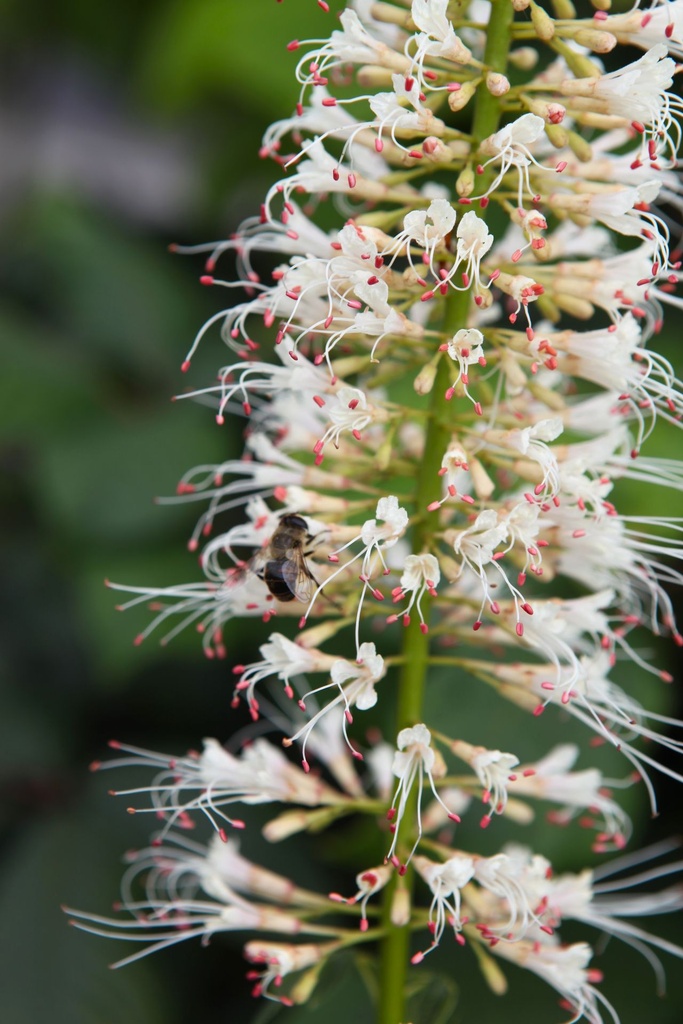
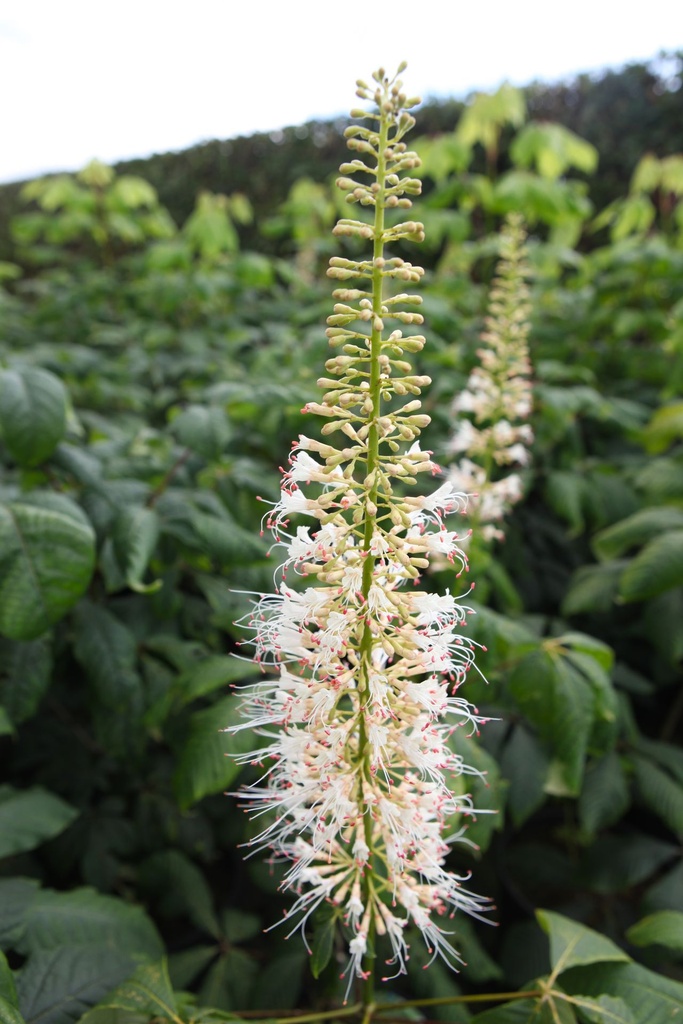
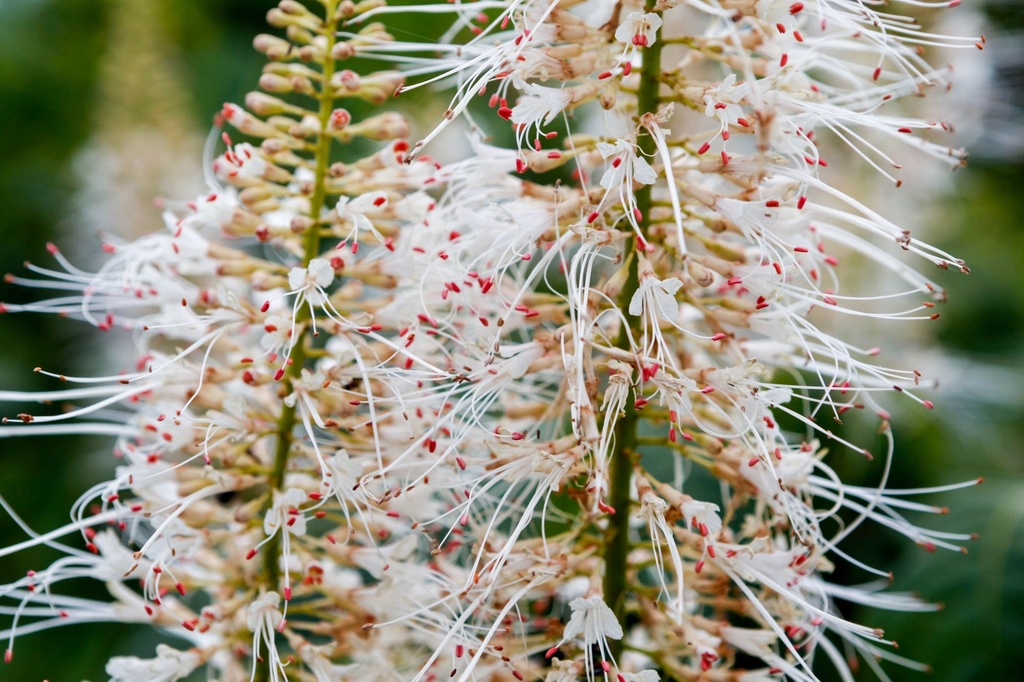
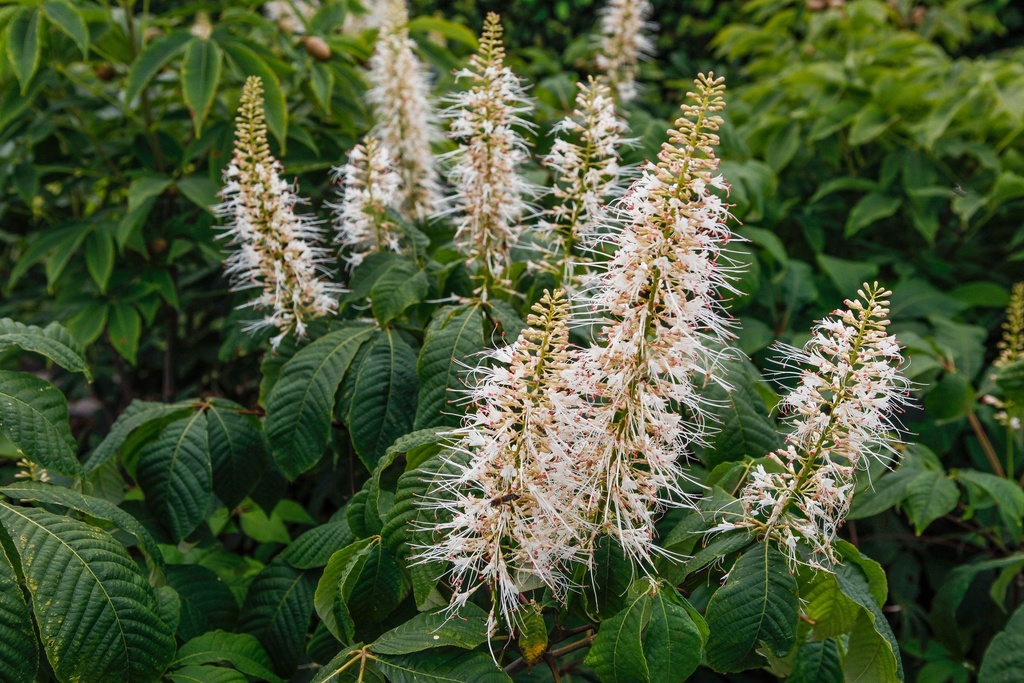
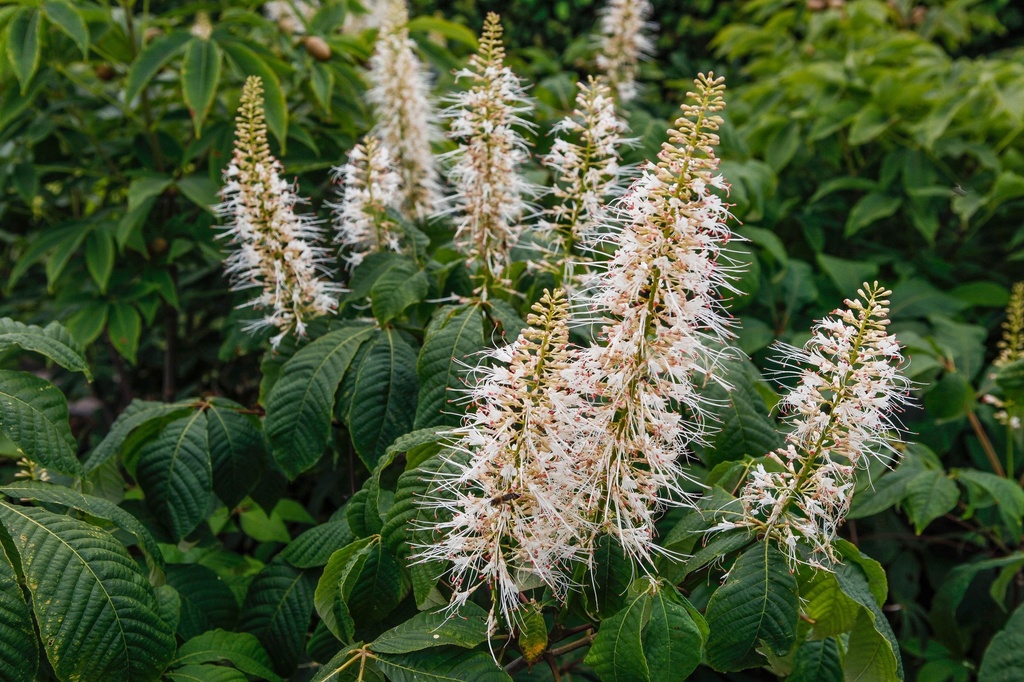
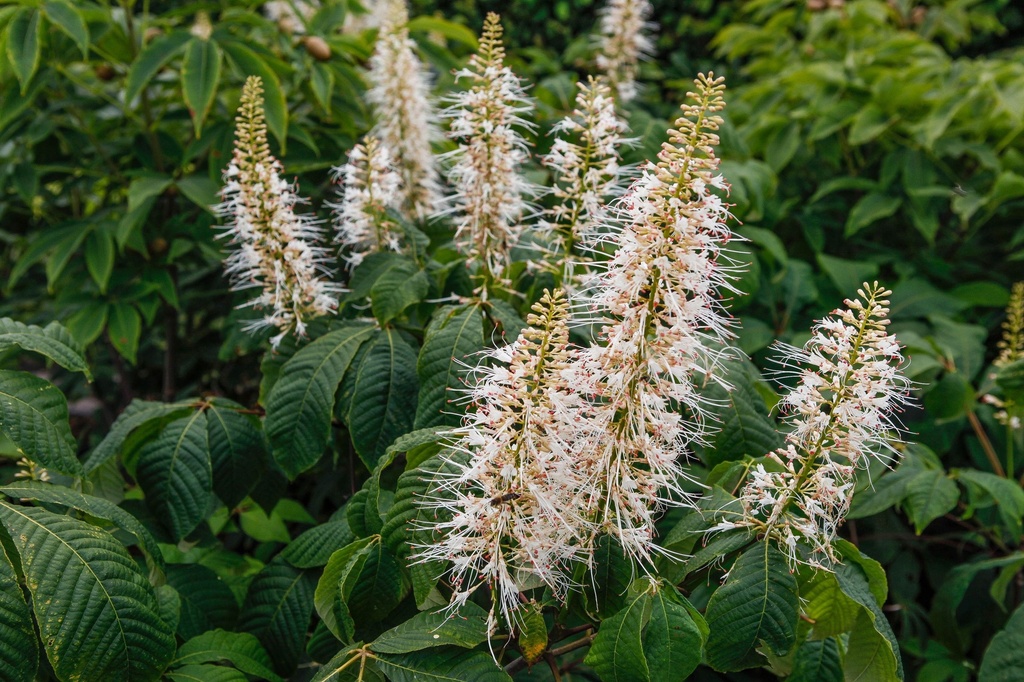
Aesculus parviflora is a large suckering deciduous shrub that reaches a height of 2,5 - 4 meters and a width of 8 meters. It has palmate leaves which open bronze, then dark green, turning yellow in autumn. Erect panicles of white flowers with prominent stamens, are sometimes followed by smooth fruits. It grows well in well-drained soil.
Okres kwitnienia
Okres sadzenia
O tej roślinie
Aesculus
Horse chestnuts and buckeyes (Aesculus) are deciduous trees and shrubs from Europe, Asia and above all North America. They range from compact shrubs of about 2 m to stately park trees. Their hand-shaped leaves and upright candles of white, yellow, pink or red flowers in late spring or summer make them favourite ornamental and bee plants.
Aesculus parviflora
The bottlebrush buckeye (Aesculus parviflora) is a broad, multi-stemmed shrub from the woodlands of the south-eastern United States. Its leaves emerge bronze, turn dark green and become yellow in autumn. In July and August it bears long, upright plumes of white flowers with protruding stamens, the latest flowering of all horse chestnuts.
Stanowisko i gleba
One of the few flowering shrubs that thrives in partial to full shade, though it also grows in sun. It prefers a rich, humus-rich soil that stays moist, but tolerates many soil types, including lime, and brief flooding. Very hardy. Allow plenty of room: it slowly spreads by suckers and becomes much wider than tall.
Przycinanie i pielęgnacja
Water well in the first years, as young plants dislike dry soil. Pruning is usually unnecessary; remove unwanted suckers if the shrub spreads too far. It grows slowly and has hardly any pest or disease problems.
Zastosowanie w ogrodzie
An excellent solitary shrub for a lawn or a shady corner, or planted in groups in borders, woodland edges and parks. The summer flowers attract bees and butterflies. The nuts are rarely formed in our climate and are toxic if eaten.
Cechy
Nazwa botaniczna
| Rodzina | Sapindaceae |
| Rodzaj | Aesculus |
| Gatunek | parviflora |
Kwitnienie
| Okres kwitnienia | june, july |
| Kolor (kwiat) | white |
Liście
| Zimozielony | no |
| Kolor (liście) | green |
| Barwa jesienna | yellow |
Pokrój
| Wysokość | 250 cm, 300 cm |
Stanowisko
| Mrozoodporność | -30 °C |
| Rodzaj gleby | acid, neutral |
| Rodzaj gleby | acid, neutral |
| Stanowisko | sun, half shade |
| Wilgotność gleby | moist, normal |
Zastosowanie
| Typ (zastosowanie) | fruit/berries, solitary |