
|
s
|
l
|
m
|
k
|
m
|
c
|
l
|
s
|
w
|
p
|
l
|
g
|
|
s
|
l
|
m
|
k
|
m
|
c
|
l
|
s
|
w
|
p
|
l
|
g
|
|
s
|
l
|
m
|
k
|
m
|
c
|
l
|
s
|
w
|
p
|
l
|
g
|
O tej roślinie
Co wyróżnia tę roślinę
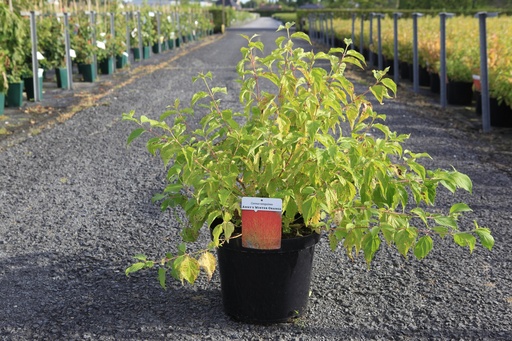
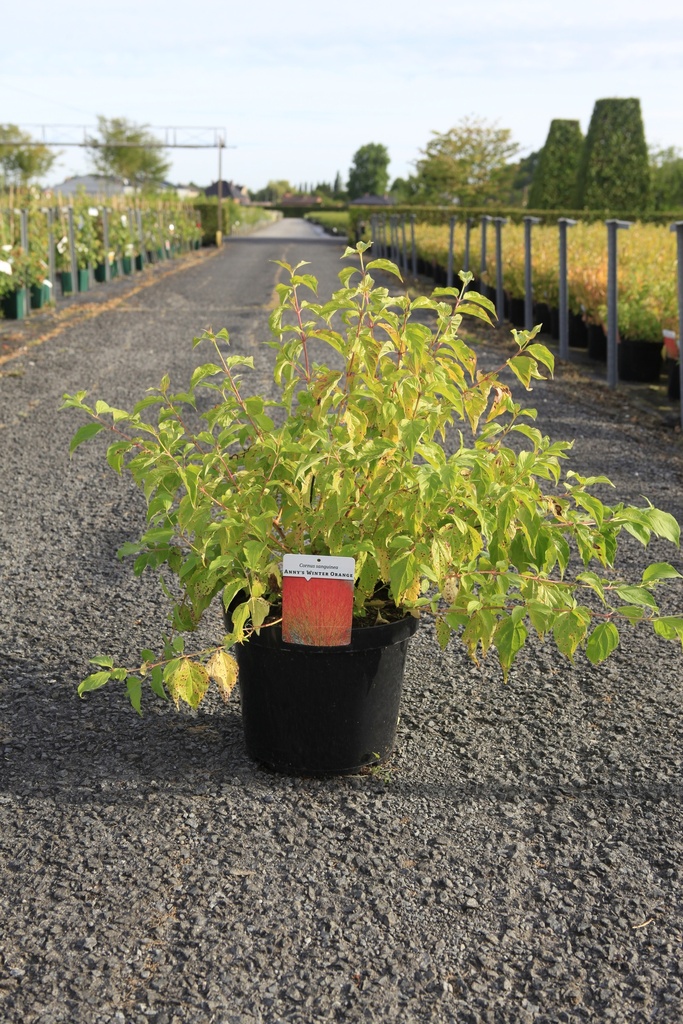
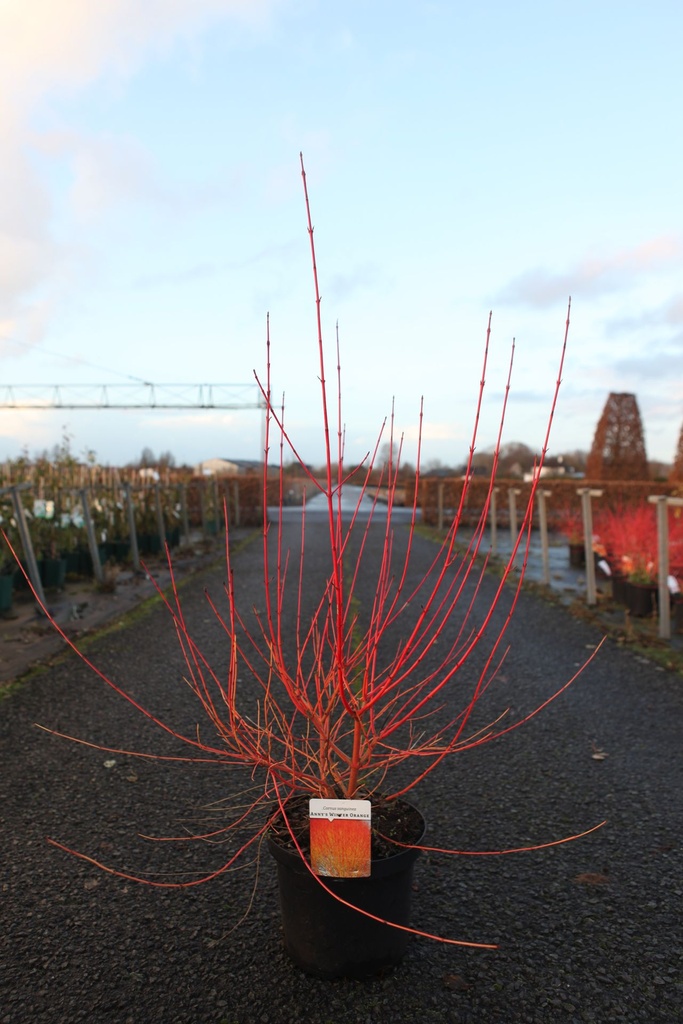
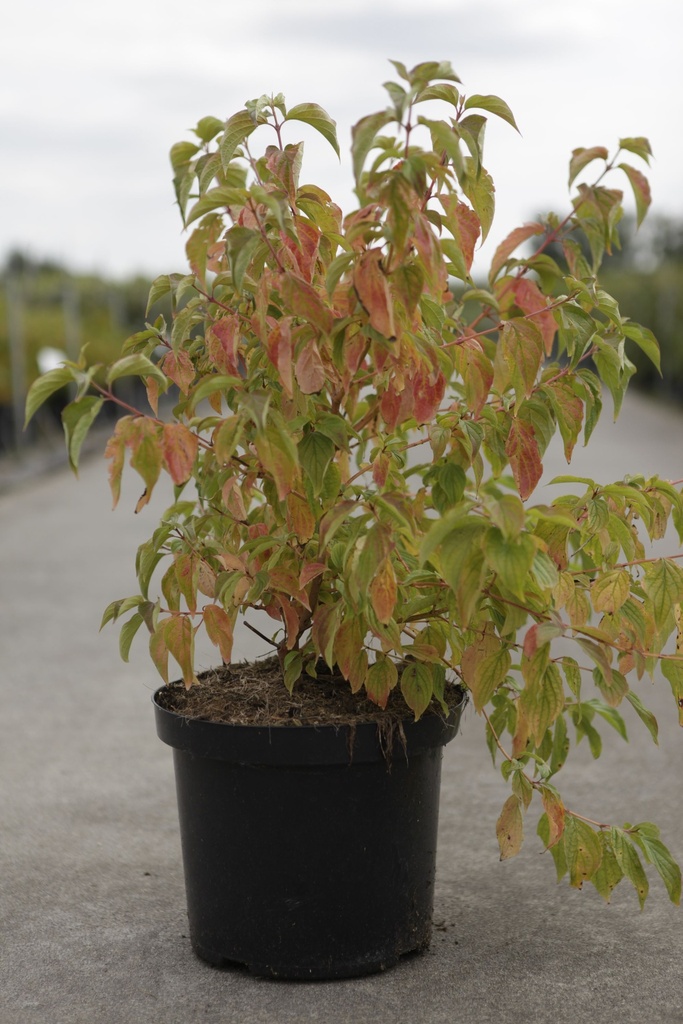
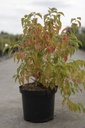
'Anny's Winter Orange' is a Dutch selection from 1995 that holds the RHS Award of Garden Merit. Its bare winter stems shade from yellow-orange at the base to bright red at the tips. Regular pruning encourages the young, most strongly coloured shoots and keeps it to 1.5–1.8 m instead of the 2 m it reaches if left alone.
Cornus
Dogwoods (Cornus) are deciduous or evergreen shrubs, small trees and a few creeping perennials from the temperate northern hemisphere. Some are grown for their brightly coloured winter stems, others for the showy white or pink bracts around their tiny flowers, and many for their fiery autumn colour and berries that birds enjoy.
Cornus sanguinea
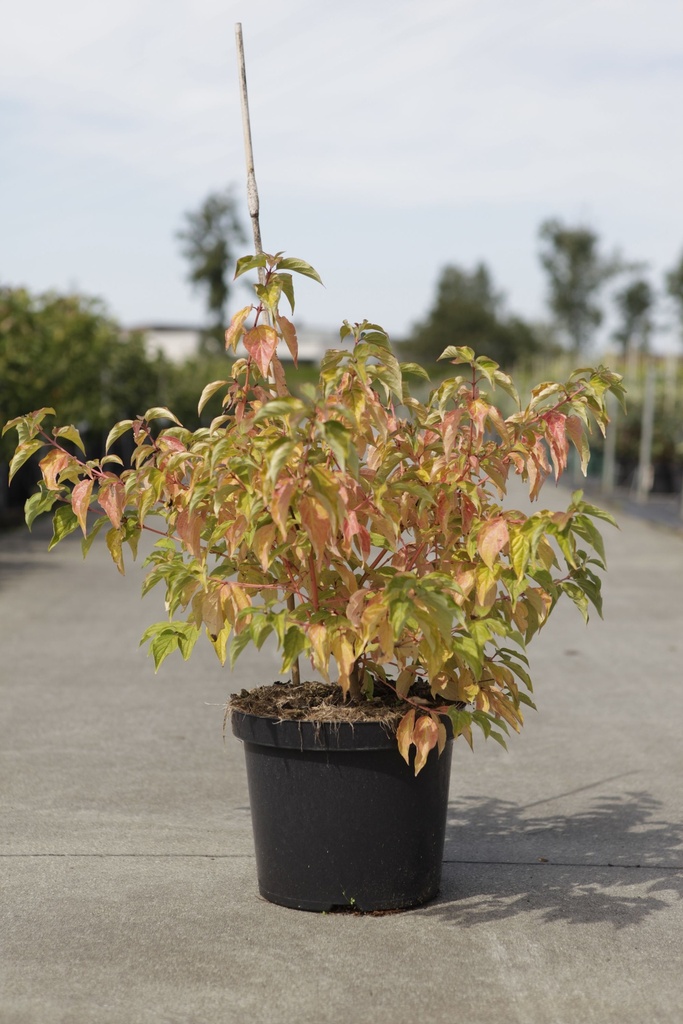
The common dogwood is a native European deciduous shrub with a dense, upright habit. Its young stems colour in shades from yellow and orange to red, and are most striking in winter after leaf fall. Small creamy-white flower clusters appear in May and June, followed by dark berries that birds eat, while the foliage turns warm colours in autumn.
Stanowisko i gleba
Best in full sun, where the winter stems colour most intensely, but also tolerates light shade. Not fussy about soil and grows well on chalky ground. Fast-growing and very winter-hardy.
Przycinanie i pielęgnacja
Only the young shoots carry the bright winter colour, so cut back once a year at the end of winter, in February or March. A hard cut to about 30 cm keeps the shrub compact; removing a third to half of the stems gives a fuller plant.
Zastosowanie w ogrodzie
Ideal for winter colour in borders, mixed and wildlife hedges, and in front of taller shrubs. Valuable for pollinators in spring and birds in autumn, and suitable for natural plantings and banks.
Cechy rośliny
Dane botaniczne
| Rodzina | Cornaceae |
| Rodzaj | Cornus |
| Gatunek | sanguinea |
| Odmiana | 'Anny's Winter Orange' |
Kwitnienie
| Okres kwitnienia | may – june |
| Kolor (kwiat) | white |
Liście
| Zimozielony | no |
| Kolor (liście) | green |
| Barwa jesienna | orange, red |
Pokrój
| Wysokość | 150 cm |
Stanowisko
| Mrozoodporność | strefa 5a (do -28,9 °C) |
| Upały letnie | do strefy upałów 7 |
| Stanowisko | sun, half shade |
Zastosowanie
| Typ (zastosowanie) | solitary, in group |
Pielęgnacja
| Cięcie | february – march |