

|
s
|
l
|
m
|
k
|
m
|
c
|
l
|
s
|
w
|
p
|
l
|
g
|
|
s
|
l
|
m
|
k
|
m
|
c
|
l
|
s
|
w
|
p
|
l
|
g
|
|
s
|
l
|
m
|
k
|
m
|
c
|
l
|
s
|
w
|
p
|
l
|
g
|
O tej roślinie
Co wyróżnia tę roślinę
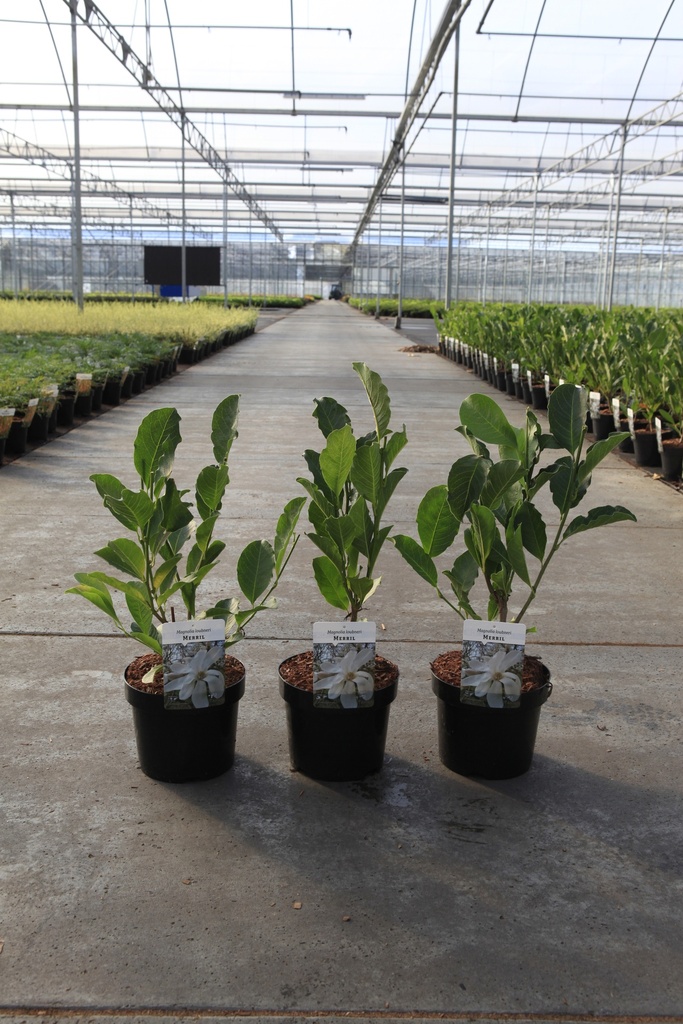
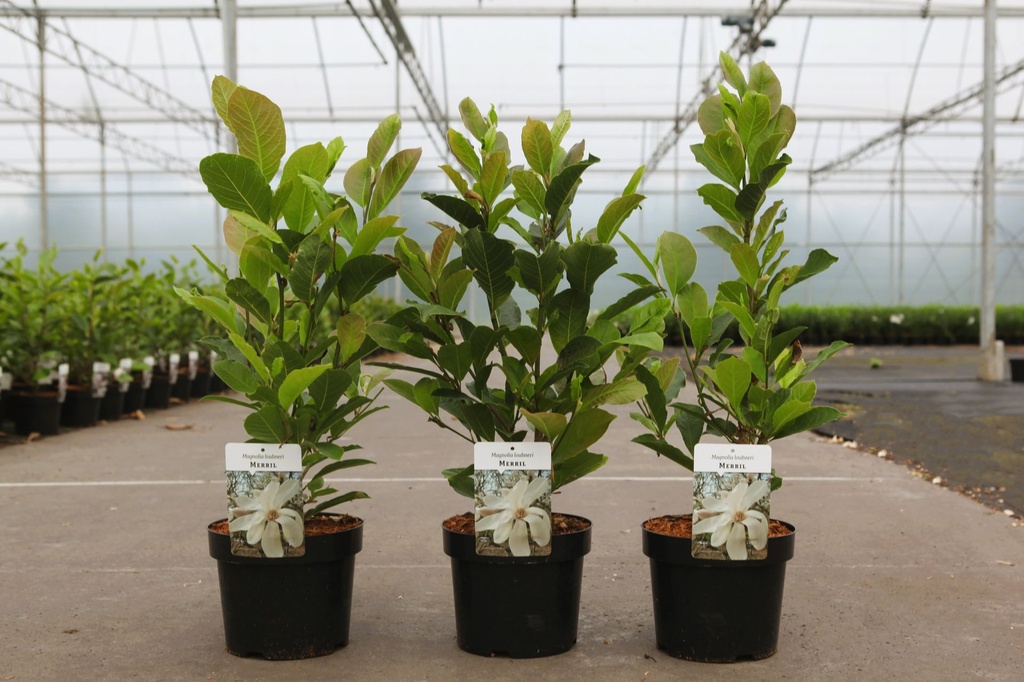
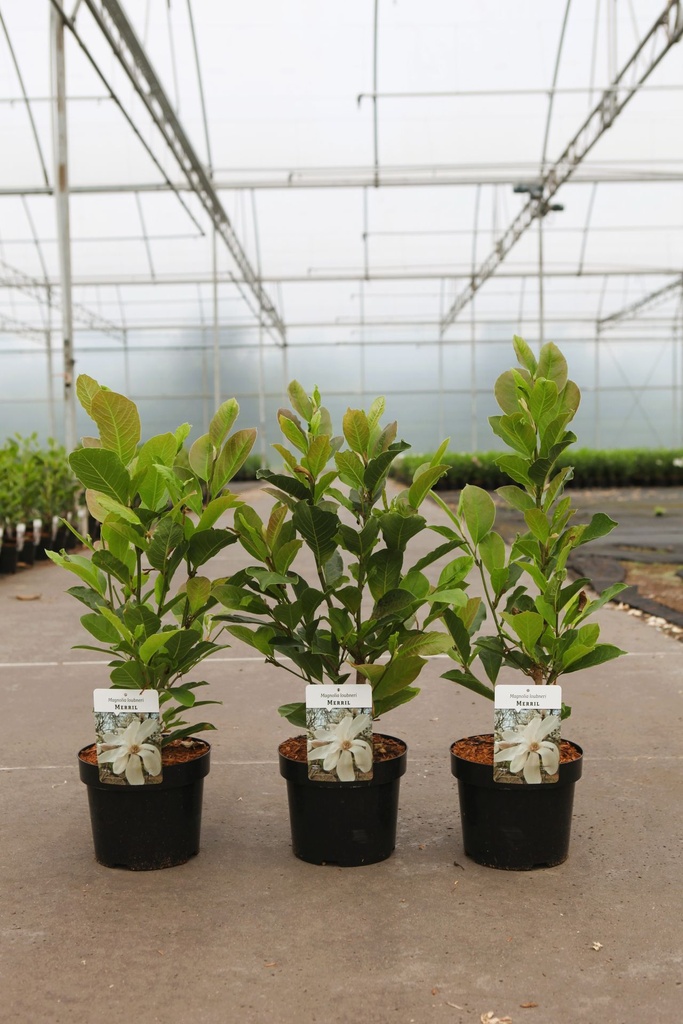
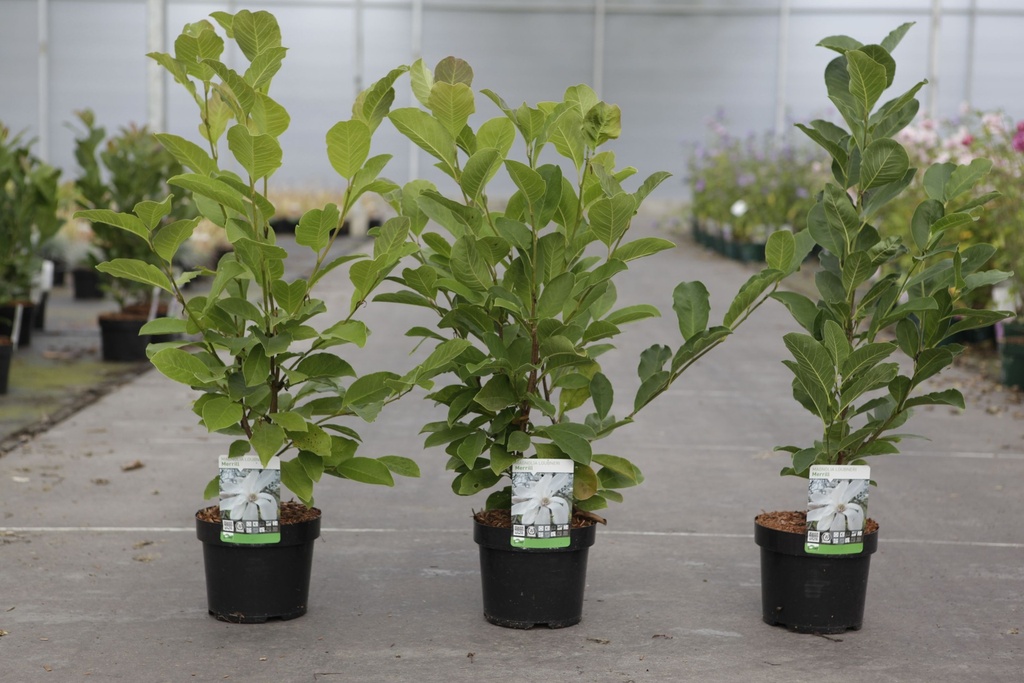
'Merrill' grows faster than almost any other Loebner magnolia and soon becomes a tree with a wide crown, eventually up to 9 m. It originated at the Arnold Arboretum and was named after its former director Elmer Merrill. The white flowers, 10 to 15 cm across, have up to 15 wide tepals; it holds the RHS Award of Garden Merit.
Magnolia
Magnolias (Magnolia) are deciduous or evergreen trees and shrubs from Asia and the Americas, and belong to an ancient lineage of flowering plants. They are loved for their large, often fragrant flowers shaped like tulips, cups or stars, in white, pink, purple or yellow. Deciduous species mostly flower in spring on bare branches, evergreen species in summer.
Magnolia loebneri
The Loebner magnolia (Magnolia × loebneri) is a deciduous hybrid between the Kobus magnolia and the star magnolia, raised in Germany in the early twentieth century. It grows into a large shrub or small, often multi-stemmed tree with a rounded crown, and in March and April, before the leaves, it is smothered in fragrant, star-shaped flowers in white, pink or lilac.
Stanowisko i gleba
It wants direct sunshine for part of each day, so choose a sunny or half-shaded spot rather than deep shade, ideally screened from cold winds. A rich, deep soil that holds moisture yet drains is best, neutral to slightly acid; a trace of lime does less harm here than to most magnolias. It is hardy, and both buds and flowers cope fairly well with late frost.
Przycinanie i pielęgnacja
Pruning is a light task for March–April: take out dead or diseased wood and any branches rubbing in the middle of the crown, and build up the shape of young plants step by step. Regular watering helps it settle in; once rooted, it usually manages on rainfall alone. Flowers appear within a few years of planting.
Zastosowanie w ogrodzie
A beautiful specimen for a lawn or the centre of a bed, and a good choice for small gardens. It also works well in a large informal hedge, at the back of a shrub border or along a woodland edge.
Cechy rośliny
Dane botaniczne
| Rodzina | Magnoliaceae |
| Rodzaj | Magnolia |
| Gatunek | loebneri |
| Odmiana | 'Merrill' |
Kwitnienie
| Okres kwitnienia | March – april |
| Kolor (kwiat) | white |
Liście
| Zimozielony | no |
| Kolor (liście) | green |
Pokrój
| Wysokość | 200 cm, 300 cm |
Stanowisko
| Mrozoodporność | strefa 5a (do -28,9 °C) |
| Upały letnie | do strefy upałów 9 |
| Rodzaj gleby | acid |
| Stanowisko | sun, half shade |
| Wilgotność gleby | moist, normal |
Zastosowanie
| Typ (zastosowanie) | shrub, solitary, in group |
Pielęgnacja
| Cięcie | march – april |


