

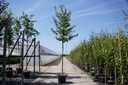
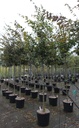
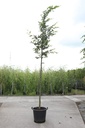
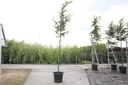
About this plant
Hornebeam Carpinus
Hornbeams (Carpinus) are deciduous trees and large shrubs from the cool temperate regions of the northern hemisphere, related to birch, alder and hazel. They have neatly toothed, strongly veined leaves and smooth grey bark that becomes fluted with age. In spring they bear catkins, followed by hanging clusters of winged nutlets.
Carpinus betulus
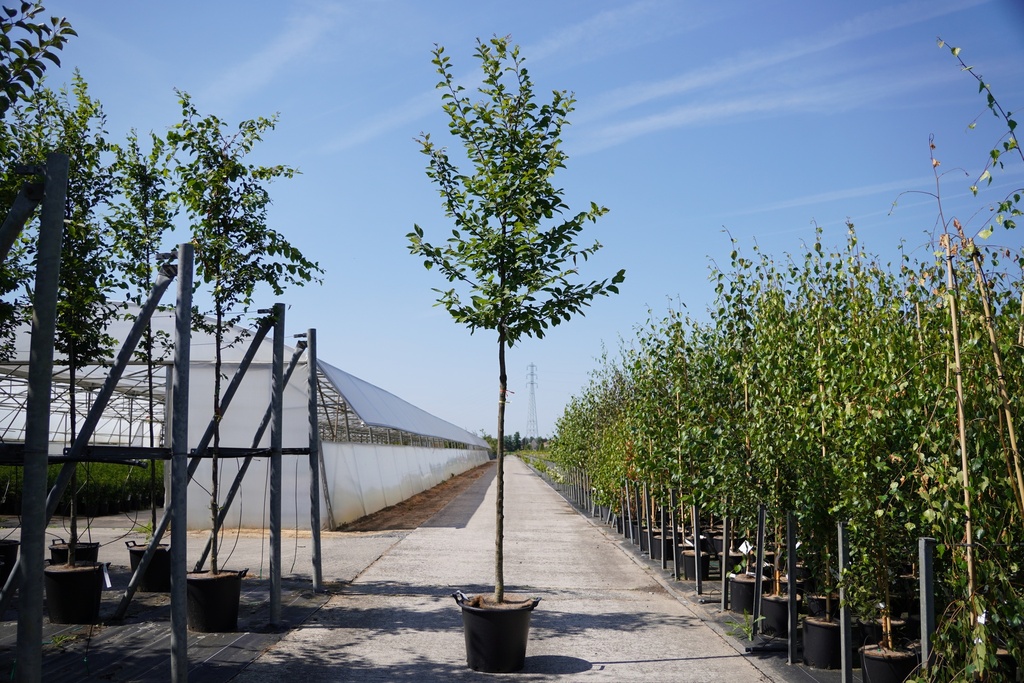
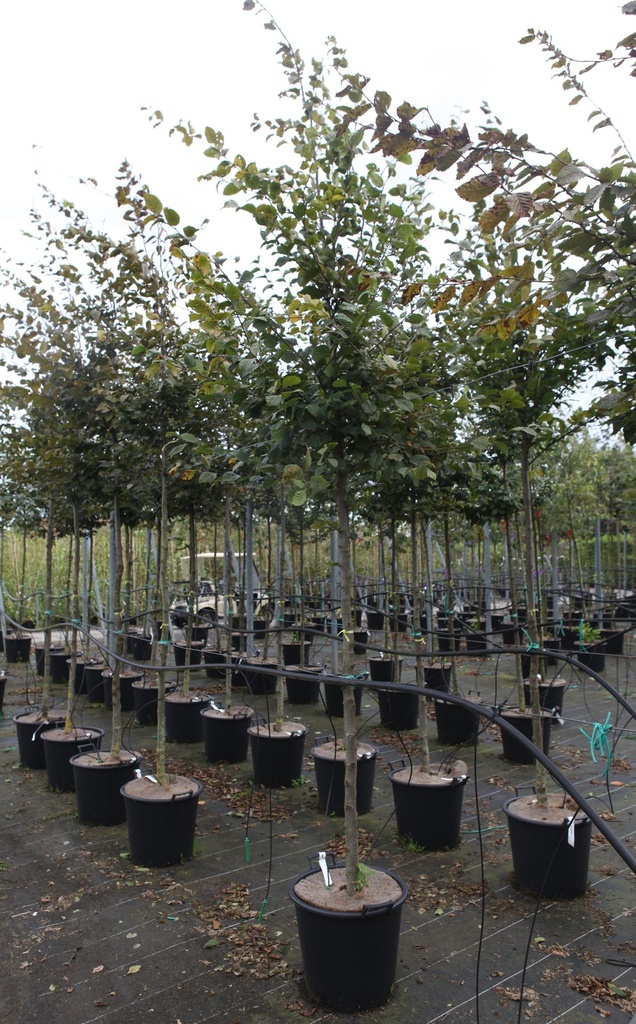
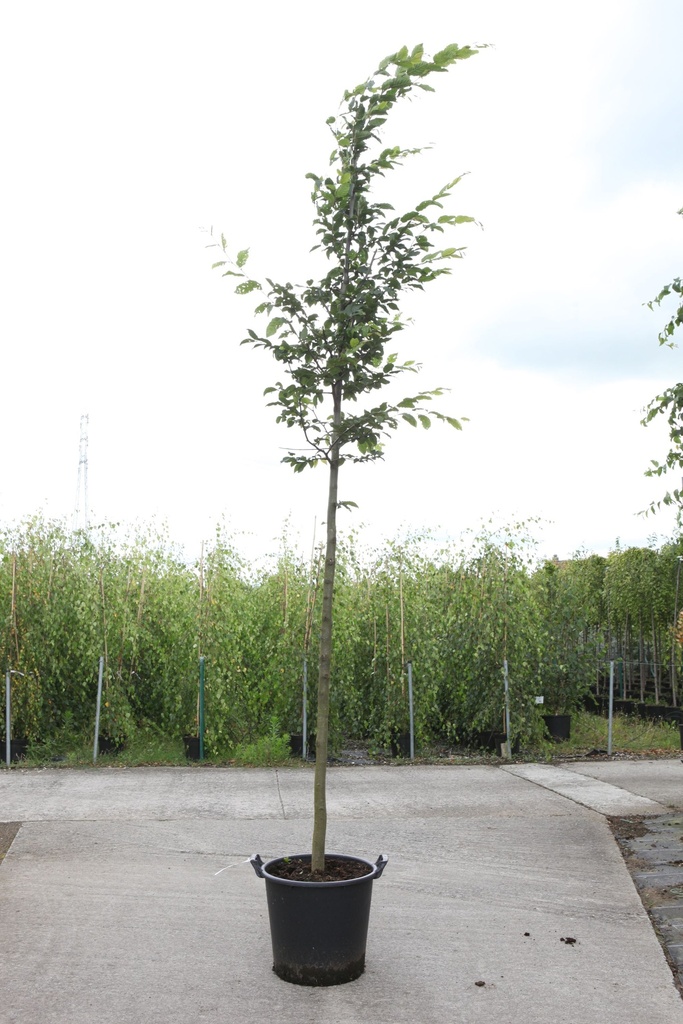
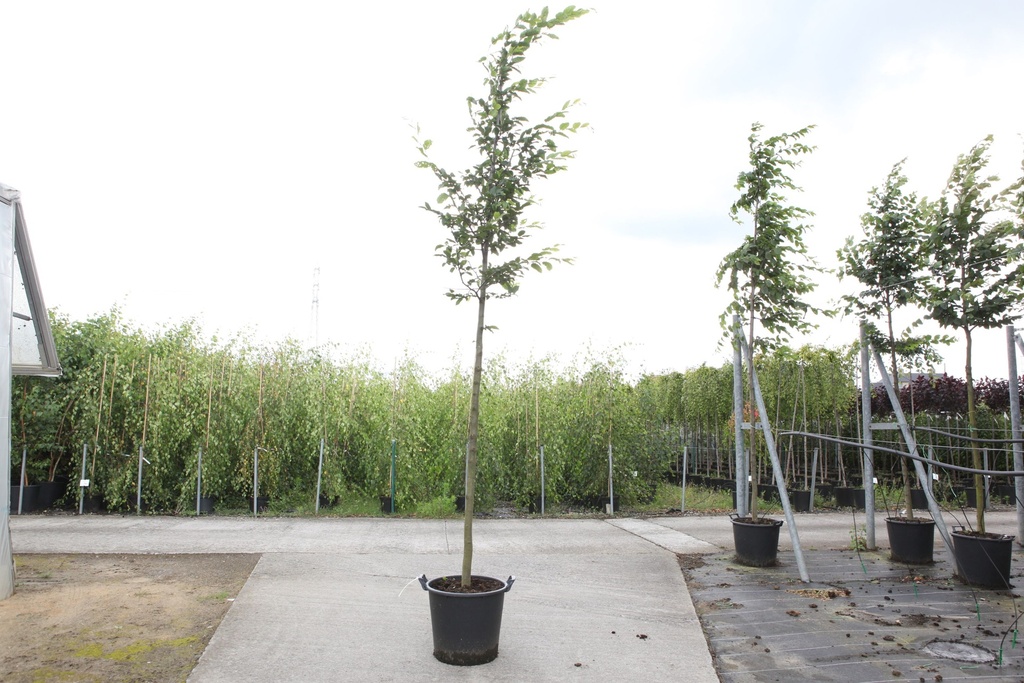
Common hornbeam (Carpinus betulus) is native to Europe and western Asia. It grows fairly slowly into a densely branched tree, conical when young and later broadly oval to rounded, around 15 to 20 m tall in the open. The fresh green leaves turn golden yellow in autumn; on clipped plants the dry brown leaves stay on well into winter.
Location and soil
Grows in sun, partial shade or shade, ideally in fertile, moist clay or loam with some lime; it dislikes poor, acid soil and ground that is waterlogged or very dry. Shelter from cold, drying winds is welcome. Extremely hardy, though it suffers in prolonged summer heat on shallow soil.
Pruning and care
Very easy to grow and tolerant of hard pruning. Clip hedges once or twice a year between June and September, for example in June and again in September, and remove shoots that spoil the shape. Water young plants during dry summers. Coral spot, caterpillars and aphids can occasionally appear.
Use in the garden
One of the best plants for formal or informal hedges, windbreaks and topiary, keeping a screen of dry leaves in winter. It is also a robust tree for parks, avenues and large gardens, and the upright and columnar forms suit streets and confined spaces. Its pollen can cause allergies in sensitive people.
Plant characteristics
Flowering
| Flowering period | april, may |
Foliage
| Evergreen | no |
| Colour (foliage) | green |
Growth habit
| Height | 500 cm, 1000 cm |
| Growth rate | slow |
Location
| Winter hardiness | -30 °C |
| Soil type | neutral |
| Location | sun, half shade |
| Soil moisture | normal |
Use
| Type (use) | hedge plant, tree/standard |
Care
| Pruning | yes, june, july, august, september |
Related products
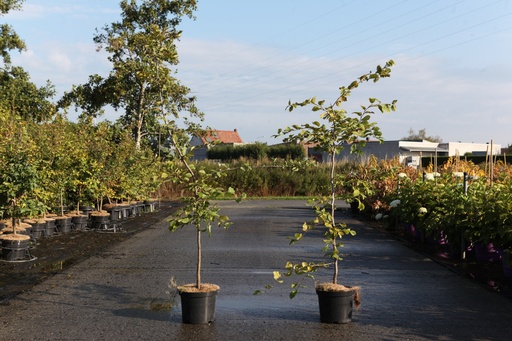
Carpinus betulus
cont. 4L 100/+ cm

Carpinus betulus
cont. 110L 300-350 cm multi-stem transplanted 3x
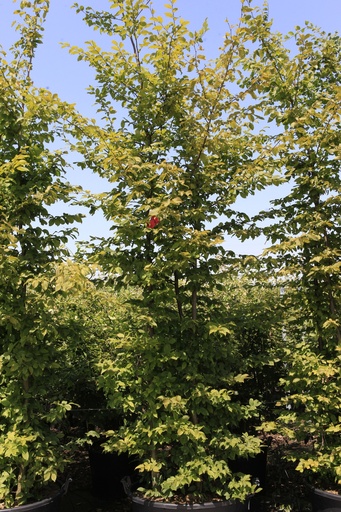
Carpinus betulus
cont. 160L 250/+ cm multi-stem